Overhead view of an air conditioning condenser unit on a concrete pad next to a house with asphalt shingle roofing and vinyl siding.

AC Installation in Crawfordsville, IN

Tell us about the job

Takes about a minute. No obligation.

New system or replacementCentral ACMontgomery County, IN
Step 1 of 2

What ZIP code is the job in?

Gas is the common setup here

Utility gas heats 47.7% of homes in Montgomery County, more than electric and propane combined with room to spare. Most AC installs here pair a new condenser and coil with an existing gas furnace rather than replacing the whole system.


What that means for your quote

If your furnace runs on gas, the job is usually matching a new condenser and evaporator coil to it, not rewiring the house for a different fuel. Worth checking what's already in the attic or basement before you compare bids.

3 months
June through August, your air conditioner is on duty
83°F
the average summer afternoon it cools against
20 hail events
in ten years, and hail bends the fins on outdoor coils
13.4 SEER2
the federal minimum any new unit must meet
Isometric line illustration of a cutaway house showing an indoor air handler with branching ducts in the attic space, connected by a line set to an outdoor condenser unit beside the building, with simple furniture in two rooms.
Your air conditioner works hardest from June through August.

NOAA nClimDiv, 1991–2020 normals

Half the homes in Montgomery County were built in 1967 or earlier.

A new condenser and coil has to match the ductwork already in the house, not the other way around.

Three months of real heat is not much to ask of a new system

Cooling runs June through August
Summer afternoons average 83°F
20 hail events from 2015 to 2024
A standard system handles this fineIndiana homes paid 14.77 cents per kilowatthour in 2024, nothing here that calls for oversizing or an upgrade to run it.

Montgomery County is zone 5A, which counts heating as the bigger job over the year, but that doesn't change what's required on the cooling side. Any split system condenser under 45,000 Btu/h made since January 2023 has to meet 13.4 SEER2 at minimum, whether it's heating that carries the house or not. A quote for anything below that number isn't quoting a unit that can legally go in. There's also a federal tax credit on qualifying high-efficiency equipment, worth asking about when you compare bids.

Cooling starts in June. Get the install done before May is out.

Cooling here runs June through August. Installing before May ends means it's ready on your schedule, not during the first hot week, and whoever's doing the work isn't trying to fit you in between emergency calls.

Find a contractor
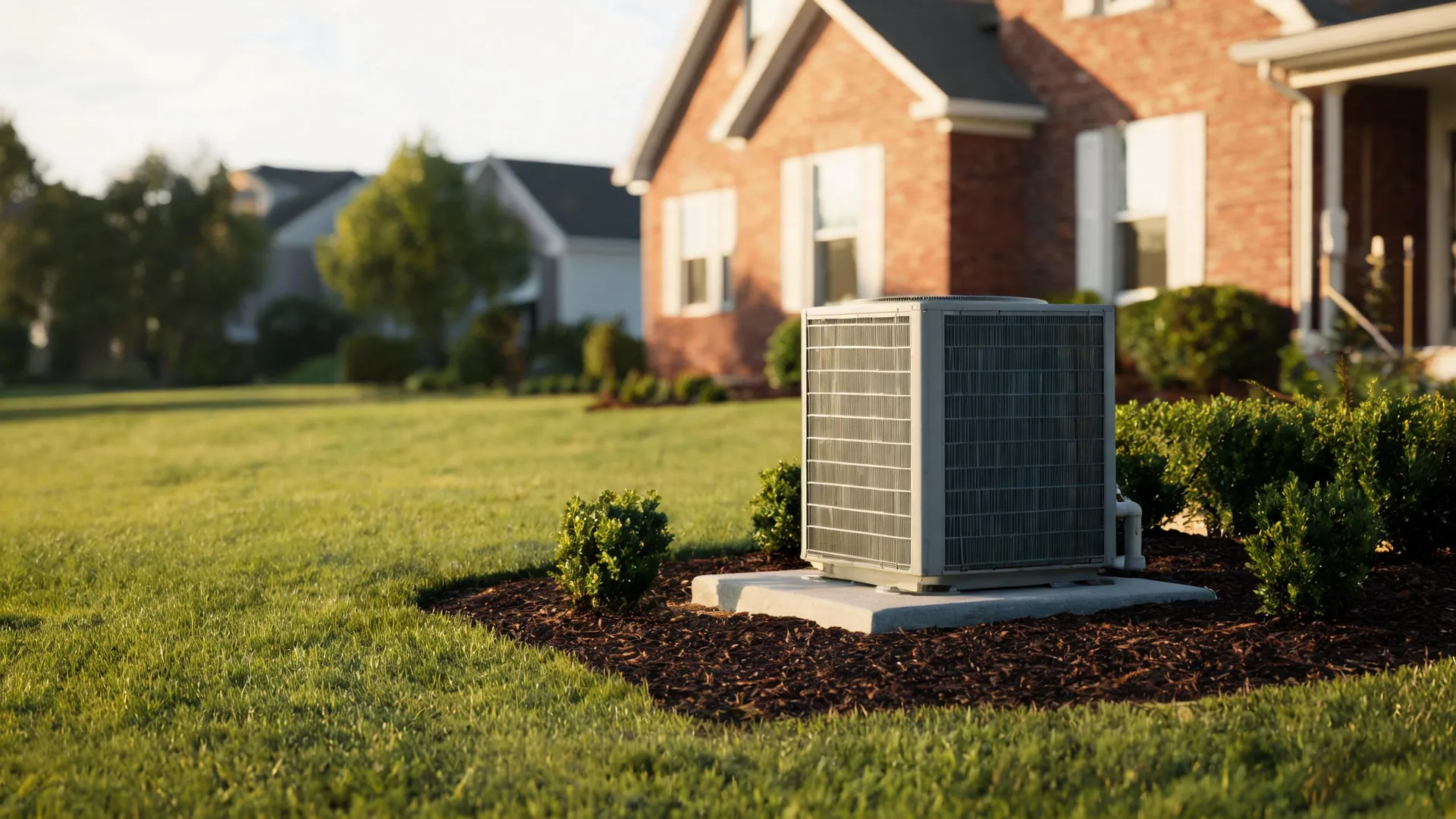
A gray metal air conditioning condenser unit mounted on a concrete pad in a flat grassy field under a partly cloudy sky.

The ductwork was already there

Ductwork gets sized for the house it's in, not swapped out when a new condenser goes in. If your house was built around 1967 or earlier, that ductwork has been there a long time, through whatever furnace or AC came before this one. A contractor sizing the new system has to work with those ducts as they are, not pick a number off a brochure and hope it fits.

Bigger isn't better here

An oversized condenser cools the air fast and shuts off before it pulls the moisture out. The room ends up cold and damp instead of just comfortable. An undersized one runs constantly and never quite catches up on the hottest afternoons. The right size runs long steady cycles that keep temperature and humidity even.

The load calculation, not the old unit's label

A contractor works out the size from the house itself. Square footage, window area, insulation, ceiling height, which way the house faces all go into it. The old condenser's size is a starting point to check against, not something to copy. It may have been wrong from the first install, or sized for a furnace system that's since changed.

An outdoor air conditioning condenser unit mounted on a concrete pad next to a blue-sided residential house at sunset.

A higher-efficiency unit would save about $30 a year to run in Montgomery County compared with a new unit at the federal minimum.

  • A higher-efficiency unit$200 a year
  • A new unit at the federal minimum, 13.4 SEER2$230 a year

Estimates for a typical Montgomery County home, from EIA household energy data, Indiana fuel prices and NOAA climate normals. Your home will differ.

Installation day starts with the old condenser and coil coming out, then the new coil gets set in the furnace plenum before anything goes outside. That coil has to seal tight against the plenum walls, since any gap there is air sneaking past the cooling surface instead of through it. Outside, the new condenser gets set on a pad, leveled, and connected to the line set, and if the existing line set is being reused it gets checked for the right size and flushed clean rather than just hooked up as is. Once everything's connected, the system gets evacuated to pull moisture and air out of the lines before refrigerant goes in, and then it's charged to the manufacturer's spec and checked against the actual airflow coming through the ducts. The last part is running it through a full cycle and checking temperatures at the vents, because a system that looks right on paper still has to prove it's pulling heat out of the house the way it's supposed to.