





A row of dark-clad houses with gray gabled roofs behind trimmed hedges and a lawn, framed by overhanging tree branches under an overcast sky.

AC Installation in Corydon, IN

Tell us about the job

Takes about a minute. No obligation.

New system or replacementCentral ACHarrison County, IN
Step 1 of 2

What ZIP code is the job in?

Most homes in Harrison County run on electric heat, at just over half. Bottled or LP gas comes in second at 21.7 percent, with utility gas close behind at 18 percent. If your home is one of the electric ones, there's a good chance your furnace or heat pump shares a line set or ductwork with your AC, so a new system needs to match what's already there. Worth checking which fuel your home uses before you get quotes, since that changes what a contractor can install and what it will tie into.

5 months
May through September, your air conditioner is on duty
86°F
the average summer afternoon it cools against
33 hail events
in ten years, and hail bends the fins on outdoor coils
13.4 SEER2
the federal minimum any new unit must meet
Isometric illustration of a cutaway single-story house showing attic ductwork, an indoor air handler, interior rooms with furniture, and an outdoor condenser unit connected by lines, on a white background.
Your air conditioner works hardest from June through August.

NOAA nClimDiv, 1991–2020 normals

The efficiency rating tells you how much cooling the compressor squeezes out of each unit of electricity it uses.

A higher-rated system and a lower-rated one can cool the same house and still leave you with very different electric bills.

April is the month to get it done, before May asks the system to work

Cooling runs May through September
Summer afternoons average 86°F
69 damaging wind events from 2015 to 2024

A standard size and efficiency fit a Corydon home fine. Nothing about the climate here pushes you toward oversizing or toward paying for the highest efficiency rating on the shelf. What matters more is getting the size right for your house, since a system too big cools the air fast and shuts off before it pulls the moisture out, leaving rooms feeling clammy even at the temperature you set. At 14.77 cents per kilowatt-hour, Indiana electric rates are close to the national average, so the payback math on a premium-efficiency unit works out about the same here as anywhere else. A contractor can run that math against your actual square footage and tell you where the extra cost makes sense and where it doesn't.

Right-sized is right for Corydon

Cooling runs May through September here, with afternoon highs averaging 86°F through June, July and August. That's enough of a season to make the sizing math matter, but not enough to justify anything beyond a standard system. Get the size matched to your house and the install done before the heat sets in.

Find a contractor
A man in a dark long-sleeve shirt and tan work pants, seen from behind, carries a canvas tool bag up wooden steps toward an orange front door with a potted plant beside it.
An outdoor air conditioning condenser unit mounted on a concrete pad surrounded by gravel, photographed against a partly cloudy blue sky.

The right size isn't a guess

Sizing an AC isn't about matching tonnage to square footage on a chart. A contractor works out a load calculation, room by room, counting windows, insulation, ceiling height, which walls face the sun. Houses the same size can need different size systems once those things are counted. Too big and the compressor short cycles, cooling the air fast and shutting off before it finishes pulling humidity out of the house, so the place runs feeling clammy no matter where the thermostat is set. Too small and it runs constantly on the hottest afternoons and still can't keep up. Either mistake wears on the compressor, since neither lets it settle into the steady run time it's built for.

Ask what the load calculation found

Any contractor worth hiring will run room by room numbers before quoting a size, not just measure the house and match a chart. Ask to see the load calculation itself, not just the tonnage it landed on. If a contractor quotes a size without walking the house or asking about windows and insulation, that's a sign they're guessing.

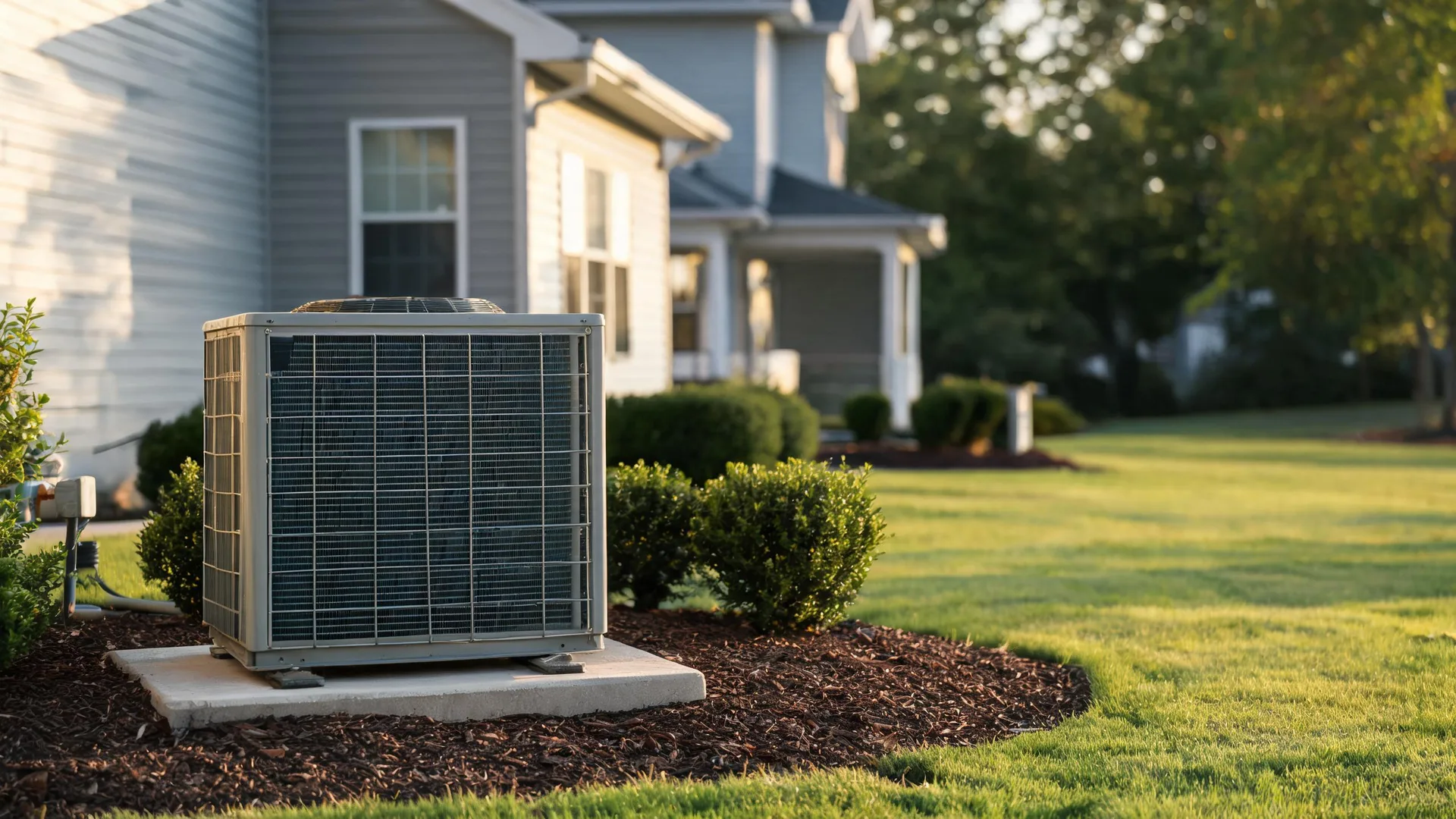
Ask what happens to the ductwork and line set

A new outdoor unit still has to connect to what's already running through the house. Ask whether the existing ductwork and line set can handle the new system or whether something needs to be resized or replaced. Skipping that question is how a homeowner ends up with a unit that can't deliver the cooling it's rated for.

Overhead view of an outdoor AC condenser unit on a concrete pad next to a house with a dark shingle roof.

A higher-efficiency unit would save about $40 a year to run in Harrison County compared with a new unit at the federal minimum.

  • A higher-efficiency unit$280 a year
  • A new unit at the federal minimum, 13.4 SEER2$320 a year

Estimates for a typical Harrison County home, from EIA household energy data, Indiana fuel prices and NOAA climate normals. Your home will differ.

Install day starts with the old equipment coming out, not the new one going in. The outdoor unit gets disconnected and hauled off, and if the indoor coil is being swapped too, that comes out of the air handler or furnace cabinet. A good crew checks the line set before reusing it, since old refrigerant lines can have contamination or the wrong size for a new system. Once the new outdoor unit is set and leveled, it gets connected to the line set, the coil goes in, and the whole system gets charged with refrigerant to the exact amount the manufacturer specs, not just topped off by feel. Before anyone leaves, it should run through a full cycle while someone checks the temperature drop across the coil and listens for anything that sounds off. That test run matters as much as anything that happened before it, because a system that looks right sitting still can still be wired or charged wrong.