






A row of illuminated two-story brick houses with front porches and mature trees photographed at twilight.

AC Installation in Columbus, IN

Tell us about the job

Takes about a minute. No obligation.

New system or replacementCentral ACBartholomew County, IN
Step 1 of 2

What ZIP code is the job in?

Just over half the homes in Bartholomew County heat with utility gas, and most of those pair the furnace with central air on the same ductwork. If that's your setup, AC installation here usually means matching a new outdoor unit to the coil and ductwork already in place rather than building a system from scratch. Electricity heats a good share of homes in the county too, and those sometimes run a heat pump instead, which handles cooling differently than a gas furnace with a separate AC. Either way, what's already run through your attic or basement decides more about the install than the brand on the unit.

4 months
June through September, your air conditioner is on duty
84°F
the average summer afternoon it cools against
6 hail events
in ten years, and hail bends the fins on outdoor coils
13.4 SEER2
the federal minimum any new unit must meet
Isometric illustration of a cutaway single-story house showing interior rooms, ductwork running from an indoor air handler, and an outdoor condenser unit on a pad beside the building.
Your air conditioner works hardest from June through August.

NOAA nClimDiv, 1991–2020 normals

Cooling runs June through September here.

May is the month to get a new system in, before the first hot week fills up installers' schedules.

A normal-size system handles summers here

Power costs 14.77 cents a kWh statewide
Cooling runs June through September
Summer afternoons average 84°F

Summer afternoons in Bartholomew County average 84°F through June, July and August. That's a normal cooling load, not a spike that calls for extra tonnage. A system sized to your square footage and ductwork will keep up fine through all four months of the season. Zone 4A asks for solid efficiency in both directions, heating and cooling, which is already built into the equipment standards installers work with here. There's no local reason to size up or pay for a higher tier than the house needs.

Any system installed here starts at 13.4 SEER2

Any new split system going in here has to meet 13.4 SEER2 at minimum, the federal baseline for units under 45,000 Btu/h built since January 2023. Zone 4A's mix of hot summers and cold winters is already factored into that number, so installers aren't guessing at what the house needs. A federal tax credit is available for qualifying high-efficiency equipment, worth checking against whatever system you're considering.

Find a contractor
A man in a dark sweatshirt and brown work pants, seen from behind, climbs porch steps toward an orange-red front door while carrying a canvas tool bag, with a potted shrub in a terracotta planter to the right.
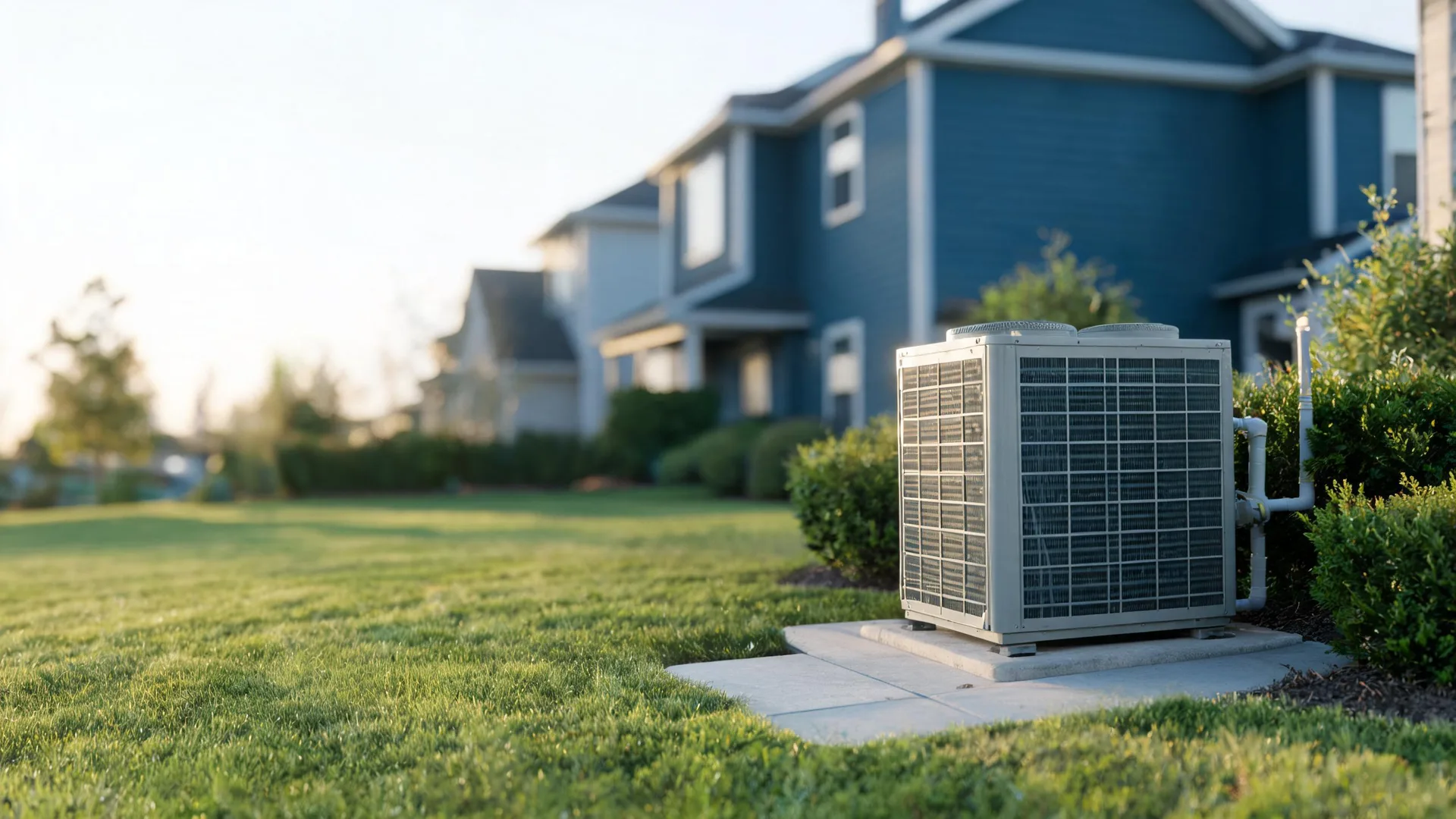
A gray residential air conditioning condenser unit mounted on a concrete pad outdoors, surrounded by green grass under a partly cloudy blue sky.

The old unit doesn't get reused

Whatever is running now gets disconnected and hauled off once the new one is in place. The outdoor unit, the indoor coil and the refrigerant lines usually come out together, since an old coil paired with a new condenser is a common source of problems down the line. If the old system used a refrigerant that's been phased out, it has to be recovered properly rather than vented, and that's part of a normal swap. Age is usually what ends a cooling system before anything else does. Compressors wear out, coils start leaking slowly, and a system that has run every summer for years is at the point where failure can happen without much warning.

Square footage alone doesn't size a system

A contractor doing this right works out the load room by room. How much glass faces the sun. How much insulation is in the attic. How many people and appliances add heat inside. Houses built the same size can still need different tonnage because of how they're laid out and which way they face. A tape measure and a square footage chart skip all of that.

Oversized cooling wears out the house, not just the unit

A system too big for the load cools the air fast and shuts off before it pulls humidity out of the house. Rooms end up feeling clammy even once the thermostat hits the right number. All that stopping and starting puts more wear on the compressor than a properly sized system running longer, steadier stretches would.

Overhead view of a gray residential air conditioning condenser unit mounted on a concrete pad beside a house with asphalt shingle roofing.

A higher-efficiency unit would save about $30 a year to run in Bartholomew County compared with a new unit at the federal minimum.

  • A higher-efficiency unit$240 a year
  • A new unit at the federal minimum, 13.4 SEER2$270 a year

Estimates for a typical Bartholomew County home, from EIA household energy data, Indiana fuel prices and NOAA climate normals. Your home will differ.

A crew starts by disconnecting the old outdoor unit and pulling the indoor coil, then recovering the refrigerant from the lines before any new equipment goes in. The lines themselves often get flushed or replaced, since old oil and debris left behind can damage a new compressor. Once the new coil and outdoor unit are set in place, they get charged with the exact amount of refrigerant the equipment calls for, not just topped off by feel. The last step is a startup check. An installer measures airflow across the coil and checks the temperature difference between the air going in and the air coming out. That check is what shows the system is actually working, not just turned on.