






A lit residential street at dusk featuring large two-story brick houses with glowing windows, mature trees, and a street lamp.

AC Installation in Bloomington, IN

Tell us about the job

Takes about a minute. No obligation.

New system or replacementCentral ACMonroe County, IN
Step 1 of 2

What ZIP code is the job in?

Just under half of homes in Monroe County heat with electricity, more than any other fuel. Utility gas comes in close behind at 43.6 percent. If your furnace runs on gas, central AC usually shares the ductwork already in place, so installation means matching a new condenser and coil to what's there. If you're on an electric furnace or heat pump, swapping in or upgrading AC works the same way, through the existing ducts. Either way, the system already serving your home gives a contractor the starting point for sizing the new one.

4 months
June through September, your air conditioner is on duty
84°F
the average summer afternoon it cools against
32 hail events
in ten years, and hail bends the fins on outdoor coils
13.4 SEER2
the federal minimum any new unit must meet
Isometric cutaway illustration of a house showing attic ductwork, an indoor air handler, refrigerant lines running outside, and an outdoor condenser unit on a pad.
Your air conditioner works hardest from June through August.

NOAA nClimDiv, 1991–2020 normals

Homes in Monroe County run their AC from June through September.

Put in a new system in May and it gets done on your schedule, not during the first hot week.

Bloomington summers don't call for anything special, just a system sized right

Power costs 14.77 cents a kWh statewide
Cooling runs June through September
Summer afternoons average 84°F
A standard AC install, sized rightSummer highs average 84°F here, nothing a properly sized system can't handle.

A straight swap starts with the refrigerant coming out of the old system and the lines coming apart, then the old condenser and coil come out. The new coil goes into the furnace plenum first, sealed tight so air moves through it and not around it. Then the line set connects to the new condenser outside. Before any refrigerant goes in, the lines get evacuated to pull out moisture and air, since either one left behind will keep the system from working right. A contractor charges the system to the weight or pressure the manufacturer specifies, checks airflow across the coil, and runs the system through a full cooling cycle before calling the job done. None of that shows up when you look at the unit afterward, but skip it and a new system can end up running worse than the one it replaced.

Replace it before the season

Replace it before the season starts, so it happens on your schedule, not in a hurry.

Find a contractor
A gray residential air conditioning condenser unit mounted on a concrete pad outdoors, surrounded by green grass under a partly cloudy blue sky.

What happens to the old system

The old condenser gets disconnected and hauled off, and the refrigerant inside it has to be recovered first, not vented. That's federal law, and it's also just how it's done. If the system is a straight swap, the line set often gets reused rather than replaced, so a contractor will check it for the right size and look for any wear where it connects to the new coil. The old coil comes out of the furnace plenum, and that's worth a look too. Years of condensation leave some corrosion behind, and if the plenum itself has rusted through, that gets addressed before the new coil goes in, not after. Whatever came out doesn't owe you anything more. It did its years and it's done.

Ask what size the old system was, not what size to buy

A contractor should run a load calculation on your home rather than just matching the tonnage of what's coming out. The old unit may have been oversized or undersized from the start, and ductwork, windows, and insulation all factor into what the house actually needs. If someone quotes a number before looking at any of that, ask how they got it.

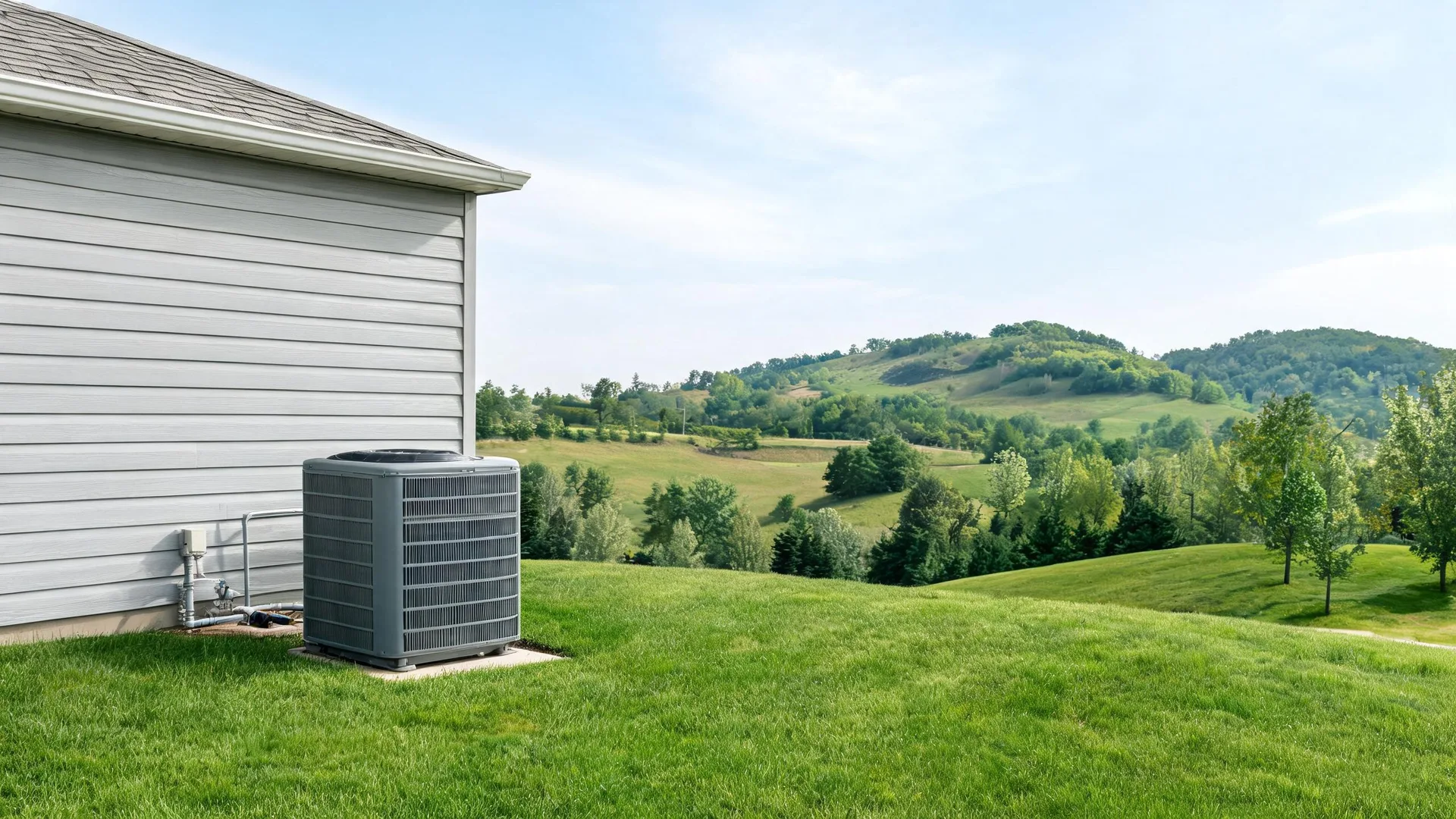
Ask whether the coil and condenser are matched

The condenser outside and the coil inside are rated to work together as a pair. Mixing a new condenser with an old coil, or buying each from a different line, can leave you well short of the efficiency printed on the box. A straight answer here tells you whether the quote is for a matched system or just parts that happen to connect.

Overhead view of an outdoor AC condenser unit on a concrete pad next to a house with a dark shingle roof.

A higher-efficiency unit would save about $40 a year to run in Monroe County compared with a new unit at the federal minimum.

  • A higher-efficiency unit$220 a year
  • A new unit at the federal minimum, 13.4 SEER2$260 a year

Estimates for a typical Monroe County home, from EIA household energy data, Indiana fuel prices and NOAA climate normals. Your home will differ.

That SEER2 number on the label is a ratio, not a guarantee. It tells you how much cooling the unit produces for the energy it uses under test conditions, and the real number you get depends on more than the equipment. A higher rated system still needs the right charge, the right airflow, and a coil that actually matches the condenser to perform anywhere near that number. Install it wrong and a high-efficiency unit can run worse than a cheaper one installed right. The rating is a starting point for comparing equipment, not a promise about your power bill.