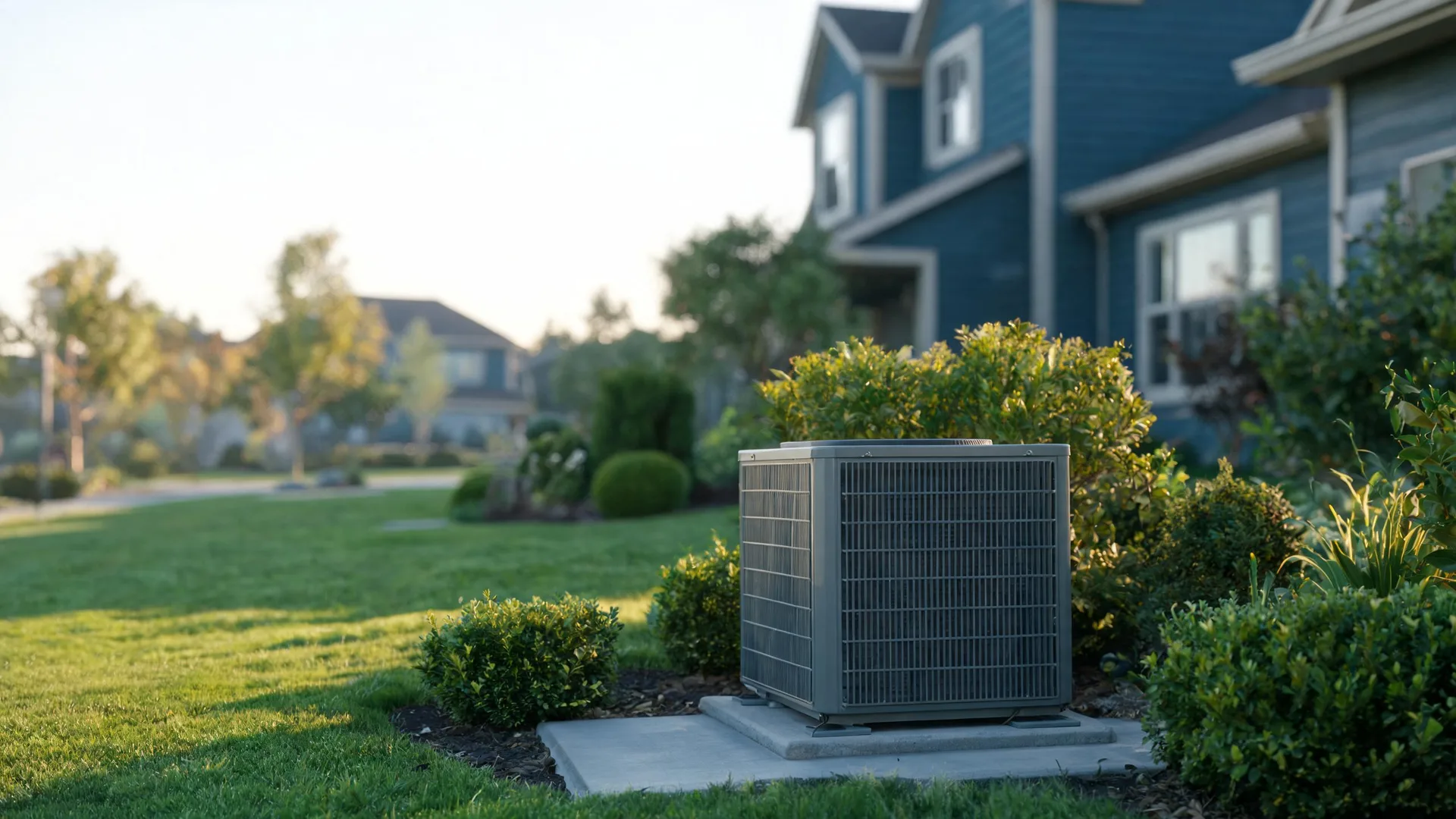
An outdoor air conditioning condenser unit installed beside the exterior wall of a blue vinyl-sided house at sunset.

AC Installation in Angola, IN

Tell us about the job

Takes about a minute. No obligation.

New system or replacementCentral ACSteuben County, IN
Step 1 of 2

What ZIP code is the job in?

Most homes here run on gas heat

Utility gas heats 59.5% of occupied homes in Steuben County, more than any other fuel. Another 22.2% run on bottled or LP gas. An AC install here is usually pairing new cooling equipment with a gas furnace that's already in place.


The furnace side stays put

If your home heats with gas, the furnace and ductwork aren't changing. The job is matching a condenser and coil to that existing blower so the whole system moves air the way it's supposed to.

3 months
June through August, your air conditioner is on duty
81°F
the average summer afternoon it cools against
26 hail events
in ten years, and hail bends the fins on outdoor coils
13.4 SEER2
the federal minimum any new unit must meet
Isometric line illustration of a cutaway single-story house showing interior rooms, ceiling ductwork and an air handler, connected to an outdoor condenser unit on a pad beside the building.
Your air conditioner works hardest from June through August.

NOAA nClimDiv, 1991–2020 normals

Cooling in Angola runs June through August.

May is the month to get a new system in, before it has to work.

Three months of real heat is not much to ask of a new system

Cooling runs June through August
Summer afternoons average 81°F
52 damaging wind events from 2015 to 2024
Power here is cheap, so fit matters more than the efficiency numberIndiana electricity ran 14.77 cents per kilowatt-hour in 2024

Angola falls in climate zone 5A, a cool zone where heating carries more of the load than cooling does. That doesn't lower the bar on the AC side. Any split-system condenser under 45,000 Btu/h built from 2023 onward has to meet 13.4 SEER2 at minimum, no matter how few months it runs. A contractor sizing a new system here is still picking from equipment that clears that number. If you're comparing quotes, check the SEER2 rating on the unit itself rather than assuming an older model on a shelf still qualifies.

Replace it before the season

Replace it before the season starts, so it happens on your schedule, not in a hurry.

Find a contractor
An outdoor air conditioning condenser unit mounted on a concrete pad surrounded by gravel, photographed against a partly cloudy blue sky.

Three months of work a year, most of the year off

Three months of 81 degree afternoons isn't a hard life for a condenser. The rest of the year it sits idle while the furnace does the work. That's the case for picking a unit on reliability and fit rather than chasing the highest SEER2 number on the shelf. A mid-range system sized right to your ductwork will keep up here without trouble, and a straightforward repair down the line is worth doing on equipment that never had to strain in the first place.

The rating is a season average, not a promise

SEER2 gets measured across a range of conditions, mild days and hot ones mixed together. A unit with a higher number isn't cooling any harder on the worst afternoon of the year. It's using less power to get there on the easy days, which make up most of the run time anyway.

A mismatched system wastes the rating it has

The SEER2 number on the box assumes the coil, the condenser and the ductwork are all working together the way the manufacturer tested them. Oversize the condenser for the coil or the ducts, and the system short cycles, never reaching the efficiency the label promised. The number is only honest when the whole setup is matched.

An outdoor air conditioning condenser unit positioned beside a blue-sided house at sunset.

Going above the federal minimum saves little here, about $20 a year.

  • A higher-efficiency unit$150 a year
  • A new unit at the federal minimum, 13.4 SEER2$170 a year

Estimates for a typical Steuben County home, from EIA household energy data, Indiana fuel prices and NOAA climate normals. Your home will differ.

Installation day starts with the old equipment coming out, not the new one going in. The condenser outside gets disconnected and hauled off, and the coil that sits above or beside the furnace comes out too, since a new condenser needs a coil built to match it. The refrigerant lines usually get replaced rather than reused, because old lines can carry contamination that shortens the life of new equipment. Once the new coil is set and the lines are run, the condenser goes in on its pad outside and gets wired in. Before anyone calls it done, the system needs to run long enough to check refrigerant charge and airflow against what the equipment is rated for. A unit that's never been fired up and checked under load is still a guess, not a finished job.