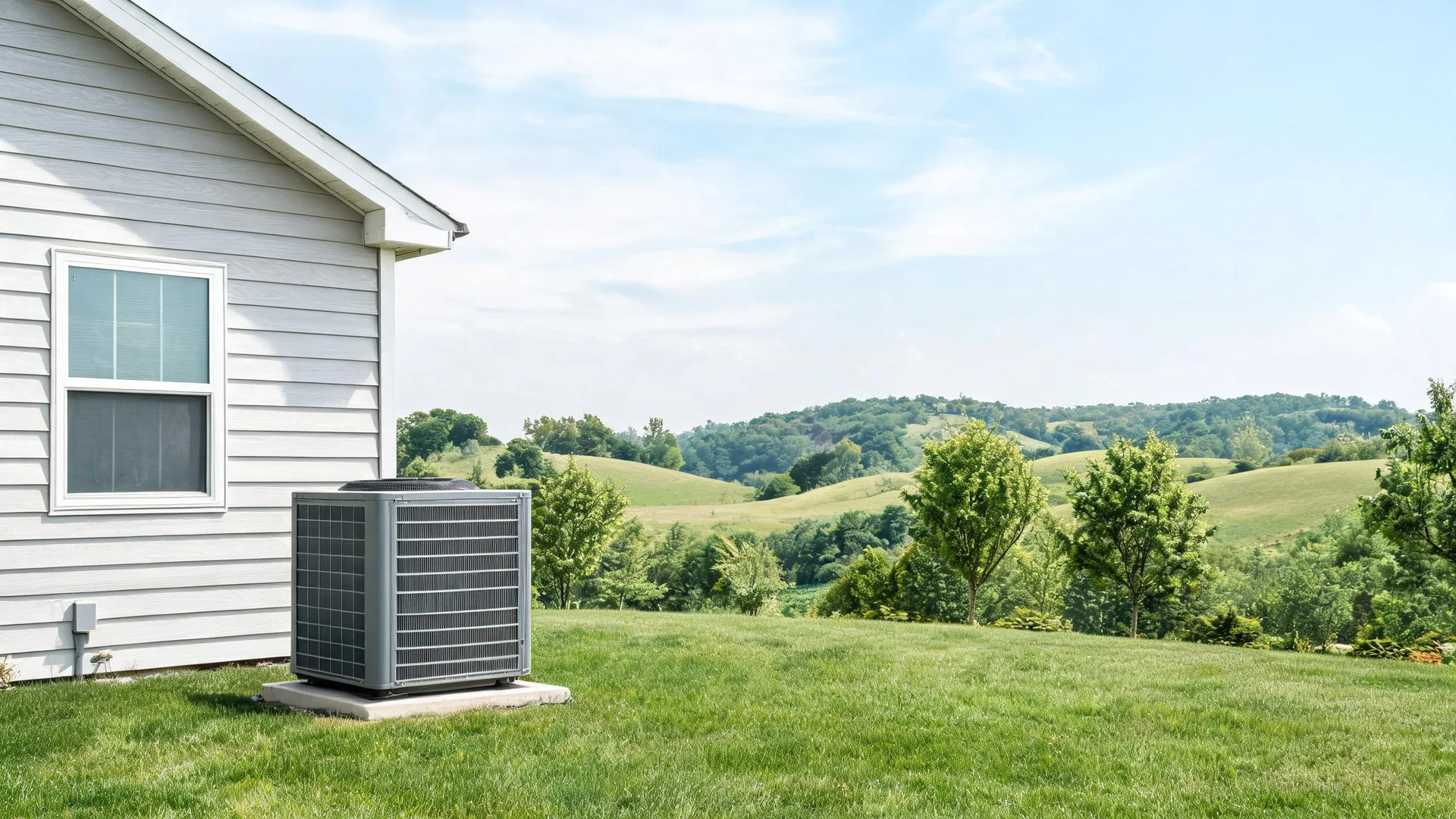
Half these homes were built in 1995 or later
Boone County splits right down the middle that way. If your house is one of the newer ones, the heat pump probably came with it, and it hasn't had many years to wear down yet.
Takes about a minute. No obligation.
Boone County splits right down the middle that way. If your house is one of the newer ones, the heat pump probably came with it, and it hasn't had many years to wear down yet.
A heat pump still early in its working life just needs the broken part found and replaced. That gets it back to running, instead of pulling it out for something new.

NOAA nClimDiv, 1991–2020 normals
Zionsville winters average 21°F at night, and heating carries most of the load here.
A heat pump built for that job isn't straining when it breaks down, so finding the bad part usually makes more sense than replacing the system.



Indiana homes paid 14.77 cents per kilowatthour in 2024, on the higher side for this part of the country. A heat pump running on a bad capacitor or a low charge draws more power to do the same job, and that shows up on the bill before most people think to call someone. It keeps adding up every day the repair waits. None of this means the unit is in trouble, just that the broken part is costing you while it stays broken. Getting it looked at sooner keeps the bill from being the thing that tells you something was wrong.
Nothing about the job this heat pump does here has pushed it hard. Get the broken part found and replaced, and it goes back to running.
Find a contractor
If your heat pump came with the house, the install date is usually on a sticker inside the panel or on the paperwork from closing. That tells you what the house can't. A heat pump that's been running a handful of years still has most of its life ahead of it, and whatever failed is worth tracking down and fixing.
Make sure it's set to heat, not cool, and that the set temperature is actually above room temperature. Swap the batteries if it uses them. A thermostat that lost its schedule or its power can look exactly like a dead heat pump.
Walk outside and see if the outdoor unit is running at all, and whether it's caked in ice, covered in leaves, or blocked by something stacked against it. Airflow in and out of that unit matters as much as anything inside your house. If it's iced over solid instead of just frosted, that's worth mentioning when you call.
A heat pump that's struggling still tries to do its job, and that's what causes the damage. A refrigerant leak gets worse because the compressor keeps pumping what's left through the system, running hotter and drier than it's built for. A failing capacitor makes the compressor or fan motor draw more current trying to start, and that extra heat wears down windings that were fine a month ago. Ice on the outdoor coil blocks airflow, so the system pulls in less heat than it needs, runs longer to compensate, and builds more ice in the process. None of these fix themselves by running longer. The part that's struggling just gets pushed harder until something in it gives out for good.
A diagnostic visit starts outside, at the unit itself. A tech checks refrigerant pressure, looks at the compressor's amp draw, and tests the capacitor under load rather than just eyeing it for bulges. Inside, the air handler gets checked too, since the reversing valve and the airflow across the indoor coil both affect how the system runs. Electrical readings catch a weak part before it fails outright, which is why a tech checks things that look fine rather than just the one that's obviously dead. Once the bad part is found, replacing it is usually the quick part of the visit. Finding it is the job.