A lit residential street at dusk featuring large two-story brick houses with glowing windows, mature trees, and a street lamp.

Heat Pump Repair in Warsaw, IN

Tell us about the job

Takes about a minute. No obligation.

RepairHeat PumpKosciusko County, IN
Step 1 of 2

What ZIP code is the job in?

Half the homes in the county were built in 1979 or later

Half the homes in Kosciusko County went up in 1979 or earlier, half in 1979 or later. A heat pump that came with one of the newer houses has a good chance of still being within its working life.


That changes what a repair call is for

If your heat pump came with a newer home, replacing it usually isn't the first thing to consider. A tech can diagnose what's wrong and tell you whether a repair gets it running again.

8 months
October through May, your system heats
3 months
June through August, it cools
20°F
the average winter night it heats against
82°F
the average summer afternoon it cools against
Isometric cutaway illustration of a single-story house showing interior ductwork, an air handler and rooms, with an outdoor condenser unit connected by refrigerant lines on a plain white background.
Your system heats October through May and cools June through August.

NOAA nClimDiv, 1991–2020 normals

Winter here is the real work, with overnight lows averaging 20°F through December, January and February.

A heat pump sized for that doesn't strain to cool this same house in summer, so a repair now is usually fixing wear, not fixing overwork.

September is when a weak heat pump finally gives out

Cooling runs June through August
Heat runs October through May
117 damaging wind events from 2015 to 2024

Storms pass through here too. Kosciusko County saw 117 damaging wind events between 2015 and 2024, and the outdoor unit sits right outside exposed to all of it. A bent fin or a dented cabinet from a storm a few years back doesn't always show up as a problem right away. It can throw off airflow across the coil slowly, long after the weather that caused it is forgotten. If the unit's been through something like that, mention it to the tech. It helps explain a problem that otherwise looks like it came from nowhere, and it's still usually a repair, not a reason to replace.

Repair it

If your system came with a newer house, it likely has plenty of life left. Repair is usually the right call.

Find a contractor
A man in a dark long-sleeve shirt and tan work pants, seen from behind, carries a canvas tool bag up wooden steps toward an orange front door with a potted plant beside it.
A gray outdoor HVAC unit mounted on a concrete pad beside a house with gray lap siding and a stone foundation.

A system still logging its early years

Watch a heat pump run from day into night and it looks like it never stops. A newer system can keep up that pace without it costing much, because it hasn't put in the years yet. If yours came with one of the newer houses in the county, those hours are adding up on a machine that still has a lot of working life ahead of it. That's worth telling the tech when they come out, since it points toward a repair rather than a replacement.

It's blowing air that isn't the right temperature

A heat pump in heating mode should feel warm at the vent, not room temperature or cool. Air that feels lukewarm often means the reversing valve is stuck between modes, or the system is low on refrigerant. Either way it's working harder to move less heat.

It's running constantly and not catching up

Short cycles on and off are normal. A unit that runs without stopping and still doesn't reach the setpoint is losing a fight somewhere, whether that's a failing compressor, a dirty outdoor coil, or a stuck defrost cycle keeping it in cooling mode too long. The thermostat setting isn't the problem at that point.

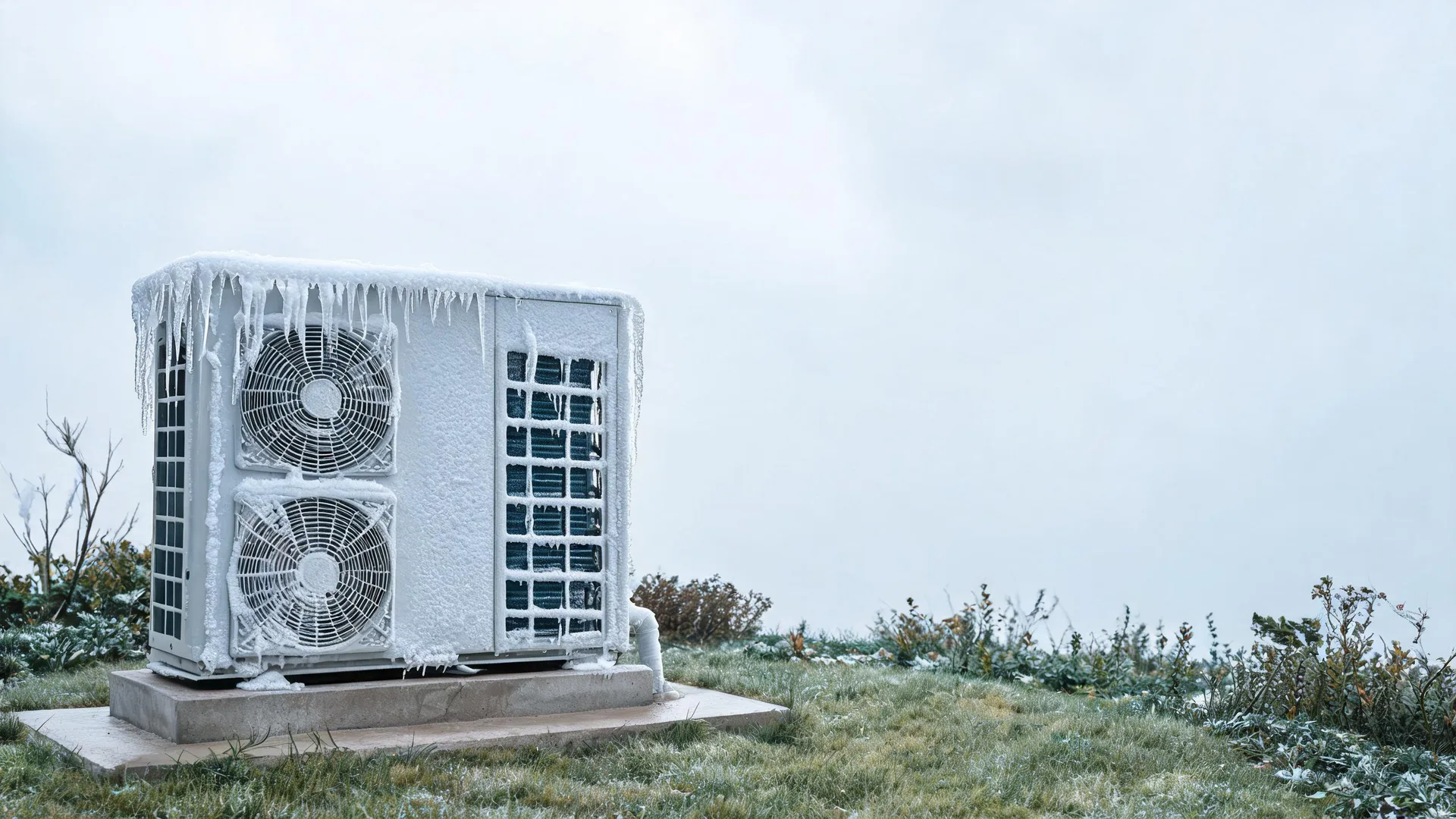
A heat pump that's struggling doesn't fail all at once. A reversing valve stuck between modes forces the compressor to work against itself, and the longer that goes on, the more wear it puts on parts that were fine a week before. Ice on the outdoor coil does something similar. A little frost melts off during a normal defrost cycle, but a coil that stays frozen blocks airflow, so the system runs longer to move less heat and draws more current doing it. A compressor running low on refrigerant overheats trying to make up for what's missing. None of that fixes itself by running longer. It just turns a repair that catches a worn part into one that's replacing a part that seized.

A heat pump that's never been worked on and one with a history of repairs are in different places, even if both are running right now. Each repair is a record of what's already failed and been replaced, so a tech looking at that history can tell whether this latest problem is a one-off or the next in a line. A compressor is the one part that usually decides the question on its own. It's expensive enough and central enough to the system that a failing compressor often settles things, where a bad capacitor or a stuck contactor wouldn't. Age matters less than what's actually broken. A system with a worn fan motor is a straightforward repair. The same system with a dying compressor is a different conversation.