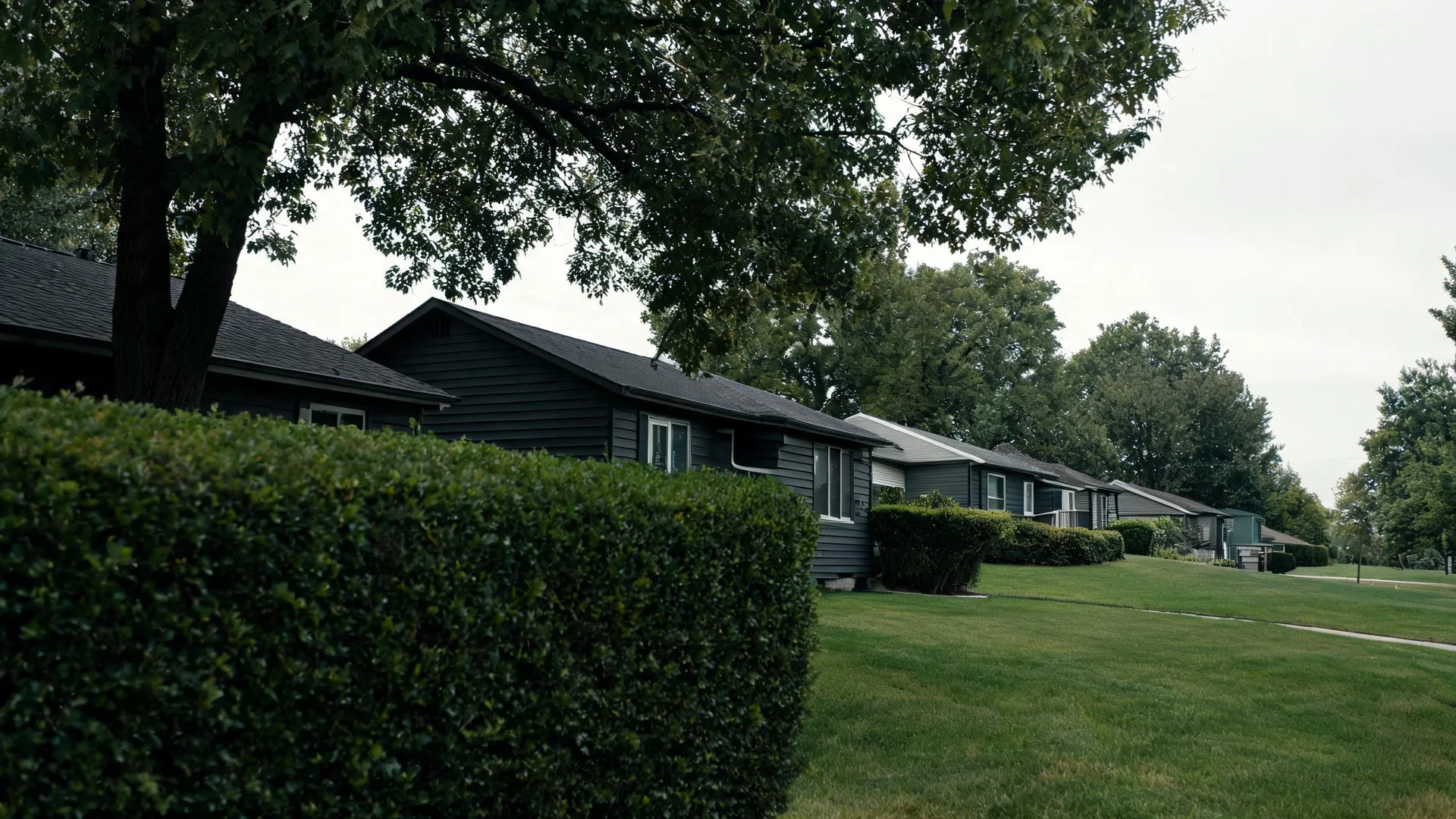






A row of dark-sided single-story houses behind a tall trimmed hedge and a large tree, with a mown lawn and a paved path under an overcast sky.

Heat Pump Repair in Vincennes, IN

Tell us about the job

Takes about a minute. No obligation.

RepairHeat PumpKnox County, IN
Step 1 of 2

What ZIP code is the job in?

Winter nights in Knox County average around 25°F. A heat pump works harder at that temperature, but that's normal running for the system, not something particular to Vincennes. When one stops keeping a house warm, the cause is usually ordinary too. A low refrigerant charge, a failing defrost control, or a reversing valve stuck in one direction. Any of those can show up on a heat pump running through a winter like this one. A contractor can check which part is actually failing and fix that one instead of replacing the unit.

7 months
October through April, your system heats
5 months
May through September, it cools
25°F
the average winter night it heats against
86°F
the average summer afternoon it cools against
Isometric line illustration of a cutaway single-story house showing interior ductwork, an indoor air handler unit, and an outdoor condenser connected by refrigerant lines, with a dark shingled roof.
Your system heats October through April and cools May through September.

NOAA nClimDiv, 1991–2020 normals

October is when heat pumps in Knox County go back to work after sitting idle most of the year.

A weak part that made it through summer often fails in the first cold snap, so early October is a good time to get it checked.

Nothing about Knox County wears out a heat pump faster. When one fails here, it's the same handful of parts that fail anywhere.

Power costs 14.77 cents a kWh statewide
92 damaging wind events from 2015 to 2024
27 hail events from 2015 to 2024

Half the homes in Knox County were built in 1962 or earlier. The house doesn't tell you how old the heat pump is, but if yours came with the house, or came with whatever system replaced the original, it may be closer to the end of its life than the start. That changes the question. Instead of just asking what's wrong, ask the contractor how much life is likely left in the unit before fixing the part that's failing now. A reversing valve or a compressor near the end is a different decision than a thermostat or a capacitor, which is worth fixing on a system of any age.

Most heat pump problems here have a straightforward fix

Knox County sees its share of storms and power interruptions, but none of that wears out a heat pump any faster than normal running does. When one stops heating, a contractor can usually trace it to a specific part and fix that part. Get it looked at before the next cold stretch asks more of it.

Find a contractor
A man in a cap, dark long-sleeved shirt and tan work pants carries a worn duffel bag as he climbs concrete steps toward an orange front door, with a potted shrub beside the entry.
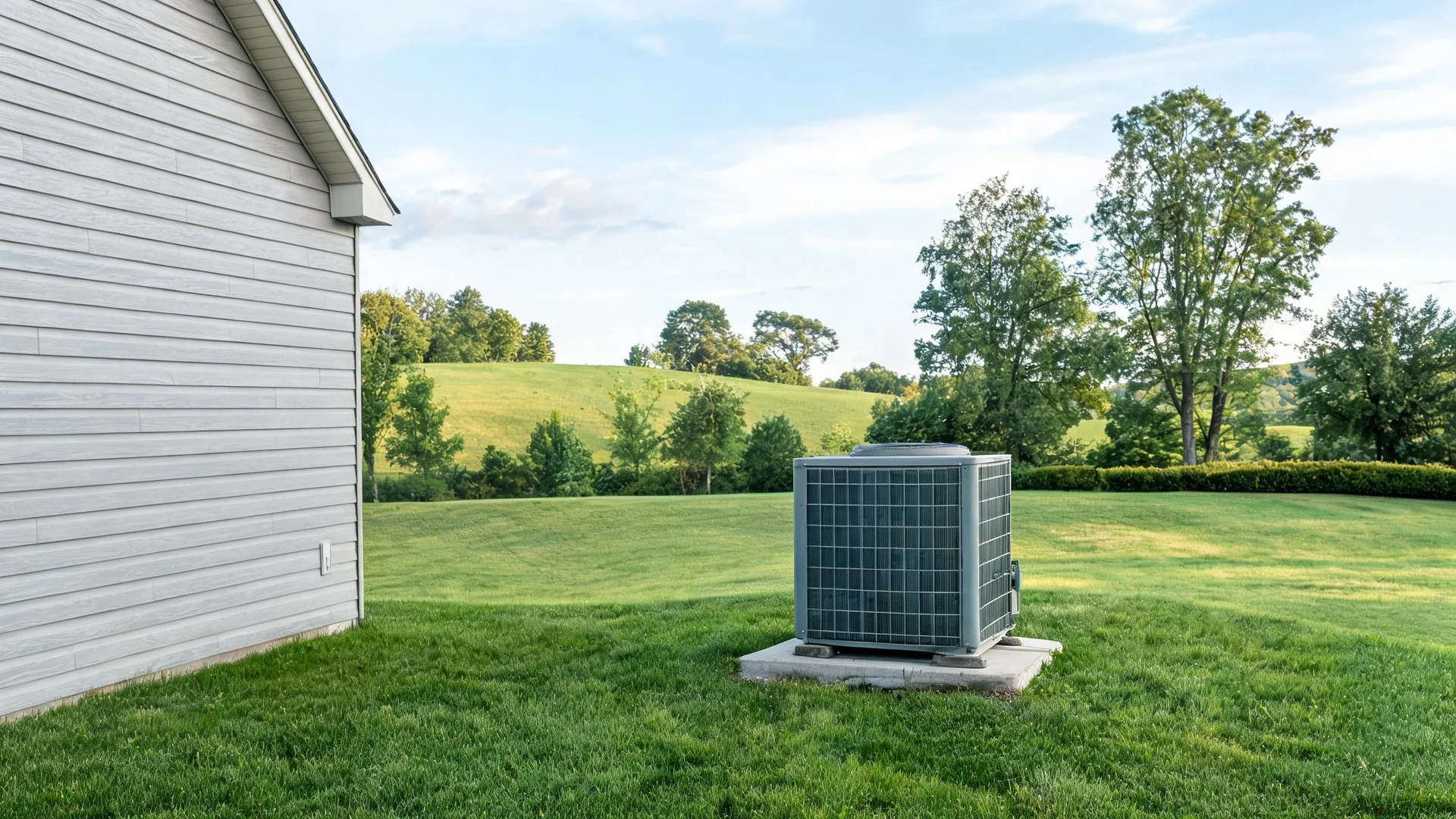
A gray heat pump condenser unit mounted on a concrete pad against the gray lap-siding exterior wall of a house.

How many winters has this one already put in

A heat pump in a house this age may be the original, or it may already be a replacement. The time-lapse shows one day, but the question that matters is how many winters this unit has behind it. Ask the contractor for a straight answer on that before deciding what to spend on the part that's failing now.

Most failures are electrical, not mechanical

A capacitor weakens, a contactor pits and sticks, a circuit board trace fails. These parts control the compressor and fan rather than moving refrigerant, and they fail more often than the compressor itself does. A contractor can test each one directly instead of guessing.
The part that fails changes what happens next

A failing capacitor or contactor is a straightforward swap once it's confirmed. A compressor or a reversing valve stuck mid-cycle is a harder call, since either one can mean the unit is better replaced than repaired. Finding out which kind of failure this is comes first.

A heat pump that's struggling usually tells you before it quits outright. The air coming from the vents turns lukewarm, or the system runs long stretches without the house getting any warmer. Ice building up on the outdoor unit and not clearing during the defrost cycle is another sign, especially if it keeps happening rather than melting off on its own. Listen for anything new too. A clicking that keeps repeating instead of a single click at startup, a hum with no fan movement, a hard clunk when the system switches between heating and cooling. Short cycling, where it turns on and off every few minutes instead of running a full cycle, points to a different problem than a unit that runs constantly and never catches up. Any of these is worth a call before the one night it doesn't come on at all.

A diagnostic visit starts outside, at the unit itself, before anyone touches the thermostat. A contractor checks refrigerant pressure, looks at the reversing valve, and watches how the defrost cycle behaves, since that tells them whether the system is actually stuck or just running normal for the conditions. Inside, they test the capacitor, contactor, and circuit board under power rather than guessing from how they look, because a part can look fine and still fail under load. They also check the airflow across the indoor coil, since weak airflow can mimic a refrigerant problem and send someone chasing the wrong fix. The goal of the visit is narrowing it to one part, confirmed by a reading or a test, not a list of things that might be wrong.