




Dark-sided single-story buildings with gray shingled roofs behind trimmed hedges, a mown lawn, and large leafy trees overhead.

Heat Pump Repair in Terre Haute, IN

Tell us about the job

Takes about a minute. No obligation.

RepairHeat PumpVigo County, IN
Step 1 of 2

What ZIP code is the job in?

October is when most heat pumps in Vigo County get switched over from cooling to heat for the first time since spring. That switch is where a weak part finally gives out. A contactor or a reversing valve that's been marginal all summer can get through cooling fine and then fail the moment it has to run the system backward. If your heat pump is blowing cold air or not keeping up now that the weather turned, that's usually not a new problem. It's an old one showing up under new load.

7 months
October through April, your system heats
5 months
May through September, it cools
23°F
the average winter night it heats against
85°F
the average summer afternoon it cools against
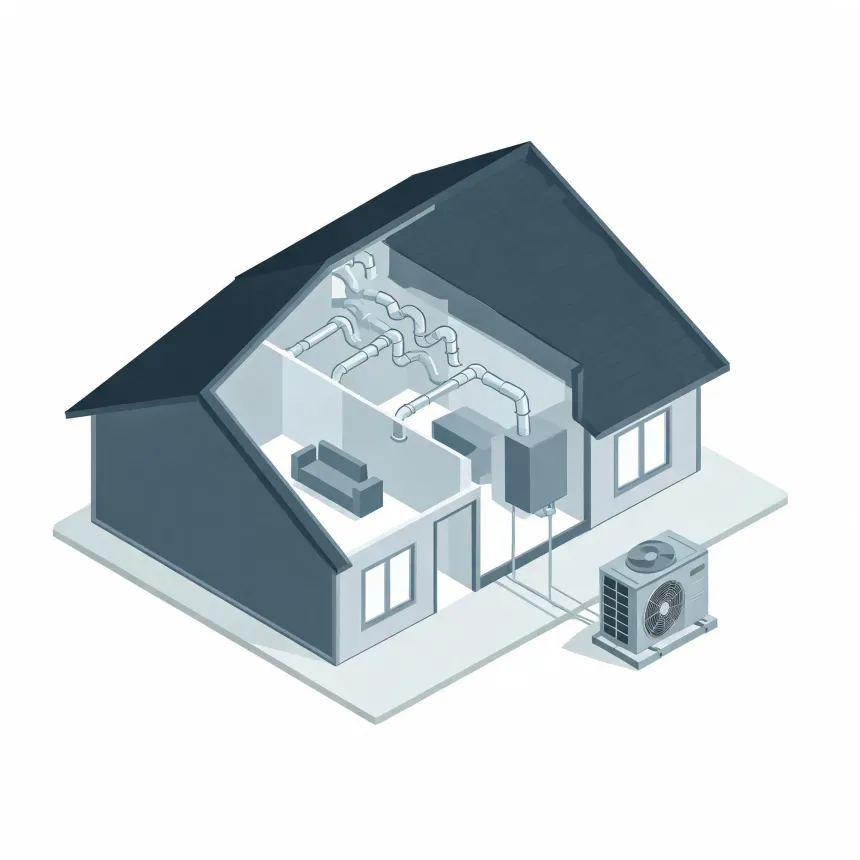
Isometric cutaway illustration of a house showing interior ductwork, an indoor air handler unit, and an outdoor condenser unit beside the building.
Your system heats October through April and cools May through September.

NOAA nClimDiv, 1991–2020 normals

Winter nights here average 23°F, not far below zero.

A heat pump in Vigo County isn't fighting extreme cold, so a unit that's been maintained usually still has what it takes to be fixed instead of replaced.

A heat pump running badly here costs you every month until it's fixed

Power costs 14.77 cents a kWh statewide
49 damaging wind events from 2015 to 2024
22 hail events from 2015 to 2024

Half the homes in Vigo County were built in 1968 or earlier. If your heat pump came with a house that old, it's probably not the first one the house has had, and it may be getting close to the end of what it can do. That doesn't mean the repair isn't worth making. A reversing valve or a contactor failing is a specific, fixable problem, separate from how many years are left on the unit overall. Before paying for a bigger repair, it's worth asking the contractor how much life the system has left in it.

Find out what it needs, then decide

A failed part doesn't mean a failed system. Get the repair diagnosed before putting money toward anything bigger.

Find a contractor
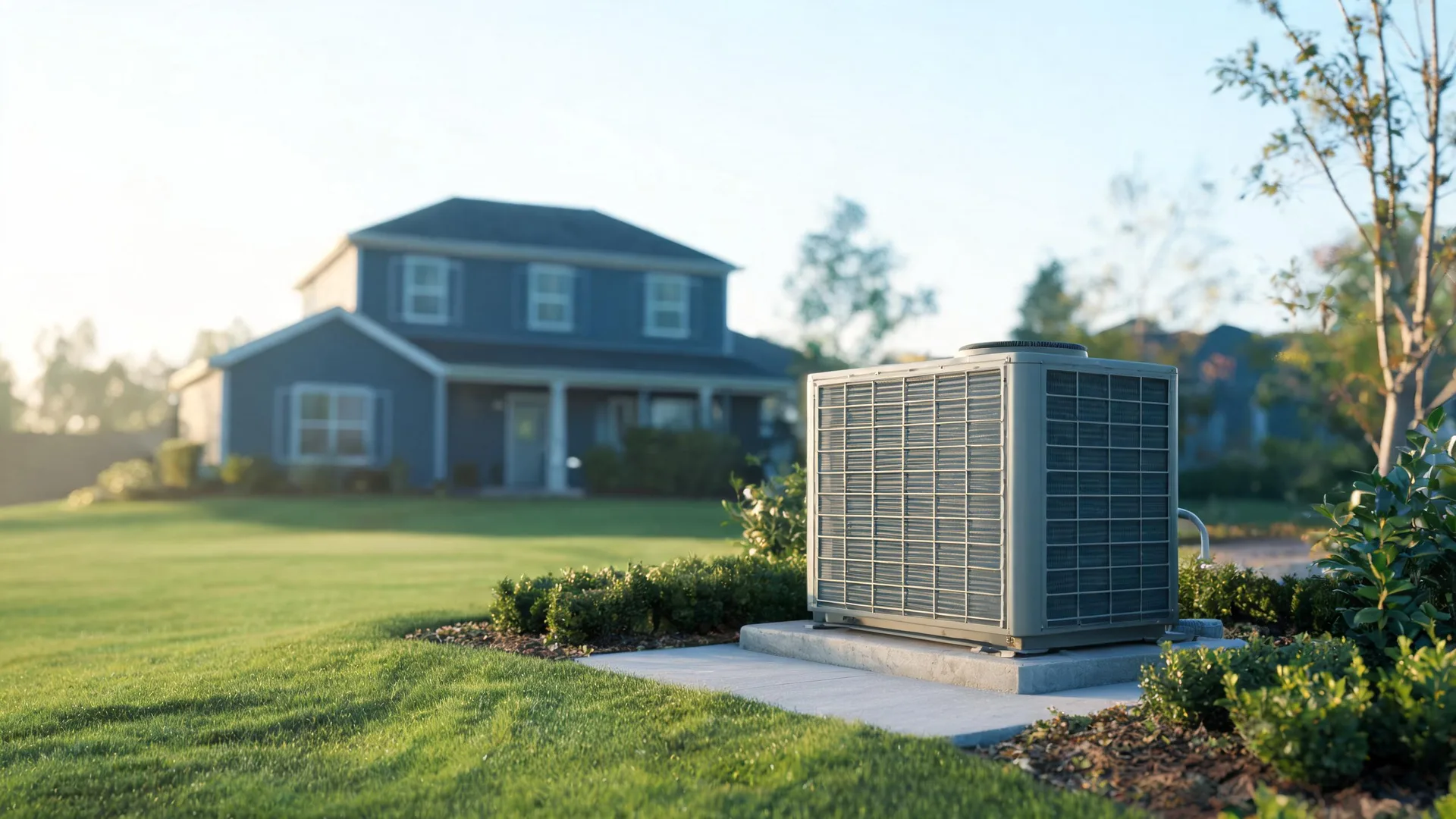
A residential heat pump outdoor unit mounted on a concrete pad next to a house with gray vinyl siding.

Ask what the years already on it mean for the years left

A heat pump that's run for decades has done it through every one of those years, not just this one. The day and night stacked up here are the hours and cycles already spent before this repair. That's not a reason to assume the worst about it. It's a reason to ask the contractor, before any work starts, how many years they'd expect to get out of it after this fix.

What you can check yourself

Look at the outdoor unit first. If it's caked in ice or snow, that's not always a problem by itself, heat pumps frost up and defrost on a cycle. But if it's solid ice and never clears over a few hours, something's wrong. Check that nothing is blocking airflow around the outdoor unit, no leaves packed against the coil, no snow piled against the side. Inside, check your thermostat is actually set to heat, not just running the fan, and swap the filter if it's dark or clogged. A dirty filter can starve the system enough to make it seem broken when it isn't.
What's not worth trying yourself

Don't chip ice off the coil or spray anything on it. The coil fins bend easily and a damaged coil is a worse repair than whatever's causing the ice. Don't take the outdoor panels off to look at the reversing valve or the contactor. Those carry line voltage, and the reversing valve especially needs a trained eye to tell if it's stuck versus just slow to shift. If the system is blowing air that's cold instead of warm after you've checked the filter and thermostat, that's the point to call someone rather than keep testing it yourself.

A heat pump fails in a few predictable places. The reversing valve is one, since it's the part that shifts the system between cooling and heating, and a coil inside it can weaken over years of switching back and forth until the valve sticks halfway. The contactor is another, the switch that sends power to the outdoor unit, and its contacts pit and burn a little every time they close until they stop closing reliably. The capacitor that gets the compressor and fan motors started wears down too, and a weak one makes the outdoor unit hum without starting or shut off on its own. Low refrigerant almost always means a leak somewhere in the line, not the system just running low over time, so topping it off without finding the leak only buys a little time. None of these are wear items you can inspect yourself, but all of them are things a contractor can test and confirm in one visit.

A diagnostic visit starts outside, with the system running so the contractor can see the actual fault instead of guessing at it. They'll check pressures with gauges on the line set, since that's the only real way to confirm a refrigerant leak instead of just topping off a system that'll leak down again. They'll test the contactor and capacitor with a meter rather than by eye, because a contactor can look fine and still not be passing full power. If the reversing valve is suspect, they'll check it both energized and not, since a valve that's stuck halfway can look like it's shifting when it isn't. Most of this takes one visit. What it ends with is a specific part named as the problem, not a guess, and some sense of whether that part is the only thing wrong with the system.