






An outdoor heat pump unit mounted on a concrete pad beside a house with beige siding and a landscaped garden bed.

Heat Pump Repair in Seymour, IN

Tell us about the job

Takes about a minute. No obligation.

RepairHeat PumpJackson County, IN
Step 1 of 2

What ZIP code is the job in?

Zone 4A means winters cold enough to ask real work of a heat pump and summers humid enough to ask the same on the cooling side. Seymour gets both, not just one. Overnight lows average 25°F through December, January and February, so a heat pump here runs a real heating load, not a light one. But it's not extreme cold, and it's not extreme heat either, so the system isn't pushed to its limits in either direction. A unit that's seen normal use here has usually been worked, not worn out. That's worth knowing before you decide whether a repair makes sense.

7 months
October through April, your system heats
4 months
June through September, it cools
25°F
the average winter night it heats against
85°F
the average summer afternoon it cools against
Isometric line illustration of a cutaway single-story house showing interior rooms with beds and furniture, ceiling ductwork connected to an indoor air handler, and an outdoor condenser unit linked by refrigerant lines.
Your system heats October through April and cools June through September.

NOAA nClimDiv, 1991–2020 normals

September is the last mild month before heat pumps here switch over to heat.

A weak part that made it through last winter often fails in that first cold snap in October, not months into it.

Seymour doesn't push a heat pump to extremes. Most problems here are ordinary ones.

Power costs 14.77 cents a kWh statewide
15 hail events from 2015 to 2024
Winter nights average 25°F
Older homes, same heat pump problemsHalf the homes in Jackson County were built in 1978 or earlier, and mobile homes are 11.9% of the housing stock.

If a repair tech comes back saying your heat pump is worth fixing, that squares with what this climate does to the equipment. A system that hasn't been run at the extremes doesn't develop the kind of wear that makes repair a losing bet. Hail is part of the picture too. Jackson County saw 15 hail events between 2015 and 2024, and the outdoor unit sits right out in it. A dented cabinet usually doesn't mean much, but hail can bend fins or damage the fan blade, and that's worth having a tech check even if the system still runs.

It's usually worth repairing

It has an easier job here than in most places, so your heat pump is often in decent shape. Repair is usually worth it.

Find a contractor
A white mini-split heat pump outdoor unit mounted on a concrete pad beside a gray-sided house, surrounded by gravel and green shrubs.

What a struggling heat pump sounds and feels like

A heat pump that needs attention usually tells you with sound or with temperature, not with a warning light. Listen for it running longer than it used to, or cycling on and off more than it should. Feel for air at the vents that's cooler than it ought to be in heating mode, since this system moves heat rather than burning fuel to make it, and a weak component shows up first as a smaller difference between the air going in and the air coming out. Ice on the outdoor unit beyond a normal defrost cycle is worth noting. So is a reversing valve that hesitates or won't switch the system between heating and cooling, which often sounds like a clunk or a stall at the changeover. Any of these is worth a call before the next hard freeze, not after.

Check the thermostat settings first

Make sure it's set to heat and the set point is above room temperature. A heat pump thermostat often has an emergency heat setting separate from the normal one, and if someone bumped it, the system runs differently than you'd expect. Check the batteries too, if it's a battery model, since a dying thermostat can cause short cycling or no response at all.
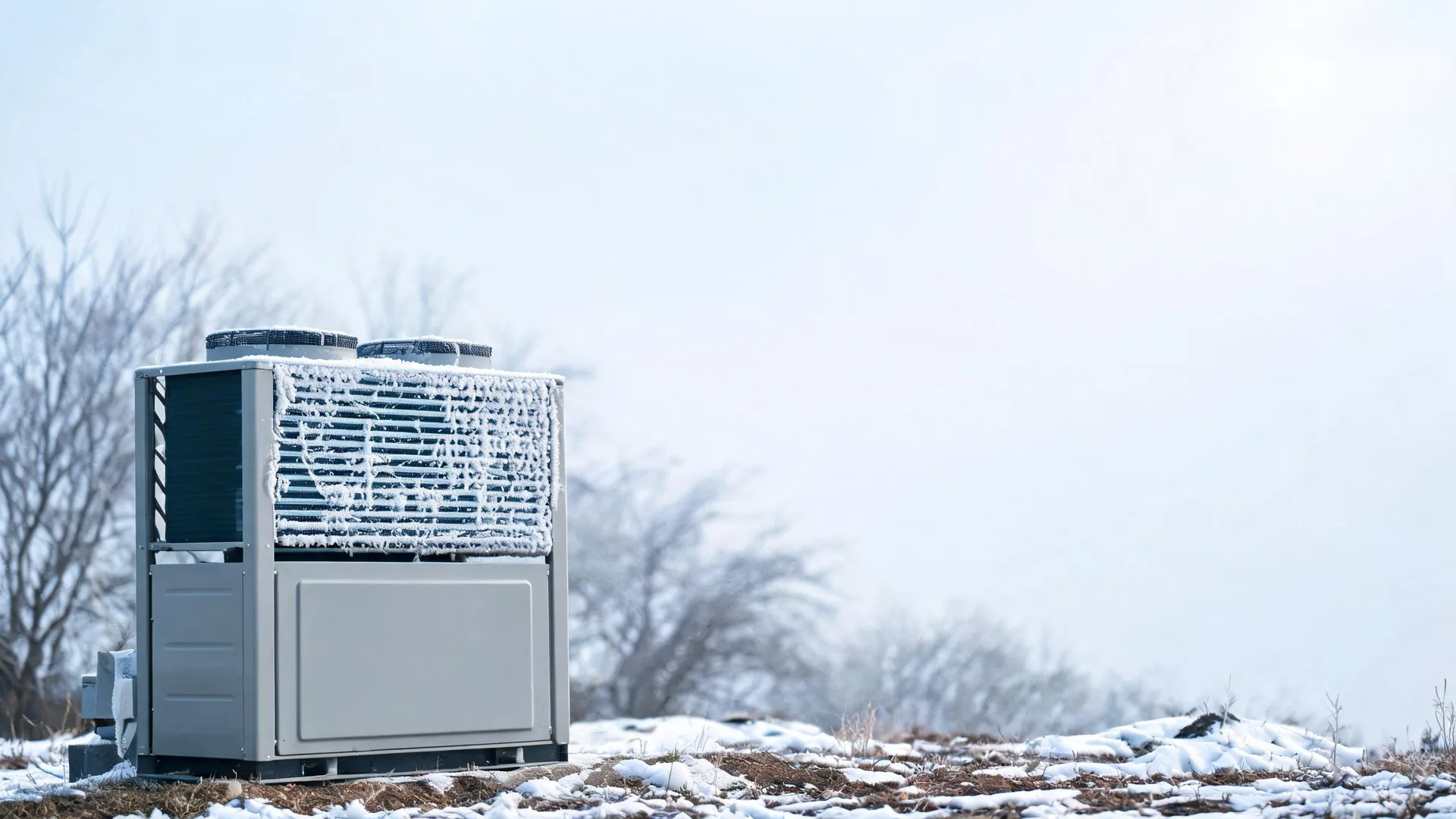
Look at the outdoor unit before you call

Walk outside and see if the outdoor unit is buried in leaves, snow, or ice beyond a normal thin frost layer. Clear away anything blocking airflow around it, since the outdoor coil needs open air to do its job. Check that the disconnect switch nearby, if there is one, hasn't been bumped off. None of this requires opening the unit, just a look and a clear path around it.

A low charge or a dirty coil does not stop a heat pump from running. It just makes the system work longer to move the same heat, and that extra runtime is what turns a small problem into a bigger one. A reversing valve that is starting to stick gets worse with every cycle it is forced through, until it sticks all the way and leaves you on heat or cool with no way to switch. Ice that is not clearing in a normal defrost cycle builds a little more each time the system runs, and once it blocks the outdoor coil, the unit has to work harder to move the same heat. None of this fixes itself by running longer. Caught early, most of these are an ordinary repair. Left running, they tend to take the compressor down with them, and that is a different repair altogether.

A tech weighing repair against replacement is really asking one question. Is the compressor still good. The compressor can't be swapped out on its own without the cost and risk starting to rival a new system. So if it's running fine and the problem is a capacitor, a contactor, a fan motor or a reversing valve, that's a straightforward repair on a system worth keeping. Age matters less than how the system has been run and maintained. A heat pump that's had its coils cleaned and refrigerant charge checked regularly tends to fail part by part, with plenty of warning, rather than all at once. One other thing worth asking is whether the system still uses a refrigerant that's being phased out. If it does, a repair that needs a refrigerant recharge can get expensive or hard to source, and that's worth weighing even when the compressor itself is fine.