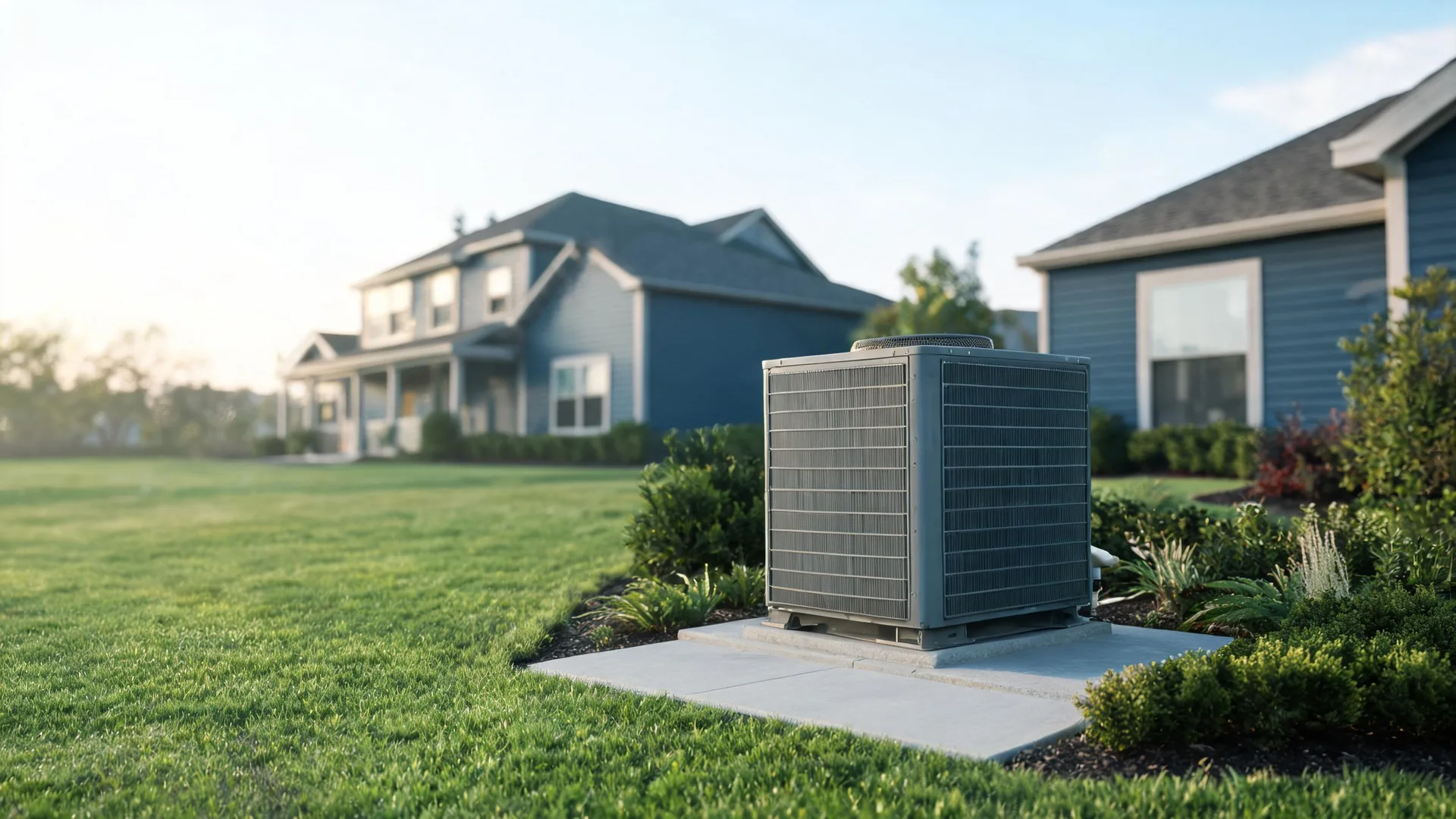
An outdoor air conditioning condenser unit mounted on a concrete pad in front of a single-story suburban house.

Heat Pump Repair in Richmond, IN

Tell us about the job

Takes about a minute. No obligation.

RepairHeat PumpWayne County, IN
Step 1 of 2

What ZIP code is the job in?

September is when a weak heat pump shows itself

Heat here starts up in October, and a heat pump that's been sitting idle usually gets its first real workout in September when someone turns it on and expects it to switch over. A part that was already marginal, a contactor, a capacitor, a low charge, tends to fail right at that first demand, not months into the season.


The same goes for the switch back in May

Cooling starts in June, so May is the other month a heat pump in Richmond gets pushed hard after sitting unused. If a repair call comes in right at one of these changeovers, that timing itself is a clue, and it's worth telling the contractor when the trouble started relative to the season change.

8 months
October through May, your system heats
3 months
June through August, it cools
22°F
the average winter night it heats against
83°F
the average summer afternoon it cools against
Isometric cutaway illustration of a small house showing interior ductwork and an air handler connected by lines to an outdoor condenser unit on a pad beside the building.
Your system heats October through May and cools June through August.

NOAA nClimDiv, 1991–2020 normals

Winters here average 22°F overnight, and heating is the bigger load on a Wayne County heat pump, not cooling.

A unit that's not fighting extreme heat or extreme cold most of the year has less wear behind it, so a repair now is more likely to hold.

Power here runs 14.77 cents a kWh, so a heat pump running on a bad part is costing you now

Power costs 14.77 cents a kWh statewide
68 damaging wind events from 2015 to 2024
14 hail events from 2015 to 2024

Most calls start with the thermostat set right where it should be and nothing happening. The system might run constantly without ever bringing the house to temperature, or it clicks on and off every few minutes instead of running a full cycle. Both are signs something's making the system work harder than it should to satisfy the thermostat. A hissing or bubbling sound from the lines points to refrigerant escaping somewhere it shouldn't. A heat pump blowing air that feels like room temperature, neither warm nor cool, often means the reversing valve isn't switching the way it's supposed to. Outside, listen for a grinding or clicking from the unit itself. That's usually a motor or a fan bearing giving out, not something that gets better if you wait.

A heat pump that hasn't been overworked is usually worth repairing

This one isn't fighting Indiana summers or brutal cold most of the year. Winters here sit around 22°F overnight, and that's the bigger load, not the heat. Less strain over the years means whatever's wrong now is more likely a single bad part than a system giving out. Worth getting a contractor out to look before you write it off.

Find a contractor
A man in a cap, gray t-shirt and brown work pants climbs porch steps toward an orange front door, carrying a canvas and leather tool bag.
A residential heat pump outdoor unit mounted on a concrete pad next to a house with gray vinyl siding.

Ask whether this is the original unit

If the system came with the house rather than a recent install, age is worth asking about directly. A contractor can look at the compressor and tell you whether it's original to the house or already a replacement. That changes what a repair now is worth. A unit nearing the end of a normal lifespan is a different call than one with years left in it, even if the part that's failing looks the same either way.

What you can check safely

Make sure the thermostat is set to heat or cool as expected and the batteries aren't dead. Check the breaker box for a tripped breaker on the heat pump and the air handler. Look at the outdoor unit and clear away leaves, ice or anything blocking airflow around the coil. Pull the air filter and hold it up to light. If you can't see through it, replace it. None of this calls for opening the unit or touching refrigerant lines.

What to leave for the contractor

If the outdoor unit is caked in ice beyond a thin frost, if it's making a grinding or clicking noise, or if it runs constantly without warming or cooling the house, that's a part failing inside, not something to troubleshoot yourself. A system that runs but blows air at room temperature usually points to the reversing valve or a refrigerant problem, and both need gauges and training to diagnose. Shut it off at the thermostat if something sounds wrong and let the contractor take it from there.

A heat pump that's struggling doesn't fix itself by staying on. If the reversing valve is stuck or the charge is low, the compressor keeps trying to do its job and running past what it's built for to do it. That's how a bad part turns into a bad compressor. Ice on the outdoor coil works the same way. A thin frost melts off in the defrost cycle, but a thick buildup blocks airflow, and the system keeps pulling in a unit that can't shed heat properly. Short cycling wears on the contactor and the start components every time it kicks on and off trying to satisfy the thermostat. The longer any of this runs, the more parts are forced to work around whatever's already failing.

A diagnostic call starts with the contractor asking what the system is doing and when it started, then confirming it at the thermostat before anything gets opened. Outside, they check the readings off the suction and liquid lines against what the system is supposed to be running, because that tells them if the charge is right before they touch anything else. They'll pull the cover on the contactor and capacitor and look for pitting or a capacitor that's swollen or reading off. If the compressor is running but the house isn't getting warm or cool air, they're checking the reversing valve next, since that's what tells the system which direction to move heat. Electrical readings on the compressor windings rule out a short or a winding that's failing before anyone commits to a repair. By the end they can usually tell you if it's one part or if the compressor itself is the problem.