Dark-painted single-story houses with gray shingle roofs behind a trimmed green hedge and mown lawn, surrounded by leafy trees under an overcast sky.

Heat Pump Repair in Portage, IN

Tell us about the job

Takes about a minute. No obligation.

RepairHeat PumpPorter County, IN
Step 1 of 2

What ZIP code is the job in?

What the repair history tells you

A heat pump that keeps needing attention is telling you something the next repair bill will not fix. A compressor or reversing valve going bad on an older unit often costs close to a new system by the time labor and refrigerant are added in. A single failed capacitor or contactor on a unit that has otherwise run fine is a different story and almost always worth fixing.

What runs in a heat pump's favor or against it

A heat pump runs in both directions, heating in the cold months and cooling in the warm ones, so it logs more hours than equipment that only does one job. Those hours add up on the compressor and the reversing valve. A technician checking the charge, the valve and the compressor can tell you whether the current failure is isolated or a sign the unit is wearing out as a whole.

8 months
October through May, your system heats
3 months
June through August, it cools
20°F
the average winter night it heats against
82°F
the average summer afternoon it cools against
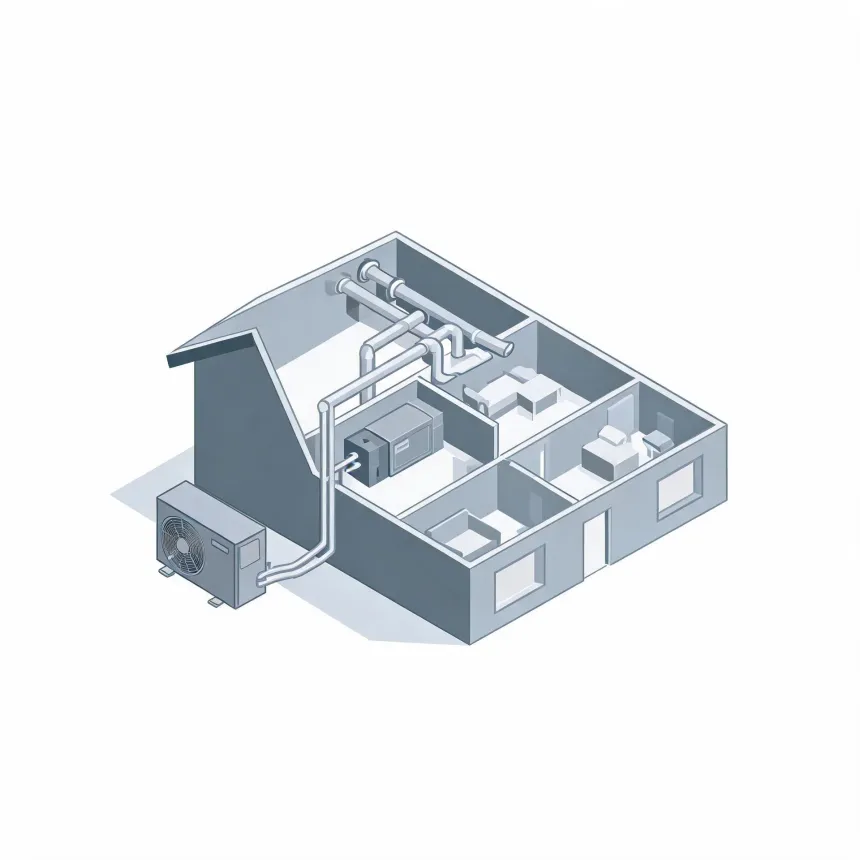
Isometric grayscale illustration of a cutaway house showing interior rooms, ducted air handler and duct runs, connected by pipes to an outdoor condenser unit beside the building.
Your system heats October through May and cools June through August.

NOAA nClimDiv, 1991–2020 normals

Portage winters bring overnight lows around 20°F, and this is zone 5A, a cool climate where heating carries the bigger load.

A heat pump here works hardest on the coldest nights, so a unit struggling to keep up in January is doing the job it was always going to be asked to do.

At 14.77 cents a kWh, a heat pump running wrong is a bill you'll notice

Power costs 14.77 cents a kWh statewide
101 damaging wind events from 2015 to 2024
26 hail events from 2015 to 2024

Heat here runs October through May, which makes September the month to get a heat pump looked at. The first cold nights after months of cooling-only duty are when a weak part finally gets asked to do something different, and that's when it quits. A contactor or capacitor that was fine running the AC all summer can fail the first time the reversing valve switches over for heat. Same at the other end of the calendar. May, right before cooling starts in June, is when a unit that sat idle on the heat side shows a problem it was hiding all winter. Either changeover is a reasonable time to have it checked before the season actually needs it.

Half the homes here were built in 1982 or later

Porter County splits right down the middle, half its homes built in 1982 or earlier, half in 1982 or later. If your heat pump came with one of the newer ones, it hasn't had time to rack up the hours that wear out a compressor or a reversing valve. That makes repair the right call more often than not.

Find a contractor
A man in a dark shirt and tan pants, seen from behind, carries a canvas duffel bag up porch steps toward an orange front door beside a potted shrub.
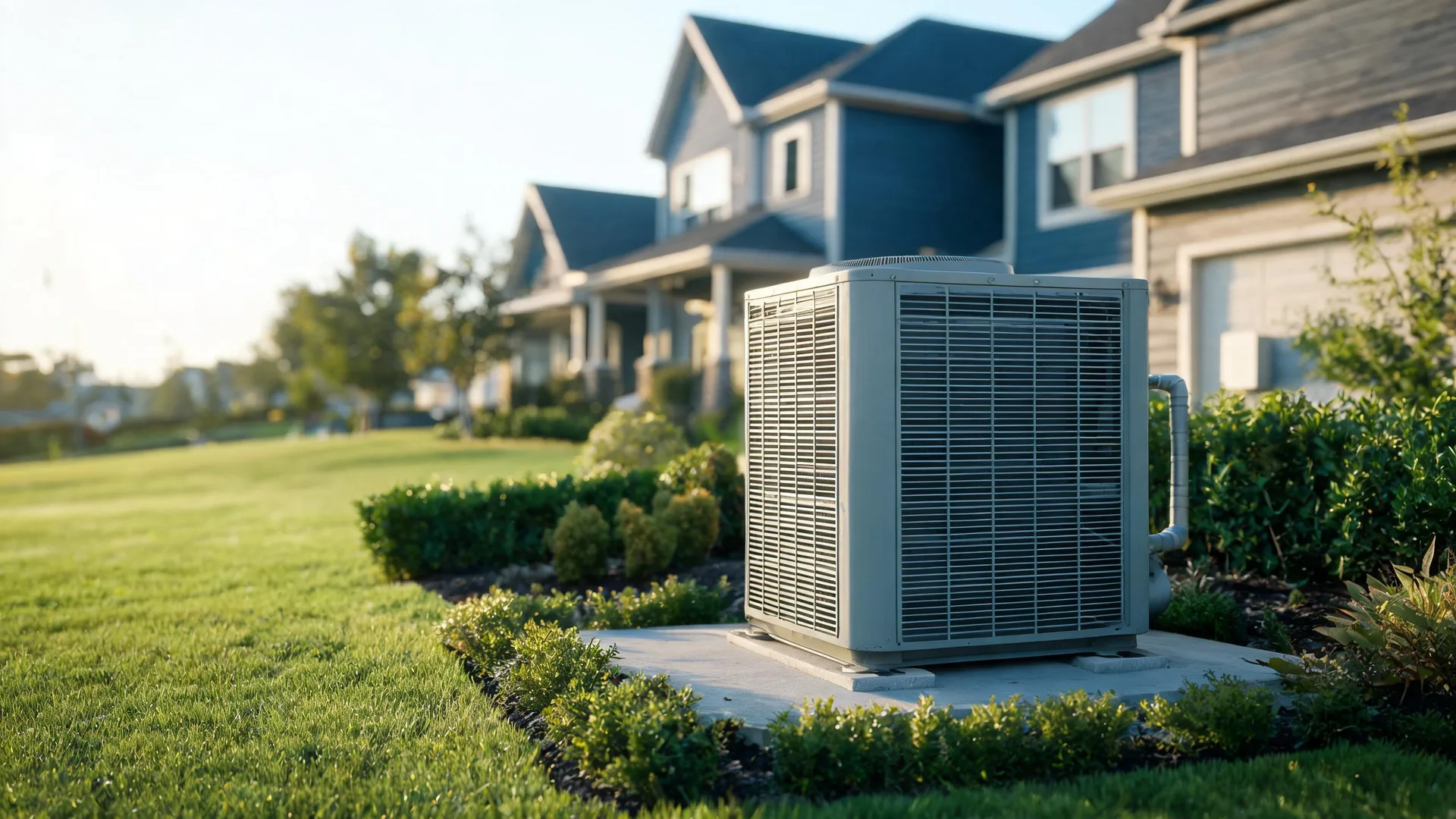
A dark gray heat pump unit mounted on a concrete pad next to a house with gray siding and a stone veneer wall.

A newer system is worth fixing first

If your heat pump came with the house and the house is newer, get the actual failure diagnosed before anyone talks replacement. A younger compressor or reversing valve still has most of its working life ahead of it, so a contactor or capacitor failing on that unit is worth fixing outright. Ask the technician which part failed before you decide how far to take the repair.

What you'll notice first

A heat pump in trouble usually shows up as warm air blowing when it should be cold, or cold air blowing when it should be warm. Sometimes it runs constantly and never seems to shut off. Sometimes it short cycles, kicking on and off every few minutes. Ice building up on the outdoor coil when it shouldn't be there is another sign, same with the outdoor unit humming but the fan not turning.

What those signs are worth paying attention to

Air coming out the wrong temperature often points to the reversing valve stuck in one position. Constant running or short cycling can mean a weak capacitor, a failing thermostat, or low refrigerant charge. Ice that won't clear points to airflow trouble or a charge problem, and a humming unit with a fan that won't spin usually means the fan motor or its capacitor has had it. None of these get better by waiting. A heat pump working against a bad part just wears the rest of the system down faster.

Before anyone comes out, a few things are safe to check yourself. Look at the thermostat first. Make sure it's set to heat or cool as intended and the temperature you want is actually above or below the current room temperature. Check your breaker panel for a tripped breaker on the outdoor unit, a heat pump that won't start at all sometimes just lost power. Walk outside and look at the outdoor unit. Leaves, grass clippings or a cover pressed against it can block airflow and make the whole system struggle. Check your air filter too, a filter packed with dust chokes airflow on both sides of the system. If the outdoor coil is caked in ice, don't chip at it. Shut the system off and let it thaw, then call if the ice comes back once it's running again.

A diagnostic visit starts with the technician asking what the system is doing and when it started, then watching it run through a full cycle before touching anything. They'll check the refrigerant charge with gauges, test the capacitor and contactor, and look at the reversing valve to see whether it's switching when it should. Electrical readings come next, voltage and amp draw on the compressor and fan motor, since a motor pulling the wrong amperage is wearing out even if it's still spinning. Outside, they'll check the coil for ice or dirt buildup and make sure airflow across it is where it should be. Only after all that does a part get condemned and replaced. Swapping a capacitor on a unit with a failing compressor just means paying for the visit again once the real problem shows itself.