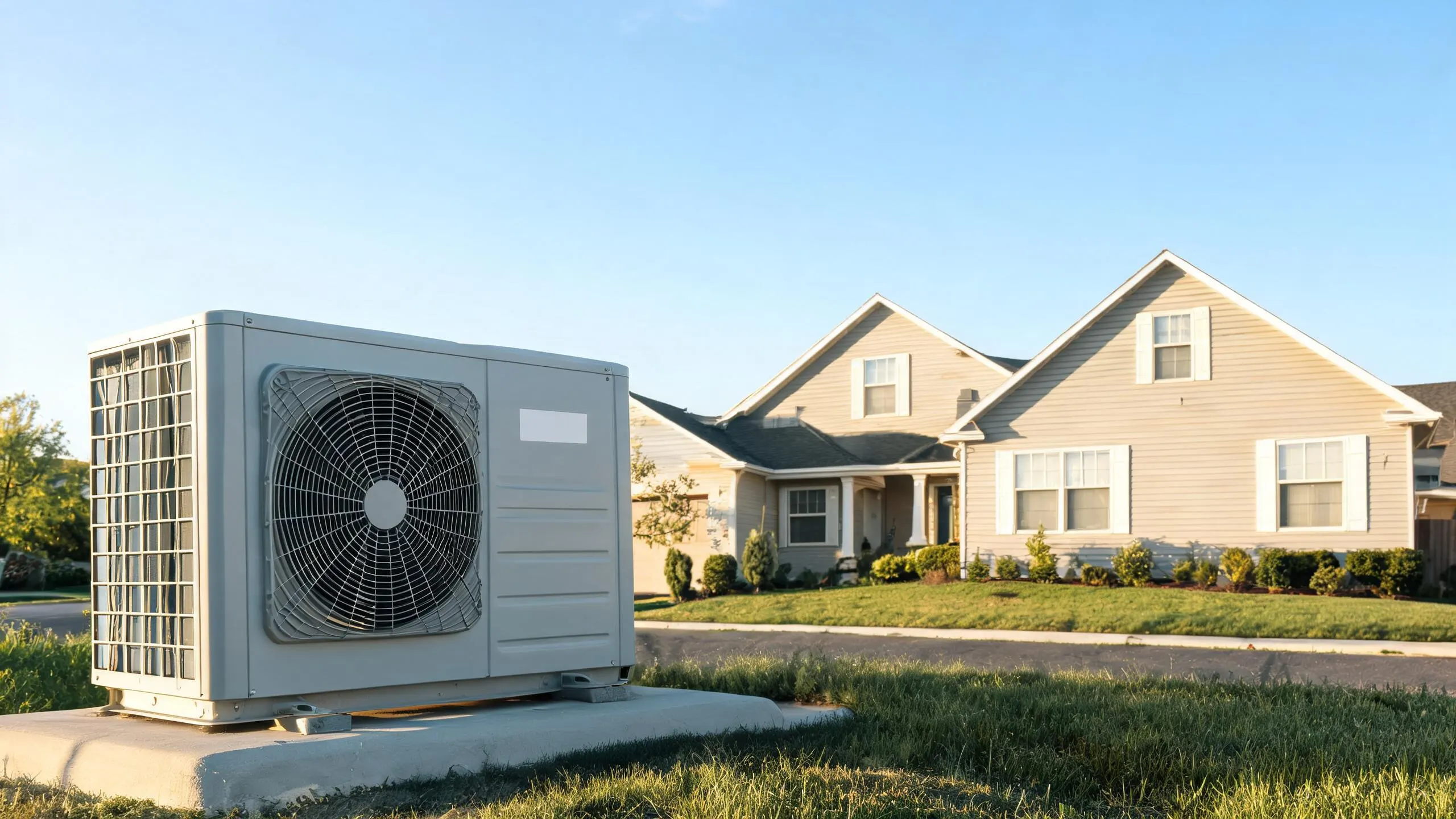






An outdoor heat pump unit mounted on a concrete pad in front of a two-story suburban house.

Heat Pump Repair in New Castle, IN

Tell us about the job

Takes about a minute. No obligation.

RepairHeat PumpHenry County, IN
Step 1 of 2

What ZIP code is the job in?

A heat pump in Henry County works for eight months straight, October through May, so September is the month to catch problems before that stretch starts. The first cold snap is when a weak part gives out, because that's when the system first has to work hard. If yours is already struggling in early fall, don't wait to see if it gets better. It usually means something was already marginal and the cold just found it.

8 months
October through May, your system heats
3 months
June through August, it cools
22°F
the average winter night it heats against
82°F
the average summer afternoon it cools against
Isometric grayscale illustration of a cutaway house showing interior rooms, ceiling ductwork connected to an indoor air handler, and an outdoor condenser unit beside the exterior wall.
Your system heats October through May and cools June through August.

NOAA nClimDiv, 1991–2020 normals

Winter lows here average 22°F, not well below zero.

A heat pump built for Henry County winters isn't running at its limit, so most repairs bring it back fine.

Half the homes here are old enough that their heat pump isn't the original one

Half the homes here were built by 1961
9 hail events from 2015 to 2024
12 winter storms from 2015 to 2024
Running one that's struggling costs you every monthIndiana power ran 14.77 cents per kilowatthour in 2024, and a bad heat pump burns more of it

Since the system isn't being pushed to its limit all winter, a repair technician is usually dealing with a part that failed on its own, not one that burned out from overwork. That's worth knowing when you're deciding whether a repair makes sense. A capacitor, a contactor, a defrost control board, these fail from age and from cycling on and off, not because the unit spent January straining against zero-degree air. Henry County does get its share of rough weather, with 12 winter storms and 9 hail events logged over the past decade, but neither one works on a heat pump the way sustained extreme cold does. Hail can dent a cabinet or bend fins on the outdoor coil. It doesn't wear down the compressor. So if a repair tech finds the cause, fixing it is usually the right call rather than a sign the system is done.

Find out how much life is left before you pay for the repair

If your heat pump is the one that came with the house, half the homes in Henry County are old enough that it's not. A repair tech can tell you whether this is a part worth fixing or a system near the end of its run, before you spend on either.

Find a contractor
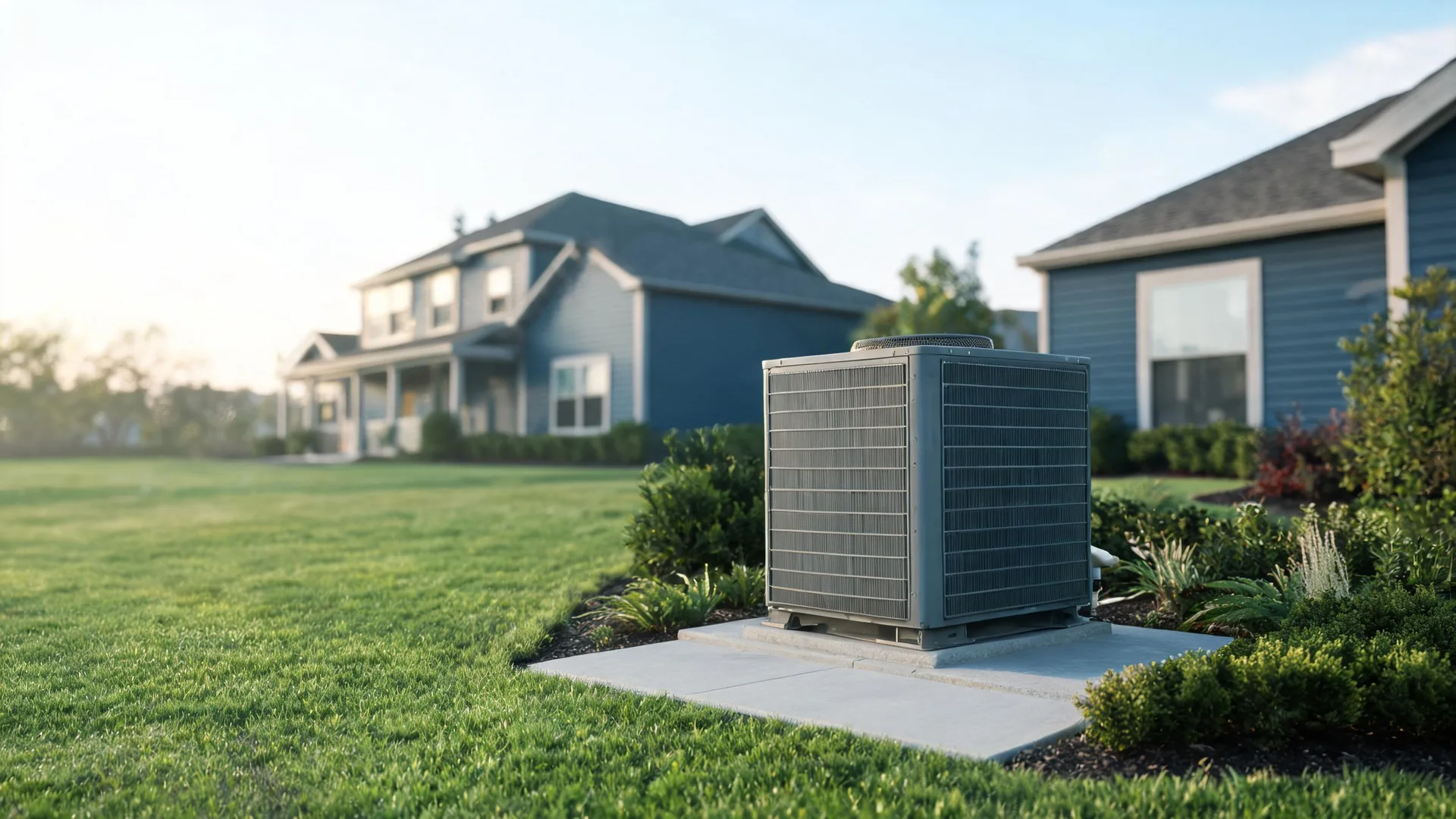
A dark gray heat pump unit mounted on a concrete pad next to a house with gray siding and a stone veneer wall.

What a heat pump tells you before it quits

A heat pump that's struggling doesn't usually go quiet about it. It runs longer than it used to, cycling on and staying on instead of shutting off once the house is up to temperature. Air coming out of the vents feels cooler than normal, not cold, just not quite warm enough to feel right. Ice builds up on the outdoor unit and doesn't clear during the defrost cycle the way it should, so you see frost sitting there for hours. The outdoor fan might run rough or not at all. Some systems start short cycling, kicking on for a few minutes and shutting back off before they've done anything useful, which is hard on the compressor every time it happens. A hissing or bubbling sound near the lines usually means refrigerant escaping, and that's not a wait-and-see problem since the system can't heat properly without the right charge. None of these fix themselves. Once you notice one, the part behind it is already failing, not about to.

What you can check yourself

Look at the outdoor unit first. Clear away leaves, mulch or anything piled against it, since it needs open air on all sides to move heat. Check the air filter and replace it if it's gray or clogged, because a blocked filter starves the system of airflow and can make it run constantly. Walk around inside and make sure no vents are closed off or blocked by furniture. Check the thermostat batteries if it has a screen that looks dim. Look at the breaker panel to see if anything tripped. These take a few minutes and rule out the simplest causes before anyone comes out.
What to leave alone

Don't take the cabinet apart or touch anything inside the outdoor unit. It runs on high voltage and holds refrigerant under pressure, and opening it up without the right tools and training turns a repair into a bigger one. If you see ice on the coil, don't chip at it. Let it be and mention it when you call. If you smell anything burnt or hear grinding from the unit, shut it off at the thermostat or breaker and leave it off until a technician looks at it, since running it that way can turn a fixable part into a replaced one.

Most heat pump failures come down to a handful of parts, and they tend to go the same way every time. A capacitor weakens slowly, giving the compressor or fan motor a harder start each time until one day it can't start at all. A contactor's contacts pit and burn from years of opening and closing, until they stick or stop making contact. The defrost control board can fail outright, and when it does the outdoor coil ices over because the system never gets the signal to clear itself. Refrigerant doesn't get used up, so a low charge almost always means a leak somewhere in the lines or coil, not just age catching up with it. Motors wear at the bearings and start running loud or rough before they quit. None of these parts care how old the system is. They fail because something inside them finally gives, not because the unit got tired.

A diagnostic visit starts outside, not in. A technician checks the outdoor unit's fan, coil and refrigerant pressure before going anywhere near the thermostat, because that's where most heat pump trouble starts. Gauges go on the lines to check the charge, and electrical testing follows on the capacitor and contactor, since a weak reading there explains a lot of what the homeowner noticed. Inside, the technician checks the air handler, the filter and the vents, because restricted airflow can mimic a failing part when nothing's actually broken. The defrost cycle gets checked too, since a board that isn't sending the right signal will ice the coil even when every other part is fine. By the time the gauges and meter come off, the tech usually knows which part is behind it, not just that something's wrong.