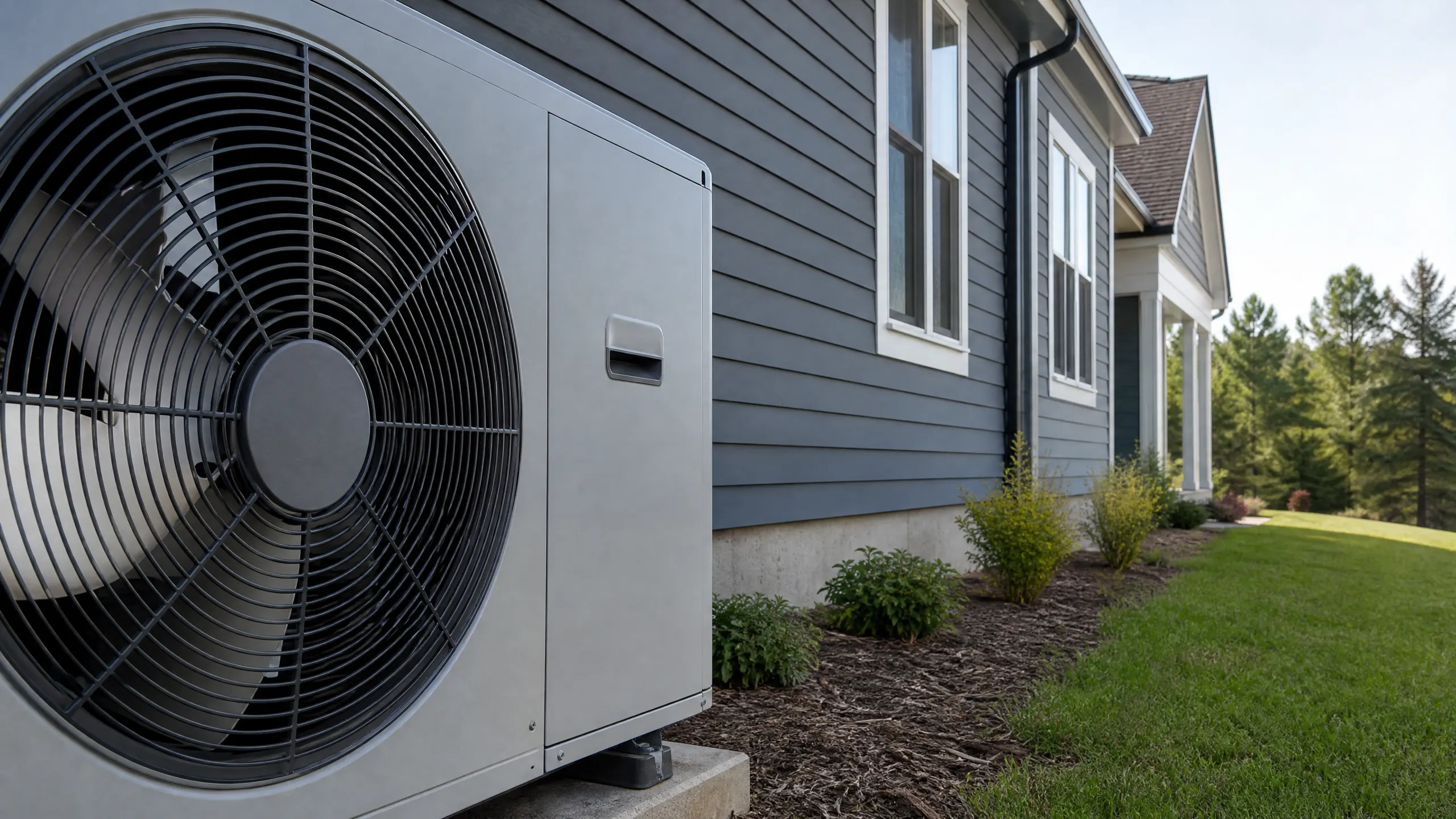







A heat pump outdoor unit mounted on a concrete pad next to the gray-sided exterior wall of a residential house.

Heat Pump Repair in Logansport, IN

Tell us about the job

Takes about a minute. No obligation.

RepairHeat PumpCass County, IN
Step 1 of 2

What ZIP code is the job in?

A heat pump in Cass County works right up through May, then sits for a few weeks before cooling starts in June. That early stretch of hot weather is when a weak part finally gets tested. A capacitor or contactor that was already marginal often won't make it through the first real heat load of the season. Same thing happens in reverse come October, when the system switches over to heat after sitting idle since August. If yours is struggling right at the start of a season, that timing isn't a coincidence, and it's worth having someone look at what's actually failing rather than just resetting it and hoping.

8 months
October through May, your system heats
3 months
June through August, it cools
21°F
the average winter night it heats against
82°F
the average summer afternoon it cools against
Isometric illustration of a cutaway single-family house showing interior ductwork and an air handler, with an outdoor condenser unit connected by lines along the exterior wall.
Your system heats October through May and cools June through August.

NOAA nClimDiv, 1991–2020 normals

Heat pumps in Cass County spend more hours heating than cooling, and winter nights average 21°F, not the deep cold that pushes a system to its limit.

A heat pump that isn't overworked tends to fail from age or a specific bad part, not from years of strain, so repairing it is usually the right call.

A heat pump that's running wrong still runs up a 14.77 cent bill

Power costs 14.77 cents a kWh statewide
58 damaging wind events from 2015 to 2024
10 hail events from 2015 to 2024
Half the houses here are older than your heat pump will ever getHalf the homes in Cass County were built in 1956 or earlier

If a repair tech here tells you a part failed, believe it before you believe the system is worn out. A heat pump that spends most of its life on moderate loads doesn't rack up the stress that shortens a compressor's life. So when something does go wrong, the chances are good it's one part, not the whole unit giving out. A bad defrost board, a failing run capacitor, a stuck reversing valve, these get replaced and the system goes back to doing what it was doing before. Worth getting it looked at rather than planning around a replacement you probably don't need yet.

Know what you're repairing before you pay for it

If your heat pump came with the house, find out how old it actually is before paying for a repair. A unit from the original build is a different call than one swapped in a few years ago. Ask whoever comes out to tell you straight which one you're looking at.

Find a contractor
A man in a cap, dark long-sleeve shirt and tan work pants walks up wooden porch steps toward an orange front door, carrying a canvas tool tote; an orange planter with ornamental grass stands to the right.
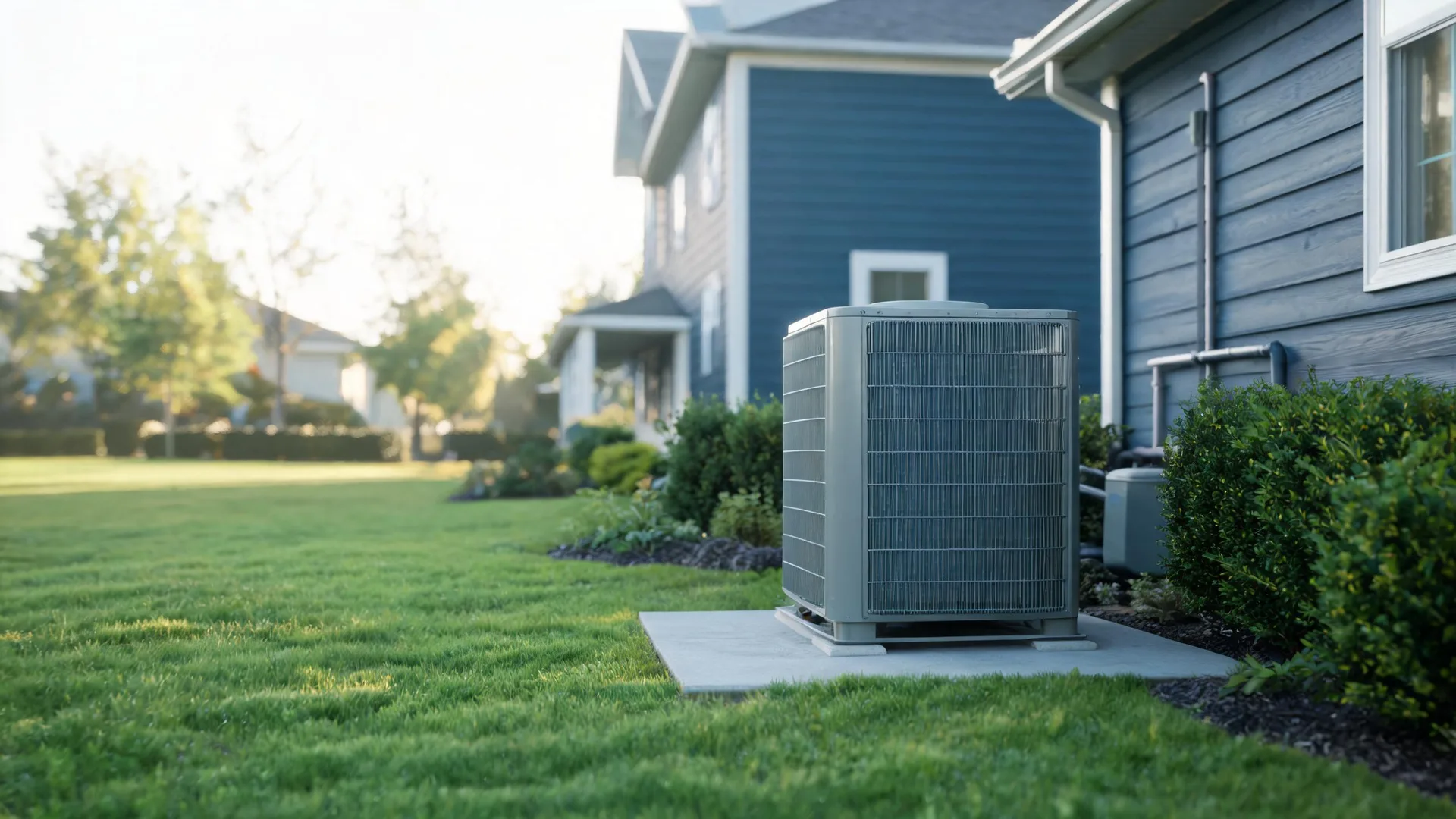
A gray heat pump outdoor unit mounted on a concrete pad next to the stone-accented exterior wall of a house.

What to check before the truck rolls

Before anyone comes out, go outside and look at the outdoor unit. If the fan isn't spinning but you can hear the compressor humming, that's different from the whole thing being dead silent, and it helps whoever shows up to know which one you saw. Check the air filter too. A filter packed with dust chokes airflow across the indoor coil, and on a heat pump that can look like a failing system when it's really just a dirty filter. Look at the outdoor coil itself for a heavy layer of ice. Heat pumps frost up some in cold weather and defrost themselves on a cycle, but a coil solid with ice that isn't melting off points to a stuck defrost cycle, not something you should chip away at yourself. Inside, check the thermostat is set to heat or cool as expected and that the batteries aren't dead, since a blank or unresponsive thermostat sometimes looks like a system failure and isn't one. Last, check your breaker panel. A tripped breaker will shut the whole system down, and it's worth resetting once before assuming the problem is inside the unit.

It's blowing air that isn't the right temperature

A heat pump that runs but puts out air barely different from room temperature is often stuck partway through a cycle, or the reversing valve isn't fully switching between heat and cool. That's not a dying system, it's one part not doing its job, and it keeps the rest of the unit running on borrowed time until it's fixed.
It's short cycling or won't stop running

A heat pump that shuts off shortly after starting is usually tripped by a safety switch protecting the compressor from something else going wrong, like low refrigerant or a dirty coil. One that runs constantly and never satisfies the thermostat is working against something, whether that's a failing sensor or a part that's lost its grip on the cycle. Either way, the fix is finding what's forcing that behavior, not waiting to see if it sorts itself out.

A lot of heat pump failures trace back to the reversing valve or the defrost control, since those parts carry work a straight air conditioner never has to do. The reversing valve switches the refrigerant flow every time the system changes between heat and cool, and that constant back and forth wears at the valve in a way a cooling-only system never experiences. The defrost board watches the outdoor coil and decides when to run a defrost cycle, and if the sensor feeding it goes bad, the board either defrosts when it doesn't need to or skips defrosting when it does. Capacitors and contactors fail the same way they would on any outdoor unit, worn down by the motor starting up again and again. A failing compressor is the most serious cause, but it's also the least common, since most heat pumps show trouble in a smaller part long before the compressor itself gives out.

A diagnostic visit starts outside at the unit itself, not with a clipboard. A tech checks the readings first, the pressures in the line and the temperature of the air coming off the coil, since those numbers point toward which part is struggling before anything gets taken apart. From there it's usually electrical testing, checking the capacitor holds its charge and the contactor is making good contact, because those fail quietly and show up on a meter before they show up as a dead unit. If the complaint is about heating or defrost, the reversing valve and defrost board get checked next, since a valve that's not fully switching or a board misreading the coil temperature causes exactly the kind of symptoms that bring someone to call in the first place. The visit ends with the tech telling you what failed and what it takes to fix it, not guessing at what might be wrong.