



A row of dark-sided single-story buildings with gabled shingle roofs behind a tall trimmed hedge, with lawn, leafy trees and an overcast sky.

Heat Pump Repair in Lawrenceburg, IN

Tell us about the job

Takes about a minute. No obligation.

RepairHeat PumpDearborn County, IN
Step 1 of 2

What ZIP code is the job in?

Dearborn County asks real work of a heat pump in both directions, but it's not an extreme climate. The dew point averages 64°F through June, July and August, which is heavy but not the worst a heat pump deals with elsewhere, and the cold months put it through a normal heating cycle rather than a punishing one. Wind and hail show up most years here, and ice storms hit the county 14 times between 2015 and 2024, but that's weather for the house, not strain on a heat pump that's tucked against it. Day to day, this machine isn't fighting the extremes some systems are built for. When one of these units breaks down here, the cause is usually a part that failed or a system that got neglected, not a unit worn out from years of hard running.

7 months
October through April, your system heats
4 months
June through September, it cools
25°F
the average winter night it heats against
84°F
the average summer afternoon it cools against
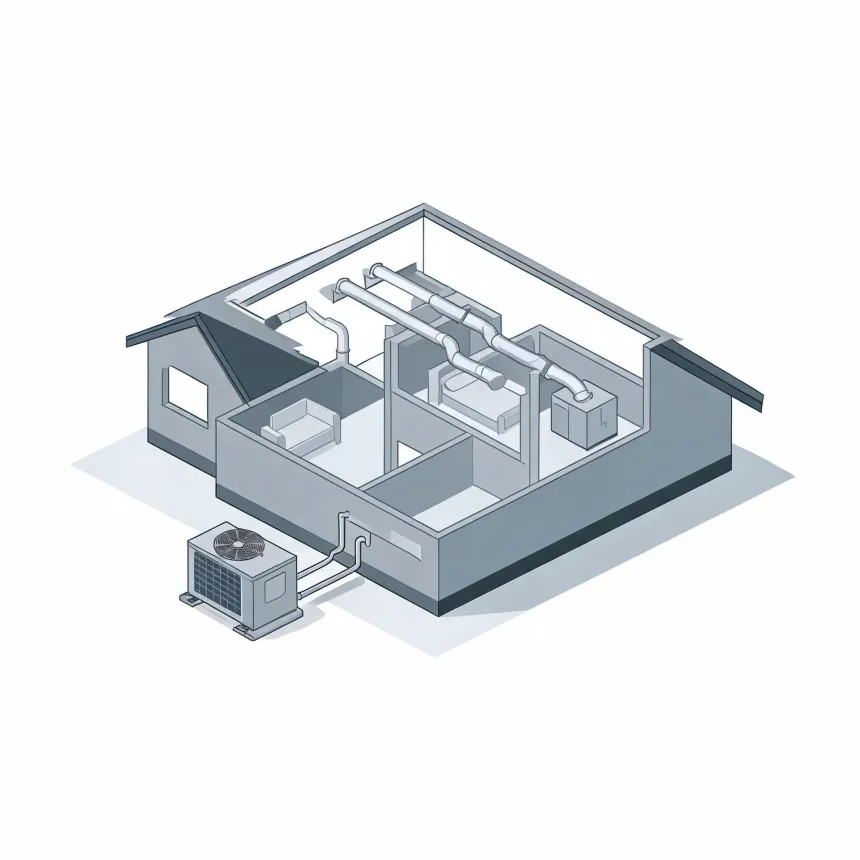
Isometric grayscale illustration of a cutaway house showing interior rooms, ceiling ductwork and an air handler, connected by lines to an outdoor condenser unit on a pad outside.
Your system heats October through April and cools June through September.

NOAA nClimDiv, 1991–2020 normals

A heat pump fails from a worn part or a skipped filter far more often than from the work it does every day.

Check the simple stuff first, the filter and the outdoor coil, before assuming the system itself is on its way out.

Half the homes in Dearborn County date to 1982 or later, so most heat pumps here still have years of work in them

Half the homes here were built by 1982
57 damaging wind events from 2015 to 2024
13 hail events from 2015 to 2024

Heat pumps here start earning their keep in June and keep going through September, then switch over for heat come October. The first weeks of each stretch are when a weak part tends to show itself. A capacitor that barely got through last summer has to kick the compressor on again after months of sitting idle, and that first startup in June is often where it finally gives out. Heat has the same problem in reverse. October asks the system to reverse itself and pull warmth from outside air it hasn't touched since spring, and overnight lows here average 25°F by the heart of winter, so a unit that's already struggling won't get easier to ignore. If something felt off at the end of last season and never got looked at, the start of the next one is when it tends to catch up with you.

This heat pump has had an easier run than most. That's a reason to fix it, not replace it.

A heat pump here isn't fighting the system the way it would in a harder climate, so a failure is almost always one part, not the whole unit. Get it looked at and in most cases it goes back to work.

Find a contractor
A gray air-source heat pump mounted on a concrete pad next to a house with gray vinyl siding, surrounded by gravel and flanked by green shrubs and white hydrangea flowers.

A newer house usually means a younger system

If your house is from 1982 or later, your heat pump has likely spent its whole life running a normal schedule in a normal climate. That's the best case for a repair instead of a swap. A system that age with a failed capacitor or a bad control board still has years ahead of it. Even an older home doesn't rule this out, since the unit itself may have been swapped out well after the house was built. Either way, worth asking whoever comes out to look at it how old the equipment actually is before any talk of replacing it.

A small problem doesn't stay small

A refrigerant leak starts as a system that works harder and runs longer to hit the temperature you set. Left alone, the compressor keeps pumping with less refrigerant than it needs, and that's what burns a compressor out. The same goes for a dirty coil. Airflow drops, the system strains to move heat, and parts that would have lasted years start failing months apart.
Running it anyway costs you the parts worth saving

The compressor is the part you don't want to replace, and it's usually the last thing to fail, not the first. A bad capacitor or a failing contactor will take out a compressor if the system keeps cycling on them. Shut it down and call when something first seems off, and the repair stays small. Keep running it and the cheap part takes the expensive one with it.

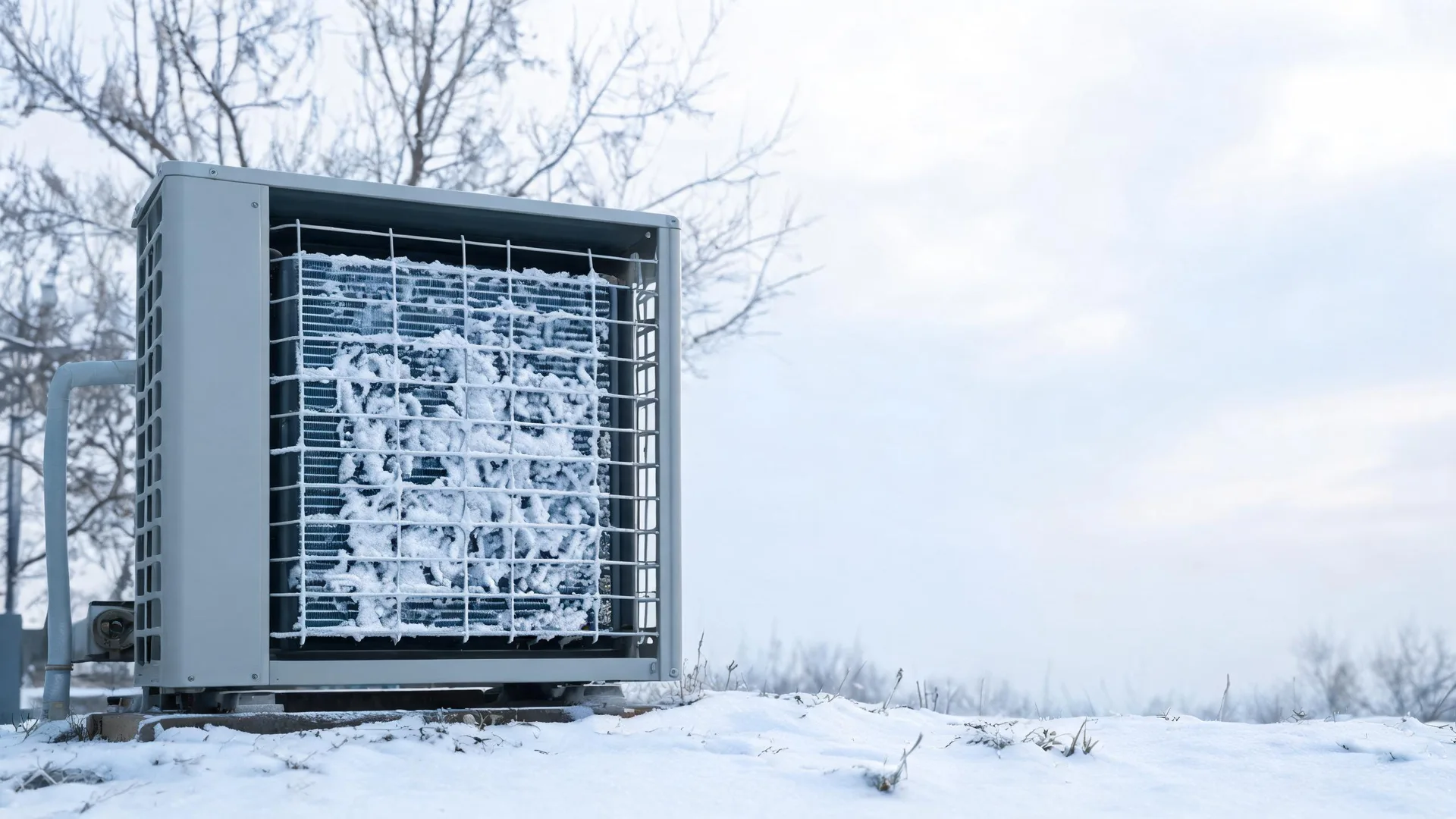
A heat pump usually tells you something is wrong before it quits outright. It runs longer than it used to, or it cycles on and off more than it should, trying to hold a temperature it used to hit without trouble. You might feel air coming out that's cooler than normal in heat mode, or not quite cold enough in summer. Ice on the outdoor unit when it shouldn't be there is another one, especially if it's not melting off between cycles. A hissing or bubbling sound near the lines, a burning smell on startup, or a breaker that trips more than once are not things to wait out. Any of these is worth a call before the system tries to push through it.

Age alone doesn't tell you whether to fix a heat pump or let it go. What matters more is what actually broke and what it would take to put right. A failed capacitor, a bad contactor, a control board on the fritz, these are normal wear items and swapping one out is routine work on a system that's otherwise sound. The compressor is different. It's the heart of the unit, the most expensive part by far, and when it fails the math usually shifts toward replacing the whole system rather than pouring money into the one component that costs as much as everything else combined. So the real question after a breakdown isn't how old the unit is, it's which part gave out. A tech who's looked at it can tell you whether this is a part swap or the start of a bigger decision, and that's worth knowing before anyone talks price.