




An outdoor air conditioning condenser unit mounted on a concrete pad next to a residential house at sunset.

Heat Pump Repair in Kokomo, IN

Tell us about the job

Takes about a minute. No obligation.

RepairHeat PumpHoward County, IN
Step 1 of 2

What ZIP code is the job in?

Kokomo is zone 5A, a cool climate where heating carries the bigger load through the year. The overnight average in December, January and February is 21°F, so a heat pump here works hardest on cold mornings. It isn't also fighting long stretches of extreme summer heat the way units further south do. That makes for an easier year on the system overall. When a heat pump here starts short cycling or blowing cool air, the cause is usually a specific worn part or age catching up with it, not years of running past what it was built for. A unit that hasn't been pushed hard is more often a unit worth repairing.

8 months
October through May, your system heats
3 months
June through August, it cools
21°F
the average winter night it heats against
82°F
the average summer afternoon it cools against
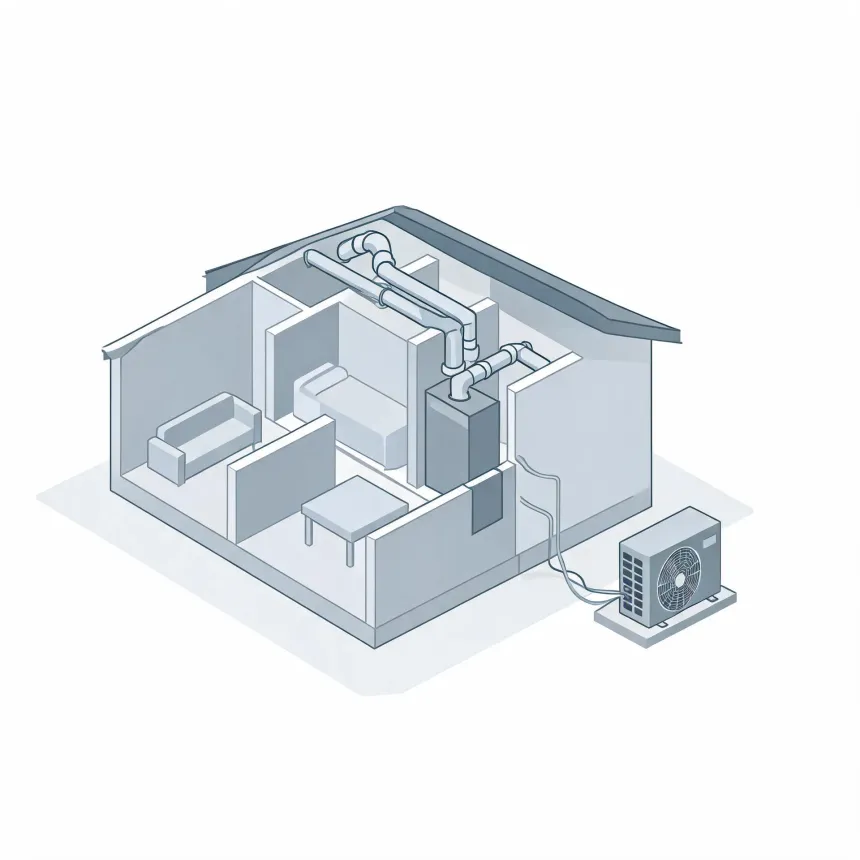
Isometric line illustration of a cutaway house showing interior rooms with furniture, ceiling ductwork connected to an indoor air handler, and a line running outside to an outdoor condenser unit.
Your system heats October through May and cools June through August.

NOAA nClimDiv, 1991–2020 normals

Heat pumps in Howard County switch over to heating in October.

A heat pump with a weak part can make it through May without trouble, then fail in the first cold week of fall.

Half the homes in Howard County were built by 1969

Half the homes here were built by 1969
51 damaging wind events from 2015 to 2024
10 winter storms from 2015 to 2024

Indiana homes paid 14.77 cents per kilowatthour for electricity in 2024, more than homes in most other states. A heat pump low on refrigerant or running with a bad capacitor doesn't just work harder, it pulls more power while heating the house less. You see that on the bill before you can point to the cause. Left alone, the same problem keeps costing you every month it runs.

A heat pump that hasn't been pushed hard is one worth repairing

A heat pump that hasn't had to fight much is usually a heat pump worth fixing rather than replacing. Get the actual cause checked before deciding either way.

Find a contractor
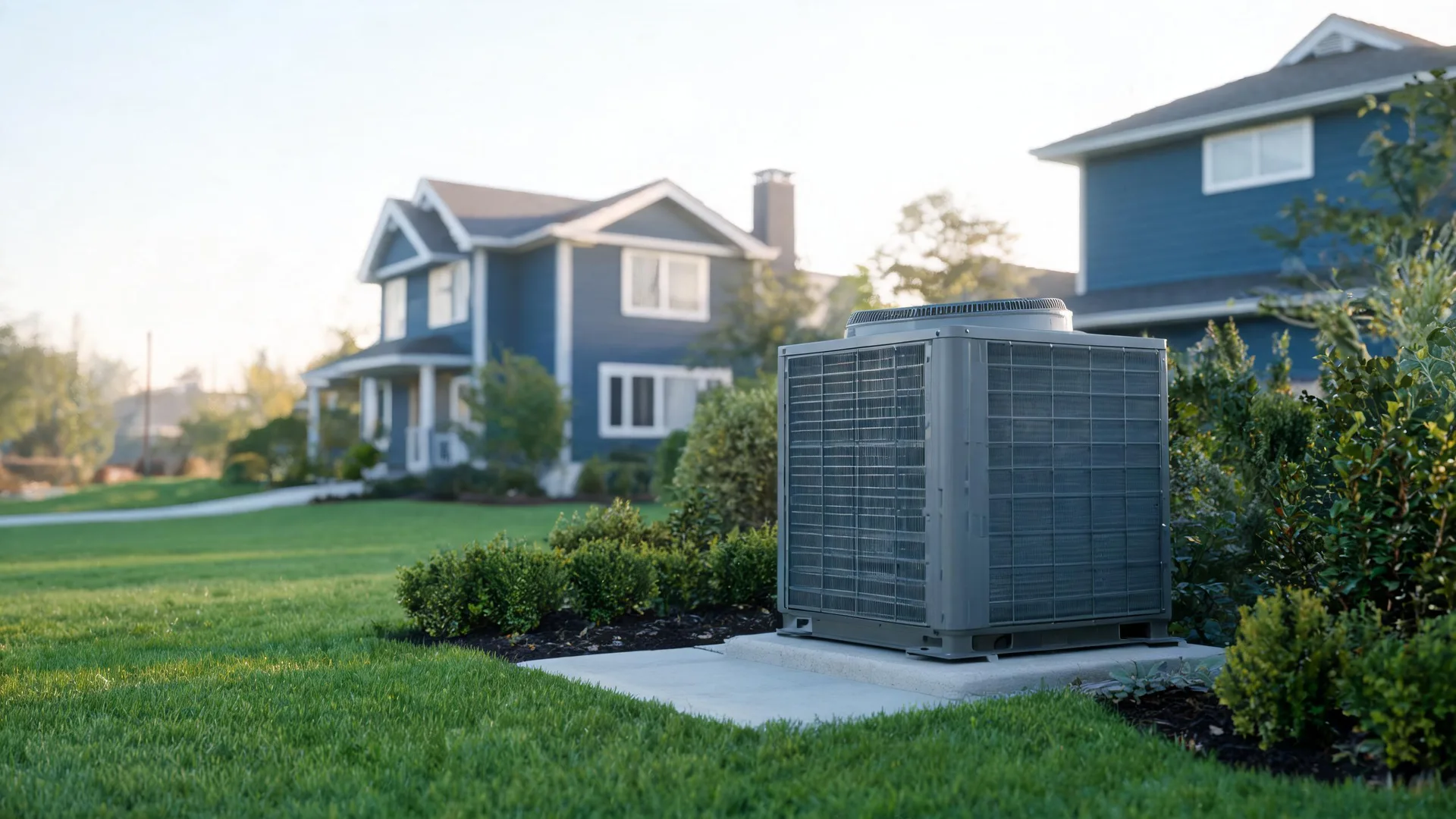
A gray outdoor HVAC unit mounted on a concrete pad beside a house with gray lap siding and a stone foundation.

Ask how old the unit is before you fix it

If the heat pump outside is the one that came with the house, ask the contractor two things. What's actually failing right now. How many more years the rest of the unit has left. A part can be replaced on a unit that's otherwise done, and you'd never know it from the repair alone. Get both answers before you pay for the fix.

It blows air that isn't warm enough

A heat pump in heating mode should feel warm at the vent, not room temperature or cooler. Air that feels barely warm usually points to low refrigerant, a failing reversing valve, or a compressor struggling to keep up. The system can keep running like this for a while, which is part of the problem. It's using power the whole time without heating the house properly.
It won't stop running, or won't start at all

A heat pump that cycles on and off every few minutes, called short cycling, is usually dealing with a bad sensor, a clogged filter, or a thermostat that's lost its calibration. One that runs constantly without ever satisfying the thermostat points somewhere else, often a stuck defrost cycle or a failing compressor. Either pattern is the unit telling you a specific part is wrong, not that it's just getting old.

Most heat pump failures trace back to a handful of parts that wear with use. The reversing valve switches the system between heating and cooling. When it sticks or fails to shift fully, the unit gets stuck in the wrong mode. The defrost control board tells the unit when to melt ice off the outdoor coil. If it misreads the cycle, the coil stays frosted and heat output drops. A weakening capacitor makes the compressor or fan motor strain to start, pulling more power before it finally gives out. Refrigerant doesn't get used up over time, so a low charge means something is leaking somewhere in the lines. That leak needs finding before adding more refrigerant does any good. A clogged filter or a dirty outdoor coil restricts airflow, and the whole system works harder just to move the same amount of air.

A diagnostic visit starts outside, at the unit itself. A contractor checks refrigerant pressure, looks at the reversing valve, and watches how the outdoor coil looks, whether it's iced over or caked with debris. Inside, they'll check airflow at the vents and look at the filter, since restricted airflow can mimic other problems that have nothing to do with the filter. They'll run the thermostat through a heating call and watch how the system responds, whether it switches modes cleanly, whether the compressor struggles to start, whether the fan comes on when it should. Electrical readings on the capacitor and motors catch the parts that are weakening but haven't failed outright yet. By the end, the goal isn't just naming what's broken, it's knowing why, so the same part doesn't fail again.