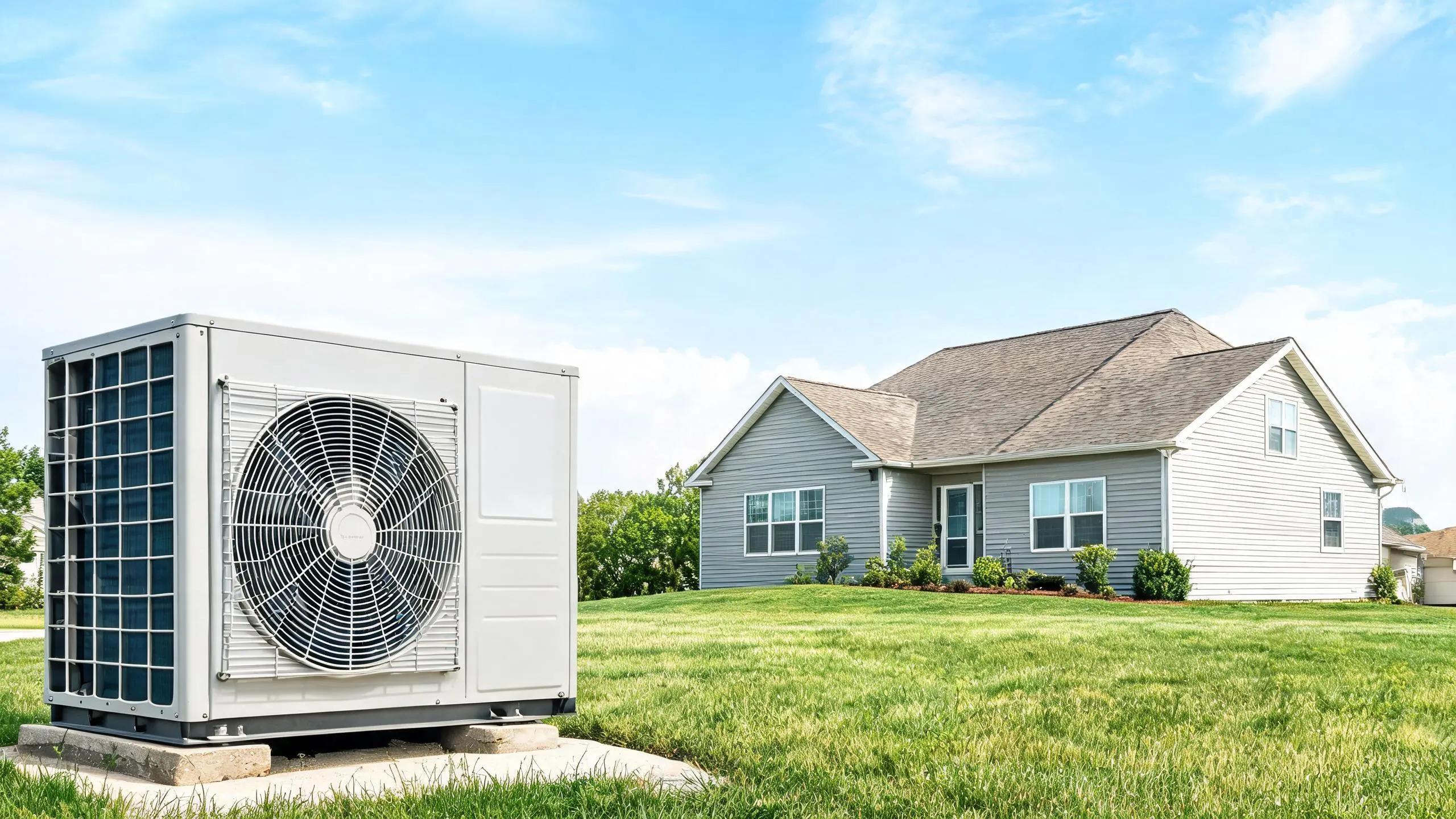







An outdoor HVAC condenser unit on a concrete pad in front of a single-story house with gray siding and a shingle roof.

Heat Pump Repair in Kendallville, IN

Tell us about the job

Takes about a minute. No obligation.

RepairHeat PumpNoble County, IN
Step 1 of 2

What ZIP code is the job in?

A heat pump in Noble County switches over to heat in October, so September is when a weak part finally gets found out. The same goes in reverse come May, before cooling starts in June. If yours is struggling to keep up or short cycling right as the weather turns, that is usually not a coincidence. The system was already borderline, and the first real demand of the season is what pushed it over. Getting it looked at now, before you are relying on it every day, makes the diagnosis easier and the fix more likely to hold.

8 months
October through May, your system heats
3 months
June through August, it cools
20°F
the average winter night it heats against
81°F
the average summer afternoon it cools against
Isometric cutaway illustration of a single-story house showing interior rooms, attic ductwork and an air handler, with an outdoor condenser unit connected by lines along the exterior wall.
Your system heats October through May and cools June through August.

NOAA nClimDiv, 1991–2020 normals

A tech checks refrigerant charge, the reversing valve and the defrost control before touching anything else.

Finding the real fault in that order matters, because a low charge can look exactly like a bad compressor.

Noble County homes don't stress a heat pump more than usual, so the usual causes are where this starts

Half the homes here were built by 1976
54 damaging wind events from 2015 to 2024
16 hail events from 2015 to 2024
A heat pump running wrong costs you every month it's ignoredIndiana electricity ran 14.77 cents per kilowatthour in 2024

This is the second time this page makes that case, so here it is plain. Noble County sits in a cool, humid climate zone where heating carries more of the load than cooling does, but overnight lows only average 20°F through December, January and February. That's cold enough to keep a heat pump working daily, not cold enough to run it into the ground. The harder wear here tends to come from the sky, not the thermostat. Wind and hail have hit this county repeatedly over the past decade, and that kind of weather lands on the outdoor unit directly. A compressor running its normal cycles year after year usually holds up better than a cabinet left standing through a hailstorm.

A heat pump that's working too hard adds to every bill until it's fixed

At 14.77 cents per kilowatthour, a heat pump short cycling or running constantly to keep up shows up on your bill every month it goes unfixed. That cost doesn't fix itself once the weather settles in. Get it looked at now.

Find a contractor
A man in a dark shirt and tan work pants carries a waxed canvas bag up wooden porch steps toward an orange front door, with a potted shrub to the right.
A gray outdoor HVAC unit mounted on a concrete pad beside a house with gray lap siding and a stone foundation.

A problem that's ignored doesn't stay small

A reversing valve that's starting to stick won't always fail outright. It can keep switching, just sluggishly, and every cycle it does that adds a little more wear to the valve body and a little more strain on the compressor forcing refrigerant through it. Same with a capacitor that's weakening. It will still start the motor most days, until the day it doesn't, and in the meantime the motor is drawing harder than it should every time it kicks on. None of this shows up as a dead system. It shows up as a system that runs longer than it used to and cycles more than it used to. The part that's struggling doesn't get a break, because the house still needs heat or cooling, so it keeps getting asked to do the job and keeps getting a little worse at it. Left alone, a weak part usually takes the compressor down with it, since the compressor is what ends up compensating for everything else that isn't working right.

What you'll actually notice first

A heat pump in trouble rarely just quits. It runs longer than it used to, or cycles on and off more than it ever did before. Air from the vents feels cool or lukewarm instead of warm, even with the system running steady. Some units pick up a noise they didn't have before, a hum that lasts too long on startup, or a clicking that repeats every few minutes. Frost on the outdoor unit that doesn't clear during the defrost cycle is another one worth watching for. These are the signs that show up at the thermostat and in the room, before anyone opens the cabinet.
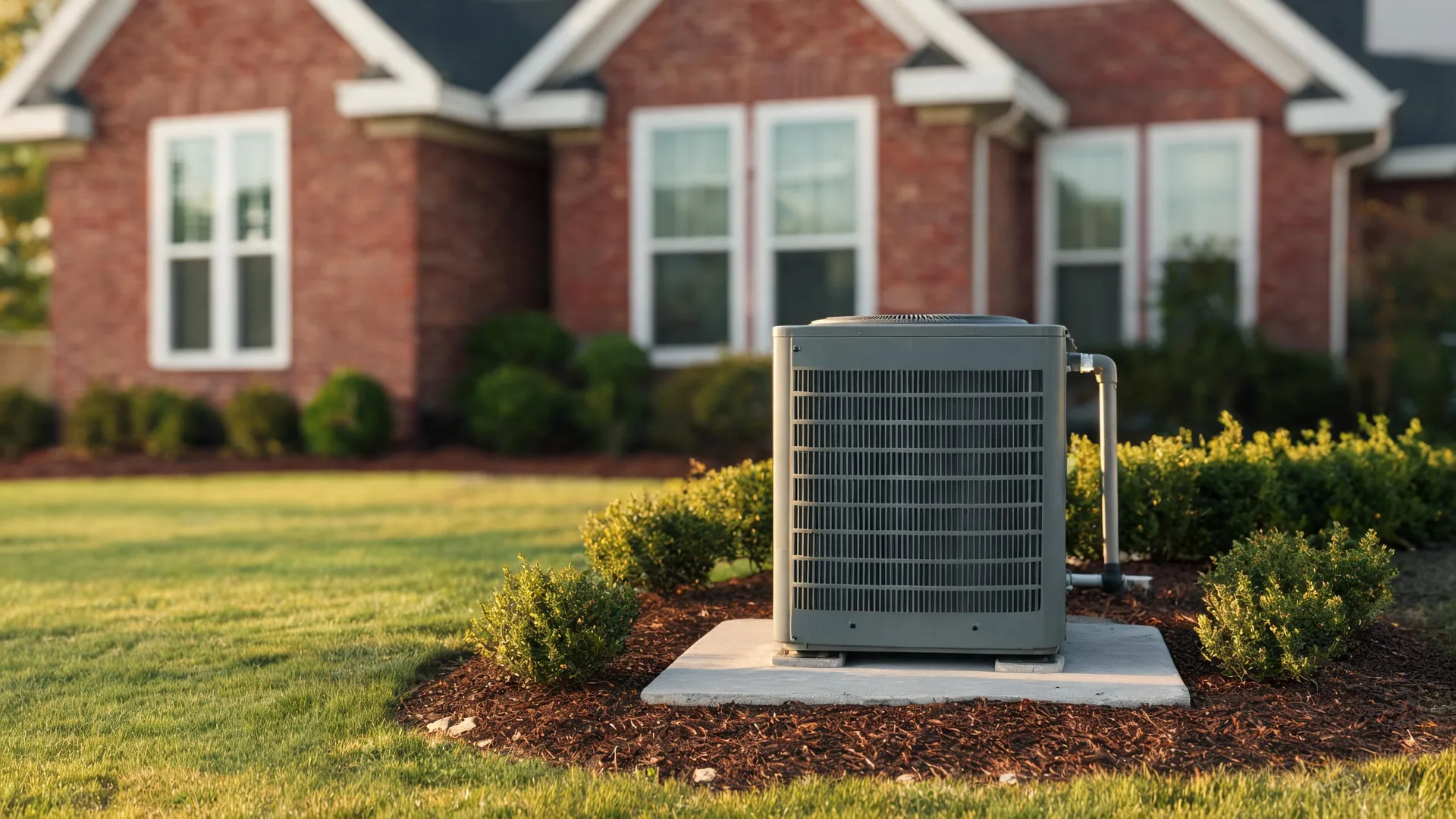
What those signs are telling you

Longer run times and short cycling usually mean the system is struggling to move heat the way it should, whether that's a low charge, a failing valve or a motor losing strength. Lukewarm air on heat mode often points to the reversing valve not fully switching over. Frost that won't clear means the defrost control isn't doing its job. None of these fix themselves, and all of them put more load on the compressor, the one part everything else in the system depends on. Catching the symptom early is what keeps the job small.

Most heat pump failures trace back to one of a handful of parts, not old age across the board. The capacitor that kicks the compressor and fans on wears down over years of starts and stops, and when it goes weak, the motor strains every single cycle until it finally won't start at all. The reversing valve, which is what lets the system switch between heat and cooling, can stick or leak internally, and once it does, the unit stops switching modes cleanly. Refrigerant charge drops when there's a leak somewhere in the lines, and low charge makes the compressor work harder to move the same amount of heat, which is often what actually burns a compressor out. The defrost control and sensor fail too, and when they do, frost builds on the outdoor coil and never clears, choking off airflow until the system can't pull heat from the outside air at all. Dirty coils and a clogged filter don't break anything directly, but they make every one of these parts work harder than it should.

A compressor failure almost always means replacement, since a compressor isn't something that gets swapped out cheaply, and once it's gone the rest of the system isn't worth running without it. A bad capacitor, a stuck reversing valve, a failed defrost sensor, a refrigerant leak in an accessible line, those are repairs. Each is a single part doing one job, and swapping the part puts the system back to normal. How long the unit has been running matters less than which part failed. An older heat pump with a weak capacitor is still a quick fix. That same unit with a compressor on its way out usually isn't worth sinking money into, since that one part is most of what the system costs. The honest way to think about it is whether the failure is in something that supports the compressor or whether it's the compressor itself.