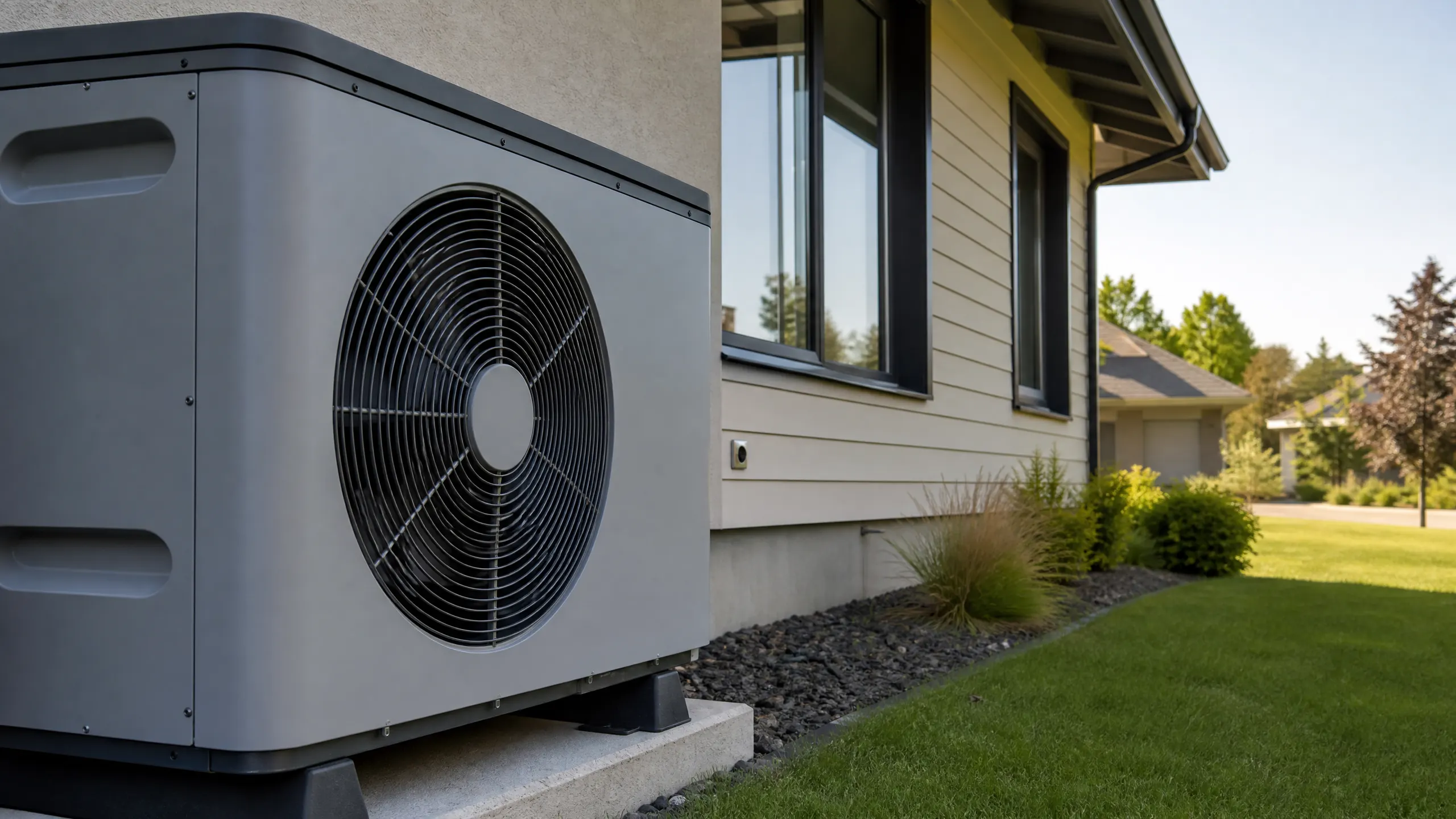





A grey outdoor HVAC unit mounted on a concrete pad beside the beige-sided exterior wall of a suburban house.

Heat Pump Repair in Jeffersonville, IN

Tell us about the job

Takes about a minute. No obligation.

RepairHeat PumpClark County, IN
Step 1 of 2

What ZIP code is the job in?

Winter nights here average 26°F, cold enough that your heat pump is working to cover the gap when it can't pull enough heat from the outside air. That's normal for a mixed climate like this one, not a sign of a bad install. If it's running constantly and the house still feels cool, or you hear it cycling into backup heat too early, that points to a refrigerant charge that's low or a reversing valve stuck where it shouldn't be. Wind and hail both show up in the county's weather history, so it's worth a look at the outdoor unit for a bent fin or a knocked-loose connection if the trouble started after a storm. Most of the time though, it's the same handful of parts that wear out on any heat pump, and a contractor can usually tell which one within the first few minutes of looking.

7 months
October through April, your system heats
5 months
May through September, it cools
26°F
the average winter night it heats against
86°F
the average summer afternoon it cools against
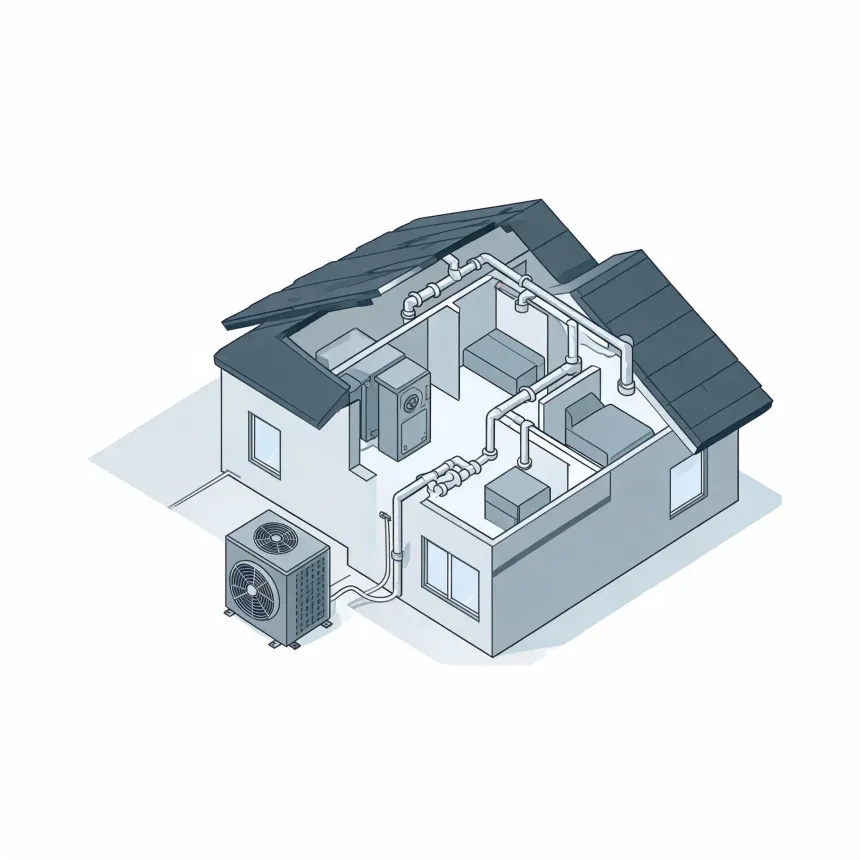
Isometric grayscale illustration of a cutaway two-story house showing interior ductwork, an indoor air handler unit, and an outdoor condenser unit on a pad beside the building.
Your system heats October through April and cools May through September.

NOAA nClimDiv, 1991–2020 normals

Heat pumps in Clark County switch over in September to start carrying the house into October.

A weak part that made it through summer often fails the first cold week it has to produce heat instead of just moving it.

Half the homes here were built by 1982, and a heat pump that came with one of them still has years in it

Half the homes here were built by 1982
79 damaging wind events from 2015 to 2024
38 hail events from 2015 to 2024

A heat pump that keeps breaking isn't a sign your house is hard on it. It usually means one part is wearing out and nobody's replaced it yet. Electricity here runs 14.77 cents per kilowatt-hour, so a unit that's lost efficiency from a failing part costs you more every month it stays broken, not just the day it quits. That's the case for getting the real cause found instead of patching symptoms. A contractor who checks the charge, the valve and the capacitor can usually tell you within a visit whether you're looking at a repair or something bigger.

Get the part that's failing, not a guess

Clark County sees its share of wind and hail, same as most of this region, and that's already been checked against your outdoor unit. Beyond that there's nothing about this place that wears out a heat pump faster than normal. So if yours is acting up, it's almost certainly one part worn past its limit, the kind a contractor finds fast because they've found it before.

Find a contractor
A man seen from behind in a dark jacket, tan work pants and boots climbs wooden porch steps toward an orange front door, carrying a waxed canvas tool bag, with a potted shrub beside the entry.
A residential heat pump outdoor unit mounted on a concrete pad next to a house with gray vinyl siding.

Hours on a newer system aren't the problem

Day into night, a heat pump that's within its working life is just doing its job, not struggling against it. If yours came with the house and the house is newer, that's a point in favor of fixing what's broken rather than replacing the unit. Get the failing part swapped and it should run another long stretch before anything else gives out.

What you can check from the thermostat

Switch the system to emergency heat for a few minutes. If the air coming from the vents turns warm right away, the backup heat works and the problem is likely in the heat pump itself, not the wiring to it. Switch back to normal afterward so you're not running on backup only. Also check the batteries in the thermostat if it's gone blank or stopped responding, since that alone can look like a dead system.
What you can check at the outdoor unit

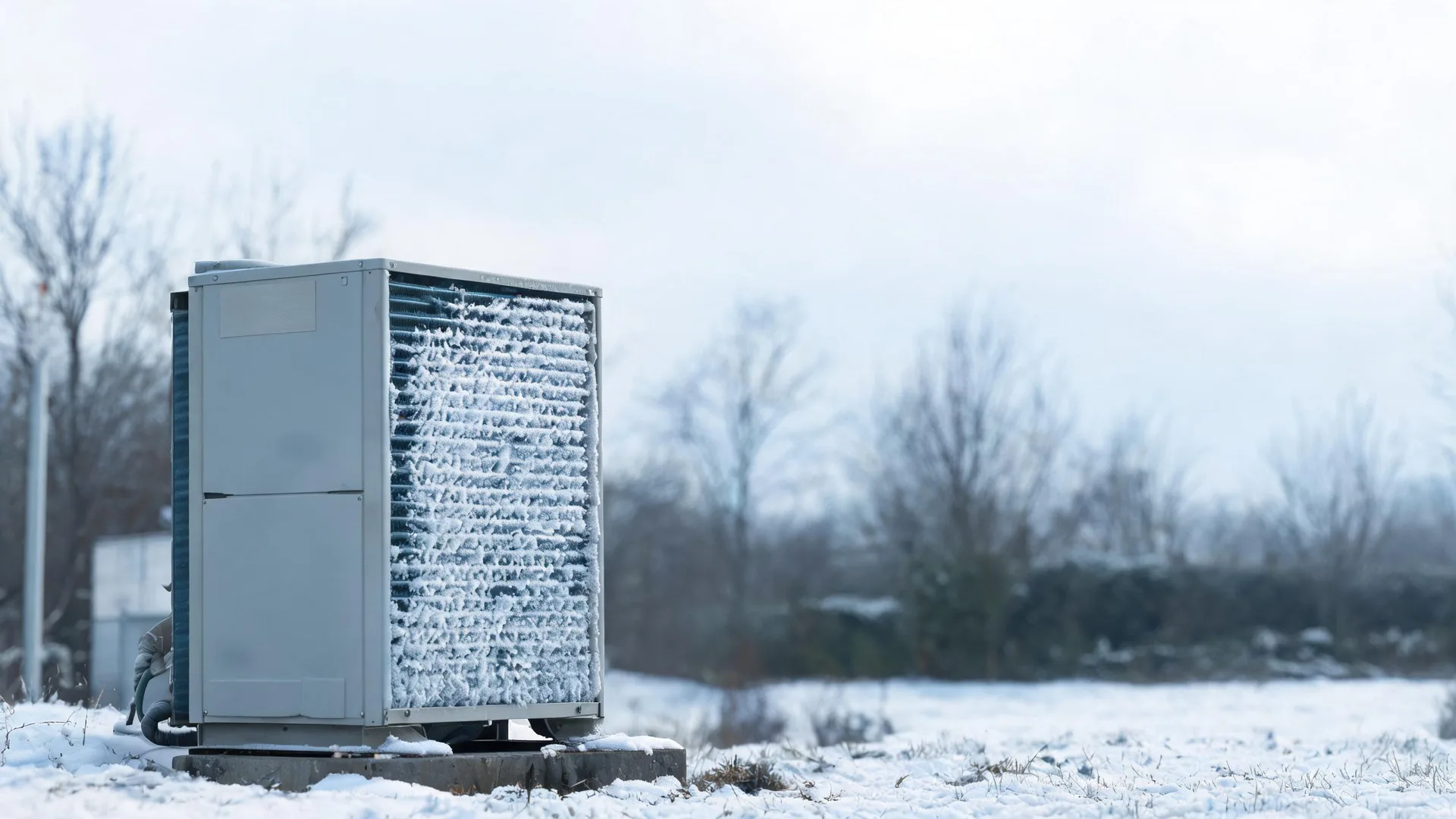
Walk out and look at the fan. If it's iced over solid rather than carrying a light frost, or if it's not spinning at all while the system calls for heat, that's worth noting before anyone comes out. Clear away leaves, mulch or anything stacked against the cabinet so air can pass through it. Don't chip at ice or stick anything into the fan guard, just note what you see.

A few signs point straight to a failing part. Short cycling, where the system kicks on and off every few minutes instead of running a full cycle, usually means a thermostat sensor or a control board telling it to stop too soon. Air that's blowing but never feels warm enough often traces back to a reversing valve not switching fully into heating mode. A hissing or bubbling sound near the lines can mean refrigerant escaping somewhere it shouldn't. Ice building up on the outdoor coil beyond a light frost means the defrost cycle isn't kicking in when it should. None of these fix themselves, and running the system while one of them is happening usually wears on whatever's left working fine.

Repair usually makes sense, and replacement only enters the conversation when the compressor itself is failing or the system is old enough that parts for it are getting hard to source. A compressor is the one part that's expensive enough and central enough to change the math, since it sits at the core of the whole refrigerant loop and a failing one often means the rest of the system has been straining to compensate for a while. Everything else, the capacitor, the reversing valve, the defrost control board, the fan motor, is a contained repair. Swapping one of those doesn't touch the rest of the system and doesn't shorten its life. The question worth asking isn't how old the unit is, it's which part failed and whether that part is isolated or a sign the compressor is working harder than it should. A contractor checking the charge and the compressor's draw can usually tell you which situation you're in before they've been there very long.