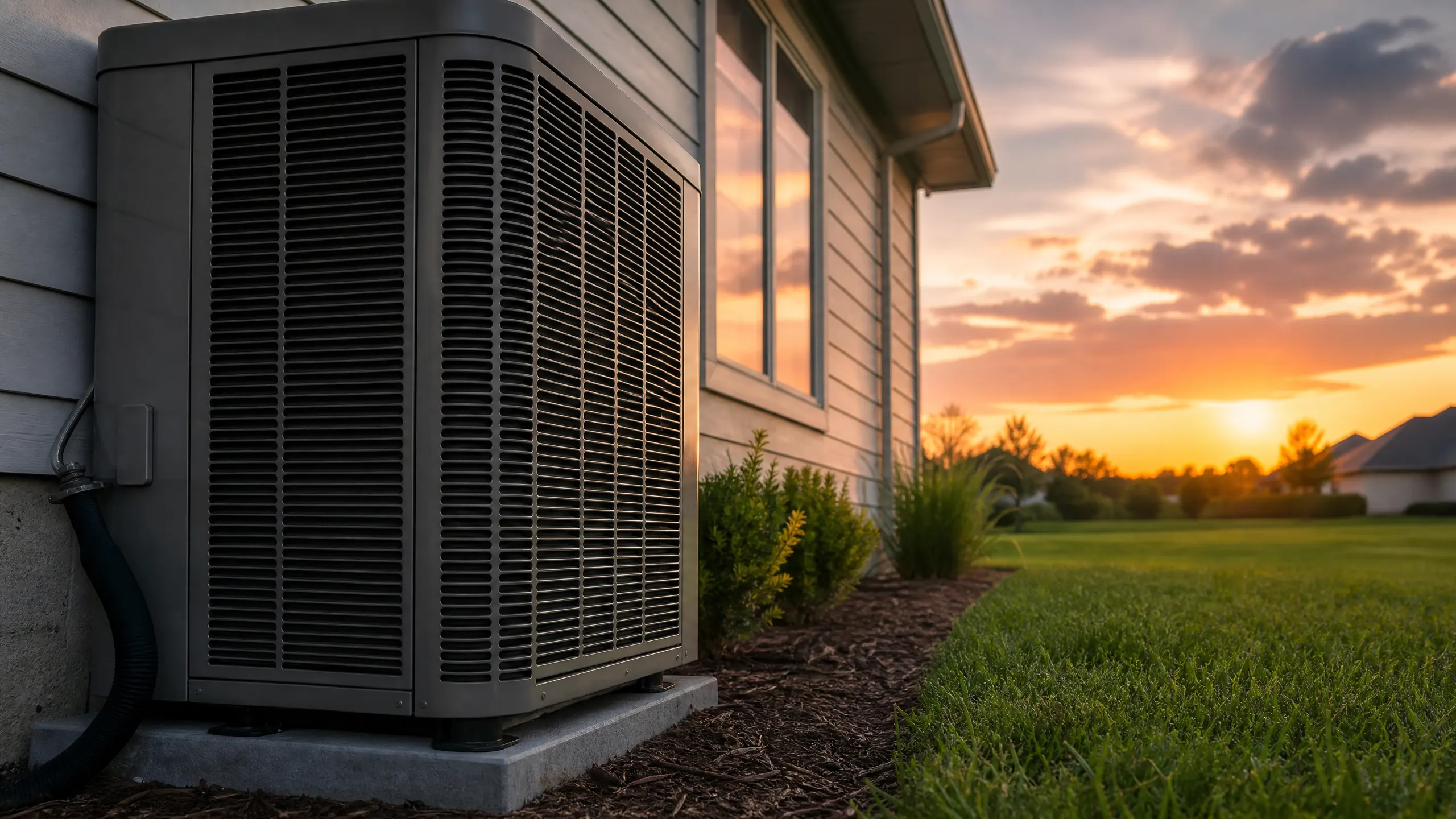
An outdoor air conditioning condenser unit mounted on a concrete pad beside a house at sunset.

Heat Pump Repair in Huntington, IN

Tell us about the job

Takes about a minute. No obligation.

RepairHeat PumpHuntington County, IN
Step 1 of 2

What ZIP code is the job in?

Winters here just mean steady work

Huntington County sits in zone 5A, a cool climate where heating carries the bigger load. Overnight lows average 21°F through December, January and February. A heat pump here runs its heat strips or defrost cycle more than one in a mild climate, but that's normal use, not strain.


So look for the common failure first

A heat pump that won't keep up or won't switch from heat to cool is usually a thermostat setting, a low refrigerant charge, a stuck reversing valve, or a defrost sensor gone bad. None of that points to anything unusual about this county. A tech can check these in order and find the real cause without guessing.

8 months
October through May, your system heats
3 months
June through August, it cools
21°F
the average winter night it heats against
82°F
the average summer afternoon it cools against
Isometric cutaway illustration of a house showing attic ductwork, an indoor air handler, furnished rooms, and an outdoor condenser unit connected by lines along the exterior wall.
Your system heats October through May and cools June through August.

NOAA nClimDiv, 1991–2020 normals

Heat here starts in October, and September is the month to get a heat pump looked at.

A weak part that limped through a mild September can fail outright the first cold week it has to run heat all day.

A heat pump that runs inefficiently costs more here than almost anywhere else

Power costs 14.77 cents a kWh statewide
99 damaging wind events from 2015 to 2024
35 hail events from 2015 to 2024

Half the homes in Huntington County were built in 1966 or earlier. If a heat pump came with a house that old, nobody installed it new when the house was built. Heat pumps don't last anywhere near that long, so a system in an older home has likely already been replaced at least once, maybe more, and the current one is somewhere in its own life span, not at the start of it. A repair call on a system like that is worth a second question beyond what broke. Ask how many years it has left before you put money into it.

This county isn't what's breaking your heat pump

Huntington County sees its share of storms and power blips, same as most places in Indiana. None of that is why a heat pump fails. A repair call here almost always comes down to a thermostat setting, a low charge, or a part that's worn out on schedule. Get the real cause found and fixed.

Find a contractor
A man in a cap, gray long-sleeve shirt and brown pants carries a worn canvas tote bag up porch steps toward an orange front door beside a potted olive tree.
A dark gray heat pump unit mounted on a concrete pad next to a house with gray siding and a stone veneer wall.

Ask the data plate before you fix anything

A tech can read the unit's age off the data plate inside the cabinet. That number, more than what broke this time, tells you whether this repair is worth doing.

Check the thermostat before anything else

Make sure it's set to heat, not cool, and that the set temperature is actually above room temperature. Some thermostats have an emergency heat setting that bypasses the heat pump entirely and runs only the backup strips. If a service call shows the thermostat was the whole problem, that's time and money saved.

Look at the outdoor unit

Walk outside and check that the outdoor coil isn't buried in leaves, snow, or ice that isn't clearing on its own during the defrost cycle. A pile of debris against the cabinet blocks airflow the unit needs to move heat. Clearing it is safe to do yourself. A heavy coat of ice that doesn't melt off within an hour points to a problem with the defrost cycle itself, and that's a call for a tech.

A heat pump in trouble usually tells you before it quits outright. Air coming from the vents that feels cool when it should feel warm is one of the first signs, since a heat pump's heat is naturally milder than a furnace's but shouldn't feel like nothing. Short cycling, where the unit kicks on and off every few minutes instead of running a steady stretch, points to a sensor or control problem. A hissing sound near the lines or ice building up on the outdoor coil beyond what the defrost cycle normally clears both suggest a refrigerant leak. Listen for the system struggling to switch between heat and cool, or for the outdoor unit running constantly without the house ever reaching temperature. Any of these is worth a call before the part that's straining now fails completely.

Once a tech is out, the thermostat and the obvious stuff are already ruled out, so the work moves to the parts that only show their trouble under power. Refrigerant pressure gets checked first, since a low charge explains a lot of what's happening at the vents. The reversing valve, the part that decides whether the system heats or cools, gets watched while it actually switches, not just looked at. The defrost board and sensor get tested too, because a bad one lets the outdoor coil ice over with no way to clear itself. Electrical readings on the compressor and fan motor come next, since a motor pulling the wrong amperage is close to failing even while it's still running. By the time a tech names the problem, the other likely causes have been checked and cleared, not just skipped past.