A lit brick residential street at dusk showing a row of two-story homes with covered porches and mature trees.

Heat Pump Repair in Hammond, IN

Tell us about the job

Takes about a minute. No obligation.

RepairHeat PumpLake County, IN
Step 1 of 2

What ZIP code is the job in?

Winter is the hard season here

Lake County is zone 5A, where heating is the bigger load on a heat pump than cooling. Nights average 20°F across December, January and February. A heat pump running hard all winter is doing ordinary work for this climate, not something extreme.

The cause is usually ordinary too

A heat pump that won't keep up or won't switch between heating and cooling usually has a known cause. Low refrigerant. A failing reversing valve. A frozen outdoor coil. A bad defrost control. Finding which one it is settles the job.

8 months
October through May, your system heats
3 months
June through August, it cools
20°F
the average winter night it heats against
82°F
the average summer afternoon it cools against
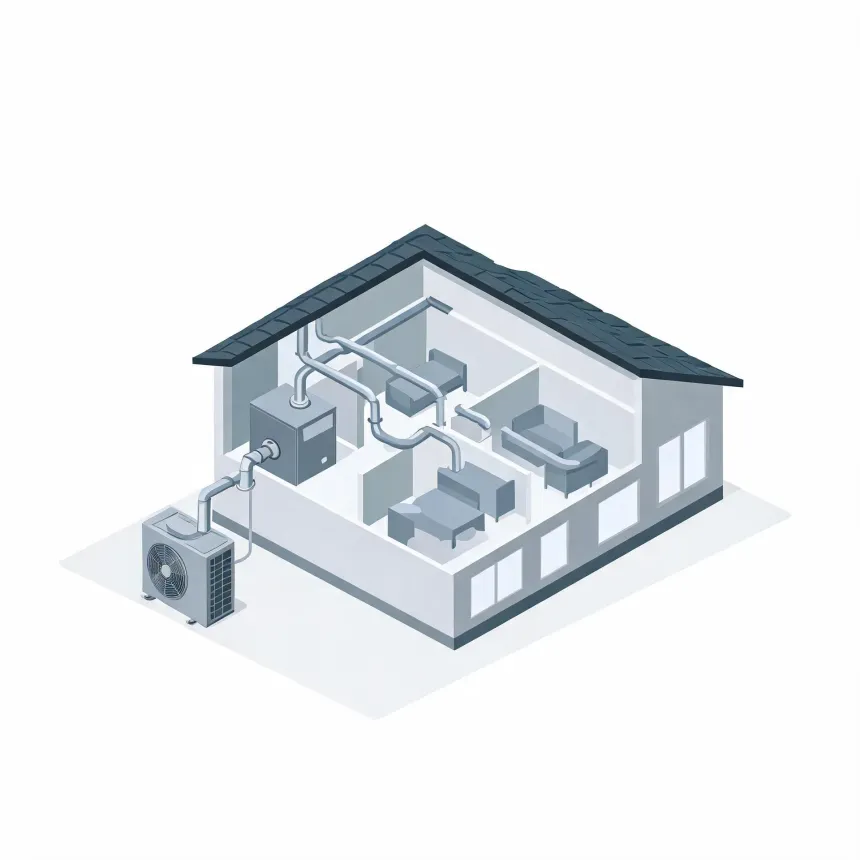
Isometric cutaway illustration of a single-story house showing an indoor air handler, branching ductwork through rooms with furniture, and an outdoor condenser unit connected by a line outside the wall.
Your system heats October through May and cools June through August.

NOAA nClimDiv, 1991–2020 normals

Heat pumps in Hammond work hardest in the first weeks of October, when the system switches over to heat for the season.

A weak part that made it through summer often fails once the heat pump has to carry the load every day.

Lake County gets its share of storms. That's a power problem, not a heat pump problem.

175 severe weather events from 2015 to 2024
17% of homes statewide lost power a day or more in 2024
121 damaging wind events from 2015 to 2024
Half these homes were built in 1968 or earlierHalf the homes in Lake County were built in 1968 or earlier. A heat pump doesn't last that long.

Electricity in Indiana ran 14.77 cents per kilowatthour in 2024. A heat pump that's low on refrigerant or stuck mid-cycle doesn't just heat poorly, it draws power the whole time it's struggling. That cost shows up on the next bill whether the problem gets fixed or not. Waiting doesn't save you the repair. It just adds weeks of paying more for less heat.

Ask how much life is left before you pay for the repair

If this heat pump came with the house, ask the contractor how much life it has left before signing off on a repair. A unit that's already near the end of its life is worth knowing about before the work starts, not after.

Find a contractor
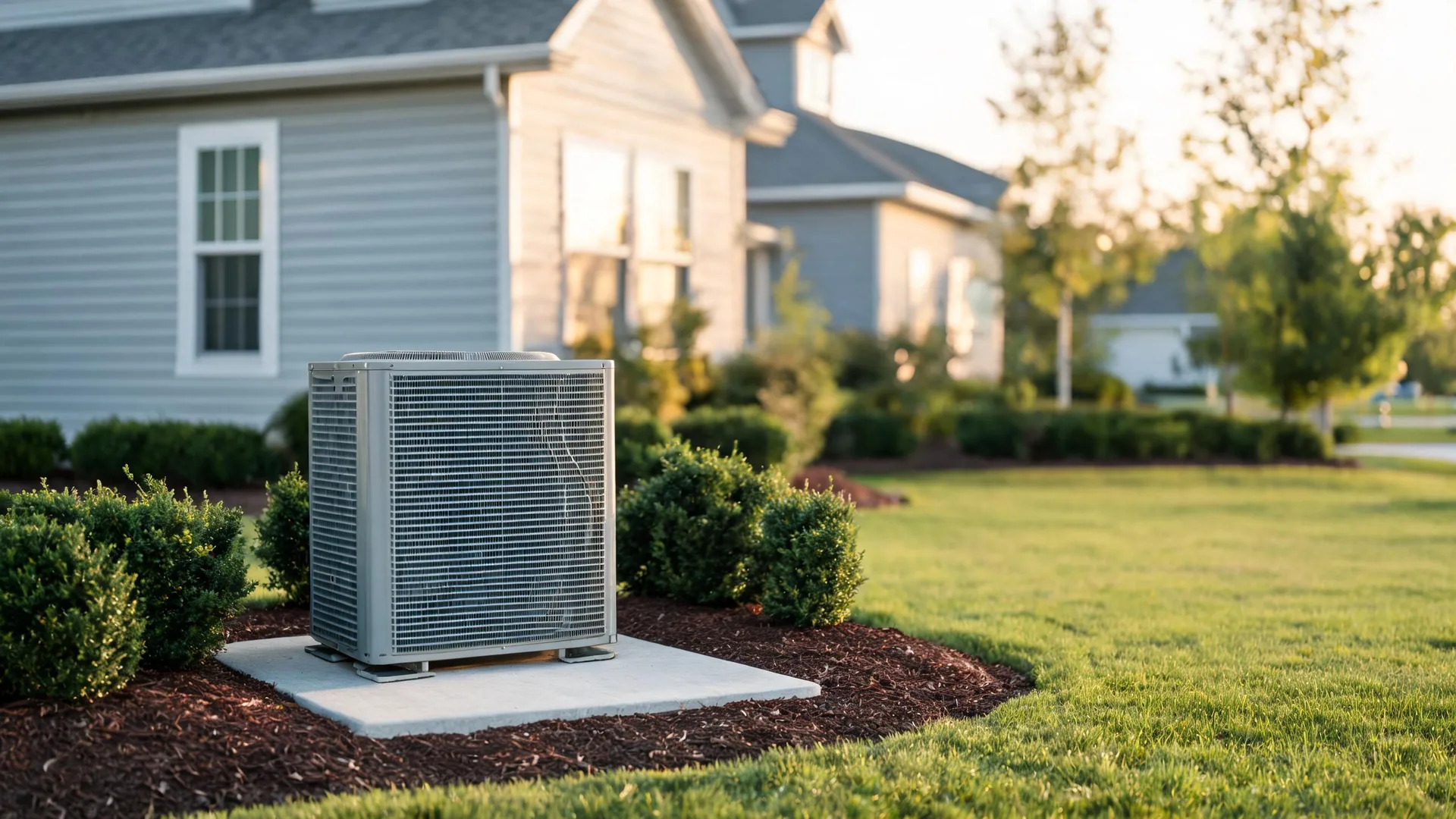
A gray heat pump outdoor unit mounted on a concrete pad next to the stone-accented exterior wall of a house.

What to check before you call

Before anyone comes out, check the thermostat is set to heat and the setpoint is above room temperature, not just matching it. Look at the outdoor unit. If it's packed in ice or snow, leave it alone, don't chip at the coil or pour water on it. Check the breaker for the outdoor unit and the one for the indoor air handler. They trip on their own. Pull the air filter and hold it up to a light. If light doesn't pass through, airflow is restricted enough to cause real problems further down the line. Walk the house and feel the vents. Air that feels cool to the hand is normal for a heat pump in heating mode. That alone doesn't mean something's wrong. Listen to what the outdoor unit is doing. A unit that starts and stops every few minutes points to a different problem than one that runs nonstop without the house ever getting warm. None of this tells you which part failed, but it tells the contractor what the system was doing before they got there, and it rules out the things that look like a broken heat pump but aren't.

Most failures are a handful of parts

A capacitor weakens and the compressor or fan struggles to start. A contactor pits and sticks from years of cycling on and off. The reversing valve, which decides whether the system heats or cools, can get stuck and leave the house blowing the wrong temperature of air entirely. These parts fail from ordinary wear, not from anything the homeowner did.

The outdoor unit takes the abuse

The outdoor unit sits through every freeze, thaw and windblown patch of leaves, so its coil and fan motor wear faster than anything inside the house. A coil caked with dirt or ice can't move heat the way it needs to, and the system ends up working harder to do less. Keeping the area around the outdoor unit clear is the one thing an owner can do to slow that wear down.

A heat pump that's low on refrigerant or struggling to defrost won't just heat poorly and stay that way. The compressor has to run longer to move the same amount of heat, and running longer under strain is what burns it out. A reversing valve that's starting to stick gets worse the same way, sticking a little more each cycle until it stops moving at all. Ice on the outdoor coil behaves the same. A thin layer blocks some airflow, the system runs longer to compensate, and the longer it runs iced up the thicker that ice gets. None of these fix themselves by running. The part under strain stays under strain until something gives, and it tends to give out on the coldest night, not the mildest one.

A heat pump that keeps breaking is telling you something a single repair bill doesn't. One failure, a bad capacitor or a stuck contactor, is just a part wearing out, and it's worth fixing on a system that's otherwise sound. But a compressor that's weak, a coil that's thinned out from corrosion, and a control board that's already been replaced once are different problems wearing the same name. Each repair after the first is competing against the cost of a new system, not against doing nothing. A contractor who's been inside the unit can tell you whether the compressor itself is still strong, because that part alone is most of what the system is worth. If that's failing, the rest of the repair stops being worth doing.