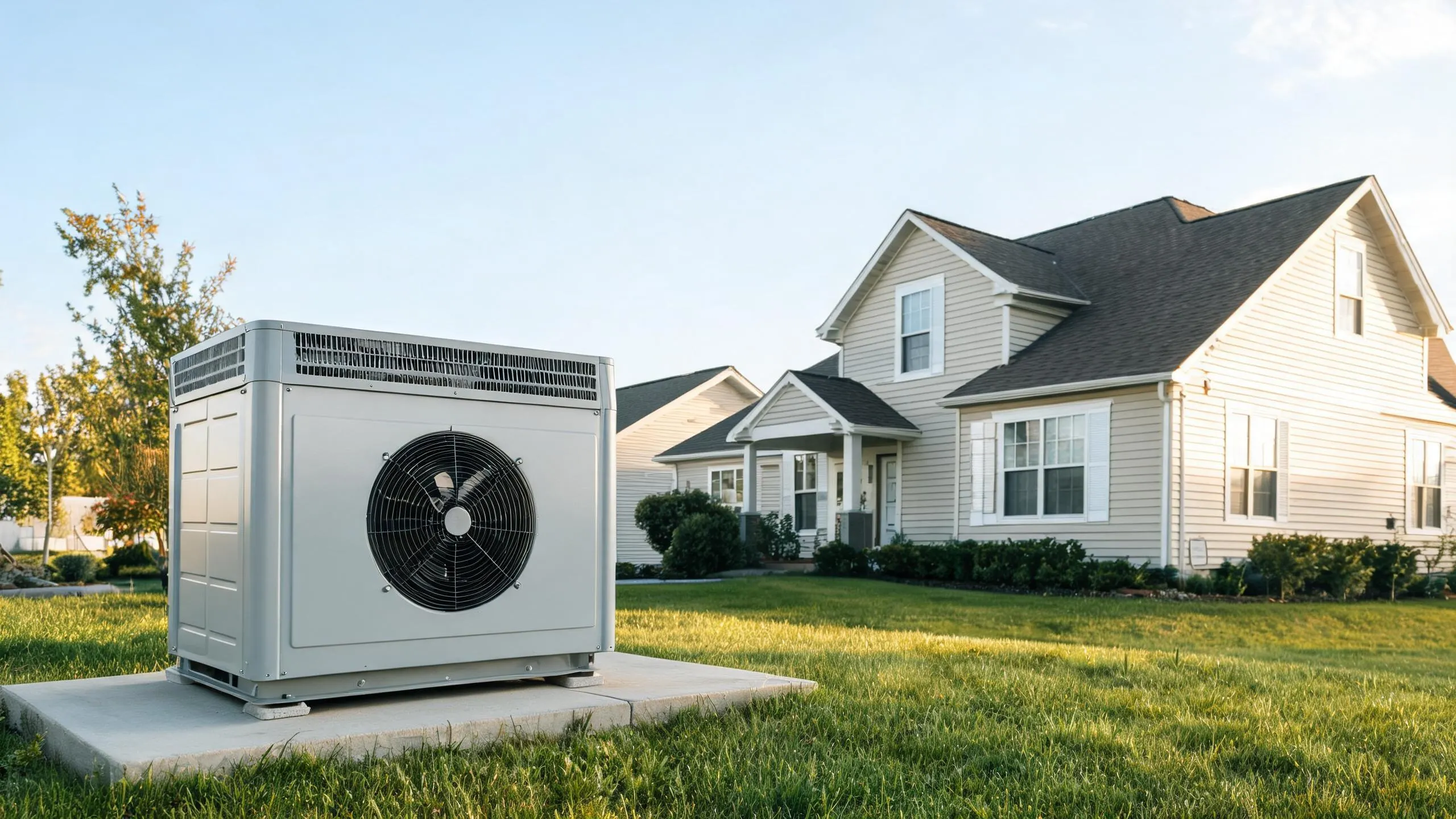
An outdoor heat pump unit mounted on a concrete pad in the front yard of a gray suburban house.

Heat Pump Repair in Greenwood, IN

Tell us about the job

Takes about a minute. No obligation.

RepairHeat PumpJohnson County, IN
Step 1 of 2

What ZIP code is the job in?

Half the homes here were built in 1993 or later

Johnson County splits down the middle, half the homes built in 1993 or earlier, half in 1993 or later. A heat pump that came with one of the newer houses hasn't been through as many Indiana summers and winters as one in an older place.


That matters for a repair call

A newer heat pump is more likely to still have real years left in it. When something goes wrong, that's a reason to get it fixed rather than wonder if it's worth the trouble.

8 months
October through May, your system heats
4 months
June through September, it cools
23°F
the average winter night it heats against
83°F
the average summer afternoon it cools against
Isometric illustration of a cutaway single-story house showing interior ductwork, an indoor air handler and simple furniture, connected by lines to an outdoor condenser unit beside the building.
Your system heats October through May and cools June through September.

NOAA nClimDiv, 1991–2020 normals

Greenwood winters average 23°F overnight, not far below freezing.

A heat pump here isn't fighting extreme cold, so parts wear at a normal pace, and a repair usually makes sense.

October and June are when a weak part finally gives out

Cooling runs June through September
Heat runs October through May
39 damaging wind events from 2015 to 2024
Power here isn't cheapIndiana electricity ran 14.77 cents per kilowatthour in 2024. A heat pump that's struggling costs you more every month it stays that way.

If your heat pump came with the house and the house is newer, get a repair quote before you assume the worst. A contractor can check the age plate on the unit in a few minutes. Most problems at this stage are one part failing, a capacitor, a contactor, a low charge, not the system giving out. Replacing a single part on a heat pump that still has years ahead of it is the straightforward move.

Worth fixing before it's worth replacing

Get the part fixed and the system keeps going. Nothing about this climate works a heat pump hard enough to wear it out early, so a repair call is usually just that, a repair call.

Find a contractor
A man in a dark long-sleeved shirt and brown work pants, seen from behind, carries a waxed canvas tool bag up porch steps toward an orange front door, with a potted shrub in a terracotta pot beside him.
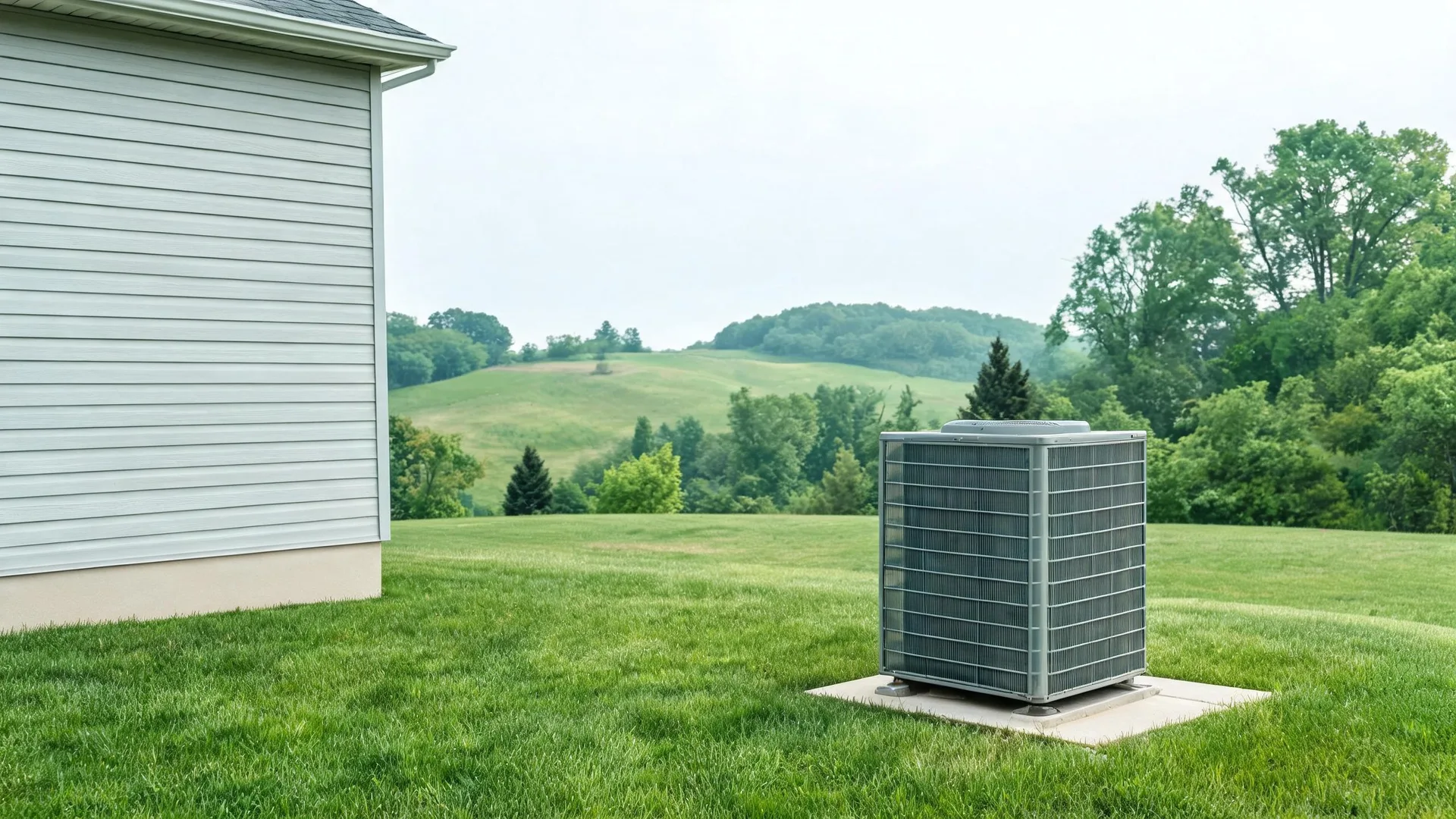
A residential heat pump outdoor unit mounted on a concrete pad next to a house with gray vinyl siding.

What actually gives out on a heat pump

A heat pump runs in both directions, cooling in summer and heating in winter, so it has no true off season the way a furnace does. The reversing valve is the part unique to this machine. It's what switches the system between heating and cooling, and if it sticks, the system can blow the wrong temperature air or short cycle. The compressor is the part that ages hardest simply because it runs more hours than almost anything else in the house. The outdoor fan motor and the capacitors that start the compressor and fan wear down the same way any motor does, a little more with each start. A dirty outdoor coil makes the compressor work harder than it needs to, which adds wear even when nothing has failed yet. None of this means the system is on its way out. It means a handful of parts do most of the work, and sooner or later one of them is the one that needs attention.

A low charge makes the compressor work harder

A heat pump low on refrigerant still tries to heat or cool the same space, so the compressor runs longer to make up the difference. That extra strain is what turns a simple recharge into a compressor replacement.

A stuck reversing valve keeps wearing the same way

If the reversing valve isn't shifting all the way, the system may short cycle or blow air that isn't the temperature you set. Left alone, the valve doesn't fix itself, and the short cycling adds wear to the compressor every time it happens.

A heat pump in trouble usually tells you before it quits outright. The air coming out feels wrong for the setting, lukewarm in heating mode or not quite cold enough in summer. You hear it switch on and off more than it used to, running short bursts instead of settling into a cycle. Ice builds up on the outdoor unit in weather that shouldn't cause it. The outdoor fan sounds different, louder or with a rattle that wasn't there before, or it isn't spinning at all while the system is on. Some of these point to a simple fix, others to a part working harder than it should. Either way, the sign to act on is the system running a long time without actually bringing the room to temperature.

A diagnostic call starts outside at the unit itself, checking that the outdoor fan spins freely and the coil isn't caked with dirt or grass clippings. From there it's gauges on the refrigerant lines to see if the charge is where it should be, since too little refrigerant shows up as weak heating or cooling long before anything fails outright. The contactor and capacitors get checked next, since a capacitor that's weakening still starts the system most of the time, just not reliably. If the complaint is wrong-temperature air or short cycling, the reversing valve gets tested to see if it's shifting all the way when it's told to. Most of this takes less time than people expect, because the symptoms usually point straight at the part behind them.