





A mowed lawn bordered by a tall trimmed hedge, with single-story houses and large leafy trees under an overcast sky.

Heat Pump Repair in Fort Wayne, IN

Tell us about the job

Takes about a minute. No obligation.

RepairHeat PumpAllen County, IN
Step 1 of 2

What ZIP code is the job in?

Allen County sees more severe weather than most places, with 241 events recorded between 2015 and 2024. Most of that was wind: 166 damaging wind events in the same stretch, enough to throw branches and debris into an outdoor unit. Hail hit 56 times. Five tornadoes touched down. The outdoor unit sits outside through all of it, with its coil and fan exposed to whatever blows through. A unit that took a hit from hail or flying debris can keep running for a while before the damage shows up in the way it heats or cools.

8 months
October through May, your system heats
3 months
June through August, it cools
21°F
the average winter night it heats against
82°F
the average summer afternoon it cools against
Isometric cutaway illustration of a single-story house showing interior rooms, ceiling ductwork connected to an air handler, and an outdoor condenser unit linked by a line set.
Your system heats October through May and cools June through August.

NOAA nClimDiv, 1991–2020 normals

September is the month before heat shows up here, and that's when a weak part in your heat pump gets found out.

Call before the first cold morning, not after it, so your system isn't trying to catch up when the overnight low is sitting at 21°F.

Wind, hail and cold nights all put strain on the same outdoor unit

166 damaging wind events from 2015 to 2024
56 hail events from 2015 to 2024
Winter nights average 21°F
Running costs more hereAllen County pays 16.78 cents per kilowatt-hour, more than most of the country, and a struggling heat pump burns through it faster.

Get a heat pump repair diagnosed as a repair, not a guess at which part failed. A tech checking a unit that took a season of wind and hail knows to look at the coil and the fan blades, not just the part that stopped first. Skip that and you can end up replacing a capacitor twice because the real damage was somewhere else. Ask what they found before they tell you what it costs. That answer tells you whether the fix will hold through the next round of wind.

Storm-checked heat pumps hold up through the next one

If your outdoor unit sat through this year's wind or hail, get it looked at even if it still runs. Damage to the coil or fan blades doesn't always show up right away in how the house heats or cools. Have it checked now, before you're relying on it.

Find a contractor
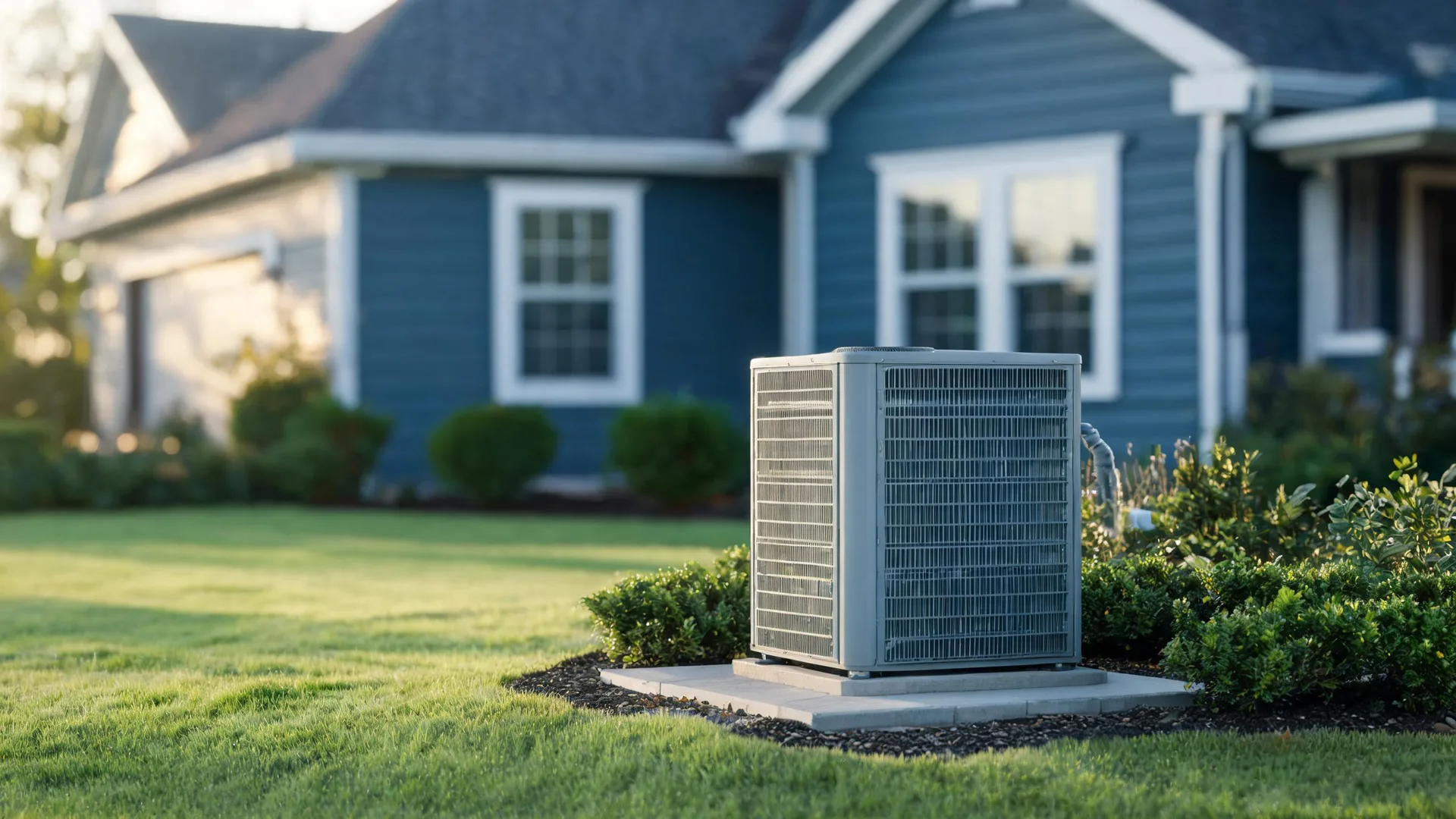
A white mini-split heat pump outdoor unit mounted on a concrete pad beside a gray-sided house, surrounded by gravel and green shrubs.

What runs through the damage runs into the cost of it

A heat pump that's struggling doesn't fail all at once. A refrigerant leak starts small, and the system keeps moving what's left, working harder to get the same heat out of it. A failing capacitor lets the compressor start rough instead of cutting it off clean, and every rough start wears the windings a little more. A fan motor running on a bad bearing keeps turning until the bearing seizes, and when it does it can take the motor with it. None of these announce themselves. The house stays warm enough, the air still moves, so it keeps running. The part underneath keeps degrading anyway, and what would have been a repair becomes a swap of the whole component, sometimes two.

The sounds change before the heat does

A heat pump that's struggling makes noise about it first. A clicking reversing valve, a hum from a contactor that won't quite pull in, a rattle from a fan blade hitting a bent shroud. Any sound the unit didn't make before is worth a call, even if the house still feels fine.
Short cycling wears out the part that starts it

A heat pump that shuts off a few minutes after it starts is tripping on something, usually pressure or temperature it doesn't like. Every one of those short cycles puts a hard stop and a hard start on the compressor. Left alone, it stops being a quick fix and starts being a compressor replacement.

A heat pump that's losing efficiency still runs, it just takes more power to get the same heat or cool air out of it. If yours is short cycling, icing up, or running longer than it used to, that's the sign to act on now rather than wait and see. Power here already costs more than most places pay, and a struggling unit burns through it faster every day it runs that way. Getting it looked at stops that drain before another month of bills reflects it. A repair now is cheaper than paying that rate on a unit working harder than it should.

A diagnostic visit starts outside, at the unit itself, not with a part already picked out. A tech will check refrigerant pressure, look at the coil for bent fins or debris, and watch how the fan blades turn before touching anything electrical. Inside, they'll check the air handler, the board, and how the system responds when it's told to heat or cool. Electrical readings come next: capacitor strength, contactor condition, amp draw on the compressor while it's running. None of this is guesswork. Each reading either falls in range or it doesn't, and that's what points to the failing part instead of just the symptom it's causing.