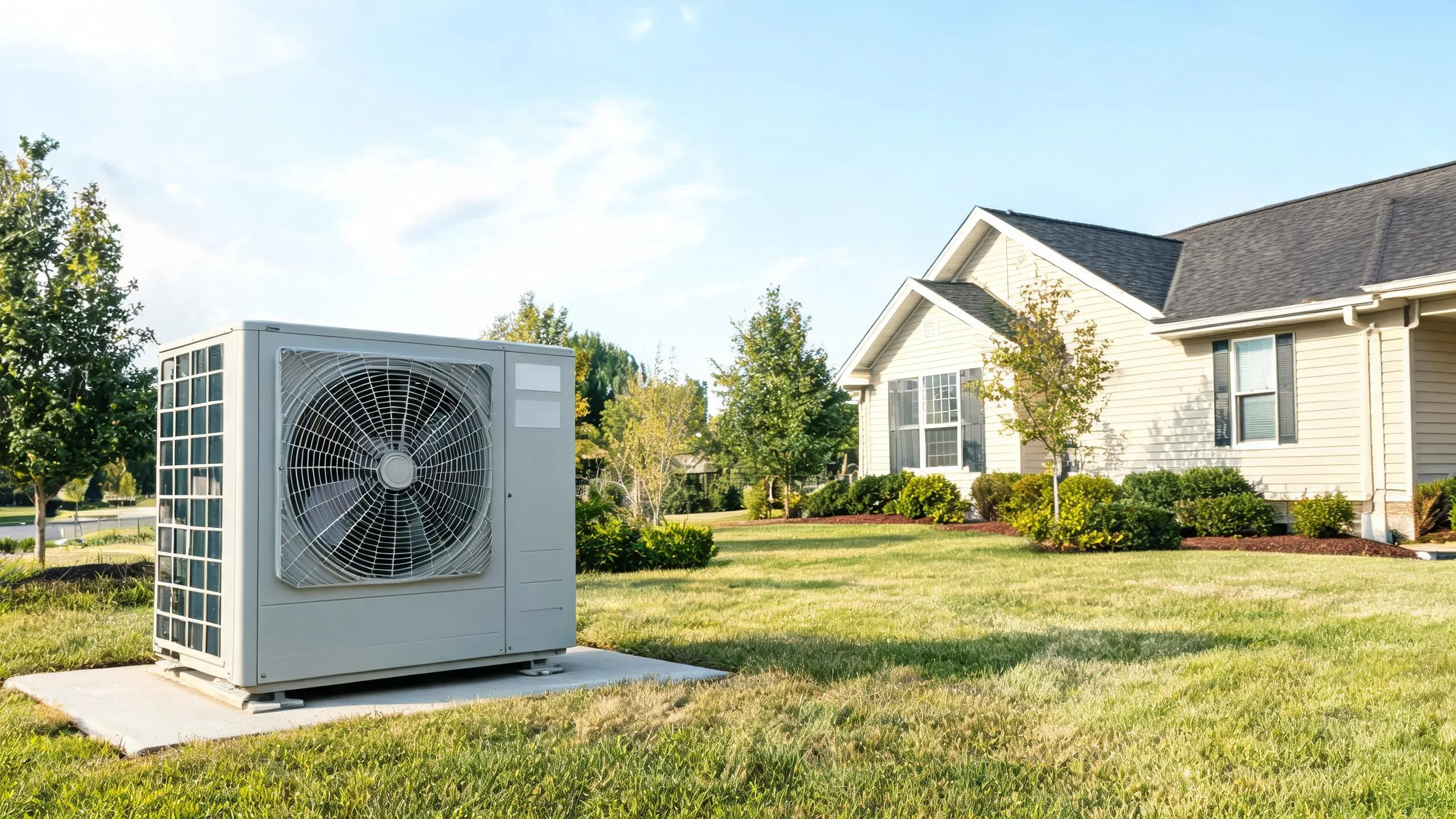
A grey heat pump outdoor unit mounted on a concrete pad in a suburban backyard, with a single-storey house visible behind it.

Heat Pump Repair in Corydon, IN

Tell us about the job

Takes about a minute. No obligation.

RepairHeat PumpHarrison County, IN
Step 1 of 2

What ZIP code is the job in?

Mixed climate, not an extreme one

Corydon sits in zone 4A, a mixed climate that asks real work of both sides of a heat pump. It still beats the places where cooling runs nonstop or where a heat pump fights single-digit nights for months. Summer humidity here pushes the dew point to 66°F on average through June, July and August, which makes the air feel heavy, but the unit isn't working against the kind of extreme load that wears a system down fast.


What that means for a repair

A heat pump that hasn't been run ragged usually has more good years left in it. When something breaks here, age or a skipped tune-up is more often the cause than the system being worked past what it can handle. That's a better reason to fix it than to replace it.

7 months
October through April, your system heats
5 months
May through September, it cools
26°F
the average winter night it heats against
86°F
the average summer afternoon it cools against
Isometric line illustration of a cutaway single-story house showing interior rooms, ceiling ductwork and an indoor air handler, connected by a line to an outdoor condenser unit on a pad beside the building.
Your system heats October through April and cools May through September.

NOAA nClimDiv, 1991–2020 normals

A heat pump runs both directions, so it has twice the parts that can wear: a reversing valve on top of the compressor and coils any AC would have.

When one fails, the first job is finding which side of the cycle it happened on before anything gets replaced.

Half the homes here were built in 1990 or later, and so were the systems in them

Half the homes here were built by 1990
Climate zone 4A
Power here costs 14.25 cents per kilowatt-hour

October is when heat here switches on for the season, and that first real cold snap is when a weak part usually gives out. A heat pump that limped through summer on a tired capacitor or a low-charge line can make it through months of light use and still fail the moment it has to run hard and long. The overnight low averages 26°F across December, January and February, so by then the system is working steadily, not just cycling on and off. If something was marginal in September, the early weeks of heating season are when it shows itself. Getting a heat pump looked at before October, not after the first cold week, catches the weak part while it's still a repair and not a no-heat call.

Find out how much life this system has left before you plan around replacing it

If this system came with the house, there's a good chance it's not as old as the trouble it's giving you suggests. That's worth finding out before anything else. A repair makes sense for a system with years left in it, and a look from someone who can check its age and condition is the way to know which one you've got.

Find a contractor
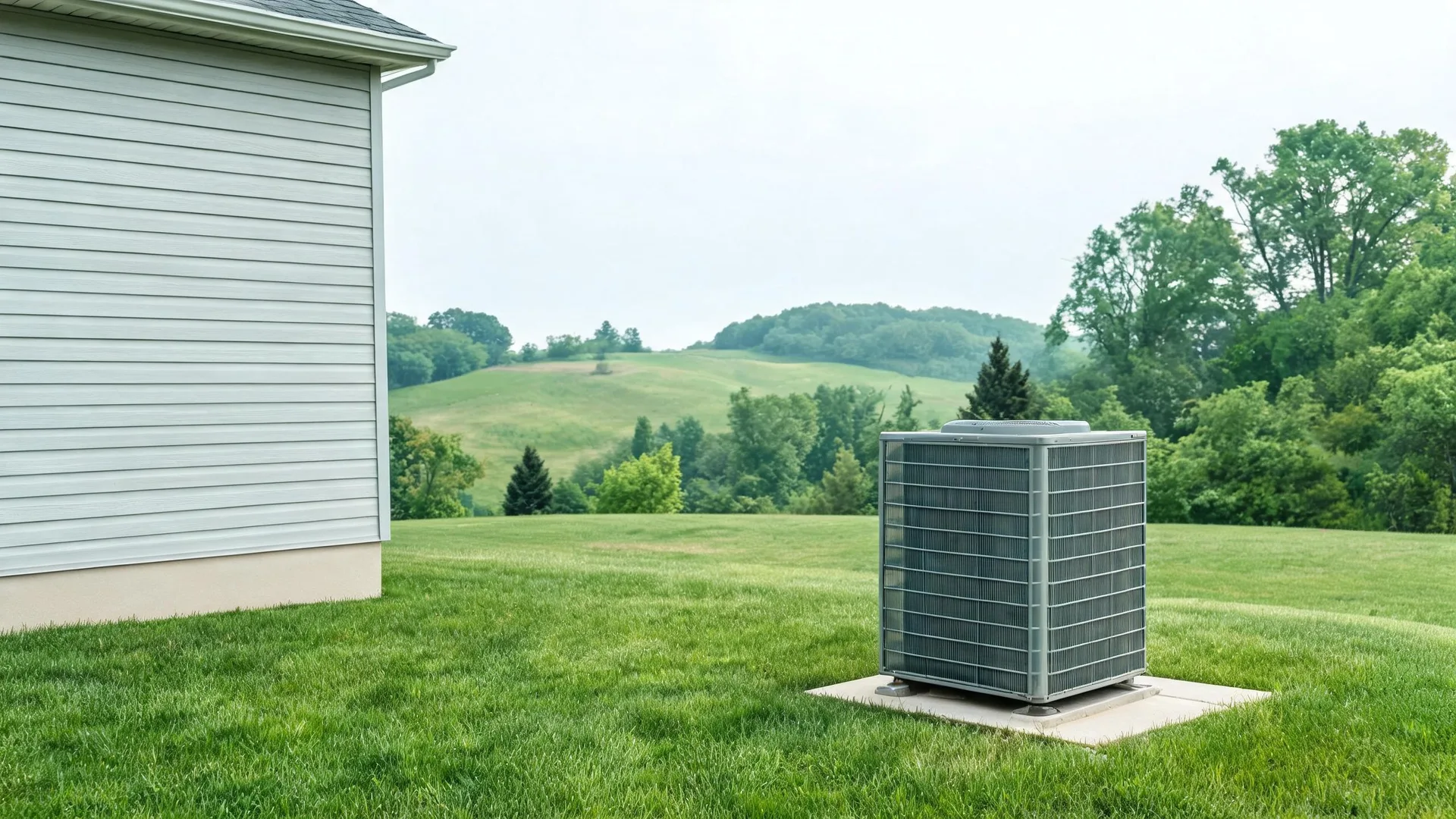
A residential heat pump outdoor unit mounted on a concrete pad next to a house with gray vinyl siding.

What wears it down, and what doesn't

The outdoor unit sits through whatever weather passes over Corydon, and the county has had its share: 69 damaging wind events and 33 hail events between 2015 and 2024, plus 12 winter storms with heavy snow and ice. None of that wears on the compressor the way a long cooling season would. Wind and hail hit the cabinet, the fan blade, the coil fins, the lines running outside, not the parts doing the work of heating and cooling the house. If this unit started acting up after a storm came through, that's worth mentioning when someone looks at it. A bent fin or a connection knocked loose is a different repair than a part that failed from age. Either way, a system that's taken that kind of weather and kept running through it isn't a system that's given up.

What a heat pump tells you before it quits

A heat pump in trouble rarely just stops. It runs long cycles without getting the house to temperature. It blows air that feels barely warm or barely cool instead of the steady output it used to give. It cycles on and off in quick bursts instead of running a full stretch. Outside, the unit might ice over heavily instead of melting itself off during normal defrost, or it might make a hard clicking or buzzing when it tries to start and the fan doesn't turn. Any of these is the system telling you a part is failing before it fails completely.

What to do when you notice it

Catching a sign early usually means replacing a capacitor, a contactor, or a sensor. Ignoring it usually means the compressor ends up carrying a strain it wasn't built for, and a compressor failure is a far bigger job than the part that caused it. A system that's short cycling or icing over needs a look before it's asked to run hard. The part that's struggling now is the part that fails outright later, and it rarely fails at a convenient time.

A heat pump that's struggling still moves heat, just at a cost. A low refrigerant charge makes the compressor run longer to do the same job, and that extra runtime wears on it faster than the leak itself would. A failing capacitor makes the compressor pull harder to start every time it cycles, and a motor that strains to start eventually stops starting at all. Ice on the outdoor coil blocks airflow, so the system pulls in less heat and leans on the backup strip heat to cover the gap, which costs more and doesn't fix what's wrong outside. None of these get better by running the system less hard and hoping. The part under strain now is the part that fails outright later, and by then it's usually taken the compressor down with it.

Figuring out repair versus replacement starts with asking what actually broke, not how old the unit is. A failed capacitor, a stuck reversing valve, a bad control board, none of that means the system is done. Those are individual parts doing individual jobs, and a tech can swap any of them without touching the rest of the machine. The question that matters more is the compressor. It's the one part that isn't a simple swap, and a compressor that's failed outright is a different conversation than a compressor that's fine but surrounded by parts that aren't. If the compressor is still good, almost everything else is worth fixing. A system doesn't wear out all at once. It wears out one part at a time, and most of those parts have nothing to do with how many years the unit has been running.