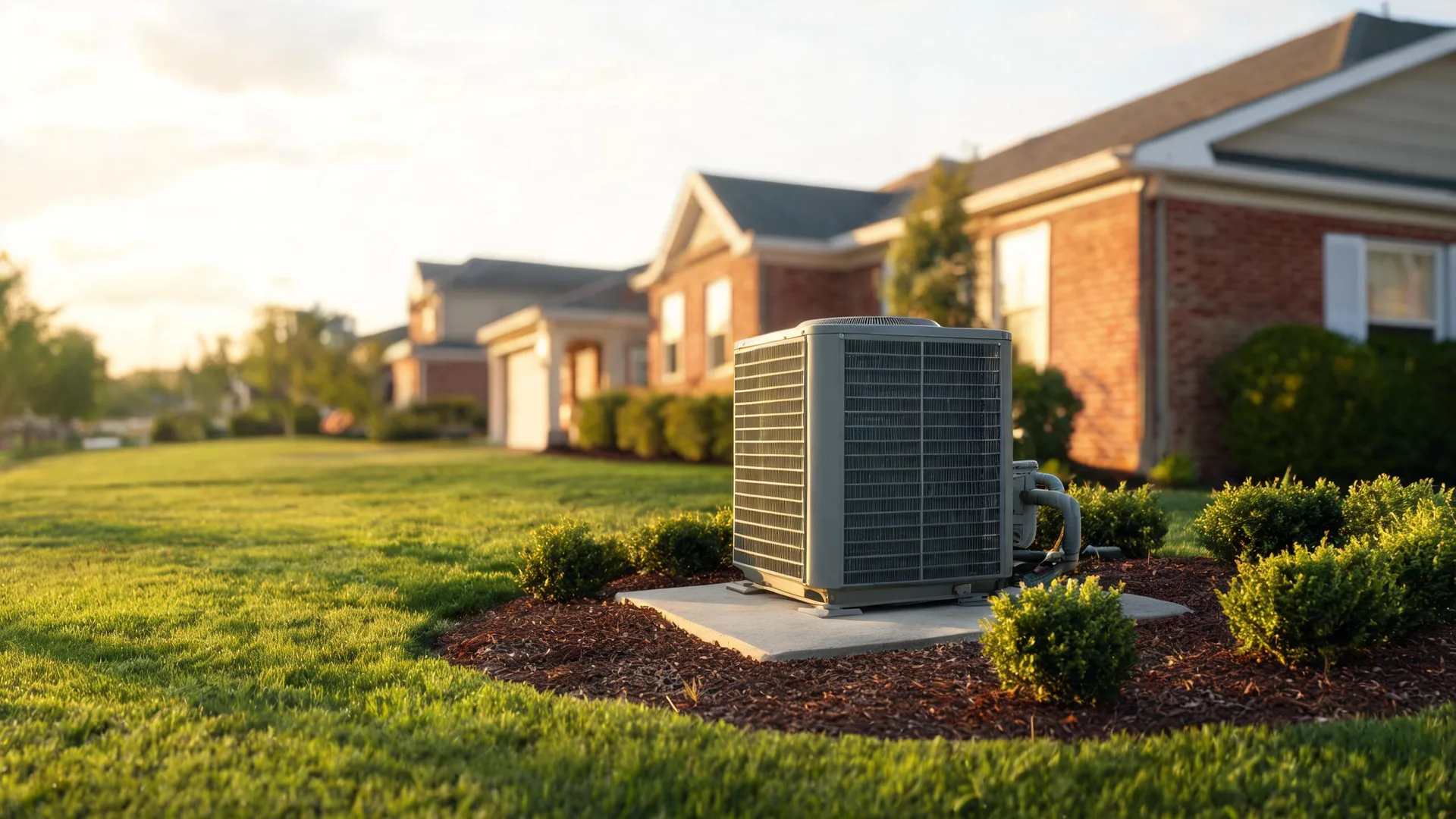
A grey heat pump outdoor unit mounted on a concrete pad against the exterior wall of a house with grey siding and stone veneer.

Heat Pump Repair in Columbus, IN

Tell us about the job

Takes about a minute. No obligation.

RepairHeat PumpBartholomew County, IN
Step 1 of 2

What ZIP code is the job in?

The heat pump is running but not keeping up

A heat pump in need of repair usually keeps running without doing its job. The air coming out of the vents feels barely warm, or the house never quite reaches the set temperature no matter how long the system runs. This points to a refrigerant leak, a failing reversing valve, or a compressor that is wearing out, not a dead system.

Short cycling and strange noises mean something specific

A heat pump that shuts off and restarts constantly, or that hums, clicks, or buzzes during startup, is telling you which part is struggling. A contractor needs to see this happening, or hear a description of exactly what it sounds like and when, to know whether it's the capacitor, the defrost control, or the outdoor fan motor before opening the unit up.

7 months
October through April, your system heats
4 months
June through September, it cools
24°F
the average winter night it heats against
84°F
the average summer afternoon it cools against
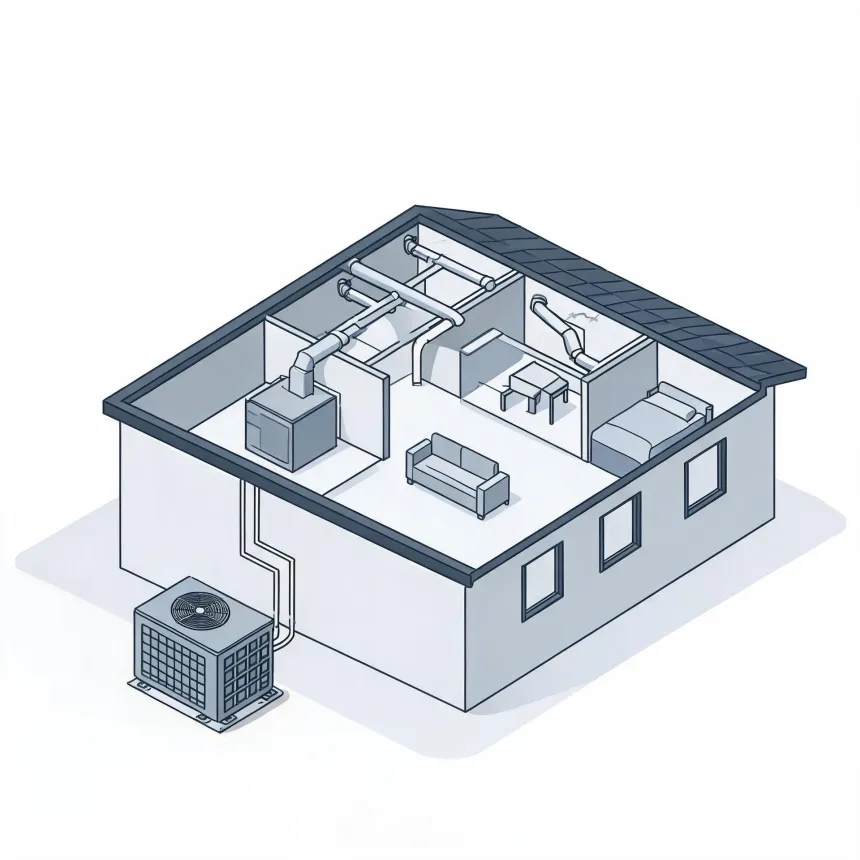
Isometric line illustration of a cutaway single-story house showing interior rooms with ducted air distribution, an indoor air handler, furniture, and an outdoor condenser unit connected by lines outside the wall.
Your system heats October through April and cools June through September.

NOAA nClimDiv, 1991–2020 normals

Bartholomew County asks real work of a heat pump, with cold winters and humid summers both pulling on it.

But the real strain is narrower than that, built for a winter that averages 24°F overnight, not the deep cold some places see, so a unit here often has less wear behind it than its age suggests.

A heat pump that's struggling to keep up costs more to run here, at 14.77 cents a kWh, so a repair pays for itself fast

Power costs 14.77 cents a kWh statewide
40 damaging wind events from 2015 to 2024
10 winter storms from 2015 to 2024

Heat pump trouble tends to surface right when the system switches jobs. Cooling here runs through September, then heat takes over in October, so a unit that has been idle on the heating side for months is suddenly asked to carry the house on its own. A part that was already marginal, a contactor with pitted points, a capacitor losing its charge, can sit fine through the mild months and only show itself the first time it has to work. That first cold stretch in October is when a weak part gets found. Having it looked at in September, before the switch, means a repair instead of a cold morning with no heat.

A newer system is worth repairing, not replacing

Half the homes in Bartholomew County were built in 1979 or later. If yours is one of them, or if the heat pump itself is newer than the house, it's probably not at the end of its life. A repair now is usually the right call, not a stopgap before a replacement.

Find a contractor
A man in a cap, dark jacket and work pants carries a canvas tool bag as he walks up steps toward an orange front door of a house with gray siding and a potted shrub.
A gray heat pump outdoor unit mounted on a concrete pad next to a residential house with lap siding and stone accents.

One visit, one system, checked piece by piece

A diagnostic starts outside, with the contractor watching the outdoor unit complete a full cycle if possible. They check refrigerant pressures with gauges, since too little or too much tells a different story about where the leak or restriction might be. Inside, they pull the air handler cover and check the reversing valve, the part that switches the system between heating and cooling, because a valve that's stuck partway is a common reason a heat pump runs constantly without warming the house. They'll test the capacitor and contactor in the outdoor unit, since worn contact points or a capacitor that's lost its charge often cause the clicking or humming a homeowner hears at startup. If the system is short cycling, they check the defrost control board and sensor, because a board that misreads outdoor temperature can send the unit into defrost cycles it doesn't need. Most of this is done with gauges, a multimeter and a careful ear, not guesswork, and it usually points to one part rather than a system in general decline.

A refrigerant leak gets bigger, not smaller

A heat pump low on refrigerant makes the compressor work harder to move heat, and that extra strain shows up as more heat. Left running, the compressor can overheat and burn out, turning a leak repair into a compressor replacement. The leak itself does not seal on its own either. It gets worse.

A struggling system hides what else it's doing

When a heat pump can't keep up, the thermostat calls for heat or cool almost constantly. That means whatever is already stressed, a weak capacitor, a contactor with pitted points, is cycling more than it was built to. Parts that might have lasted another season wear out faster when the system never gets a rest.

Most heat pump failures trace back to a handful of parts, and they fail for ordinary reasons. The capacitor loses its charge over time just from heating and cooling cycles, and once it's weak the compressor or fan motor struggles to start. Contactor points pit and burn from the arcing that happens every time the system switches on, until the connection gets unreliable. Refrigerant leaks usually start small, at a joint or a coil, and get worse rather than sealing themselves. The reversing valve can stick from corrosion or a worn coil, leaving the system stuck in one mode. The defrost control board can misread the outdoor sensor and send the unit into cycles it doesn't need, or skip ones it does. None of these mean the system is done. They mean one part gave out before the rest.

A heat pump rarely needs replacing just because one part failed. The compressor is the expensive part to replace, and the one that usually outlasts everything around it. Capacitors, contactors, defrost boards, reversing valves, these get swapped out on their own all the time without touching the compressor or the outdoor coil. What matters more than the system's age is whether the compressor itself is still sound. If a contractor finds good refrigerant pressures and a compressor that starts and runs the way it should, fixing the failed part is the straightforward call. The exception is a system that's failed the same way more than once, or one where the compressor is already showing the strain of a long-ignored refrigerant leak. That pattern, not a birth year, is what should decide the next step.