A large outdoor air-conditioning unit mounted beside a vinyl-sided house, surrounded by mulched garden beds and green shrubs.

Heat Pump Repair in Columbia City, IN

Tell us about the job

Takes about a minute. No obligation.

RepairHeat PumpWhitley County, IN
Step 1 of 2

What ZIP code is the job in?

Refrigerant leaks and worn contactors cause most no-heat calls

A heat pump that won't heat or cool often has a slow refrigerant leak at a fitting or coil, or a contactor that's pitted and stuck from cycling on and off thousands of times. The reversing valve is another common failure point, since it's what switches the system between heating and cooling and it works harder than almost anything else in the unit.


The outdoor unit takes the brunt of the wear

The outdoor coil and fan motor sit outside year round, so dirt, ice, and corrosion get to them in ways the indoor parts never face. A failing defrost control board will leave frost building up on that coil with no way to clear it, which cuts heating capacity fast and is worth having looked at before it strands you without heat.

8 months
October through May, your system heats
3 months
June through August, it cools
20°F
the average winter night it heats against
82°F
the average summer afternoon it cools against
Isometric illustration of a cutaway house showing interior rooms, ceiling ductwork and an air handler, connected by lines to an outdoor condenser unit on a pad beside the building.
Your system heats October through May and cools June through August.

NOAA nClimDiv, 1991–2020 normals

Air that feels cool in heating mode usually means a stuck reversing valve, not low refrigerant.

A heat pump running in the wrong mode wears its parts faster, so the valve is worth checking before it fails outright.

Heat runs October through May here. If the reversing valve or defrost board was already weak, this is when it shows.

Cooling runs June through August
Heat runs October through May
64 damaging wind events from 2015 to 2024

Indiana electricity ran 14.77 cents per kilowatthour in 2024, and a heat pump that's struggling pulls more of it than one running right. A stuck reversing valve or a failing defrost board makes the system work to make up for what it's losing, and that shows up on the bill before it shows up as a breakdown. A refrigerant leak does the same thing, since the compressor runs longer trying to hit the same temperature. None of that gets cheaper by waiting. If something's off with the heat, having it looked at now costs less than paying to run a system that's fighting itself all winter.

A newer home means your heat pump is usually worth repairing

Half the homes in Whitley County were built in 1979 or later, so there's a good chance yours is one of them. A heat pump that came with a newer house usually still has life in it. A stuck reversing valve, a weak contactor, a slow refrigerant leak, these are things worth fixing, not reasons to replace the system.

Find a contractor
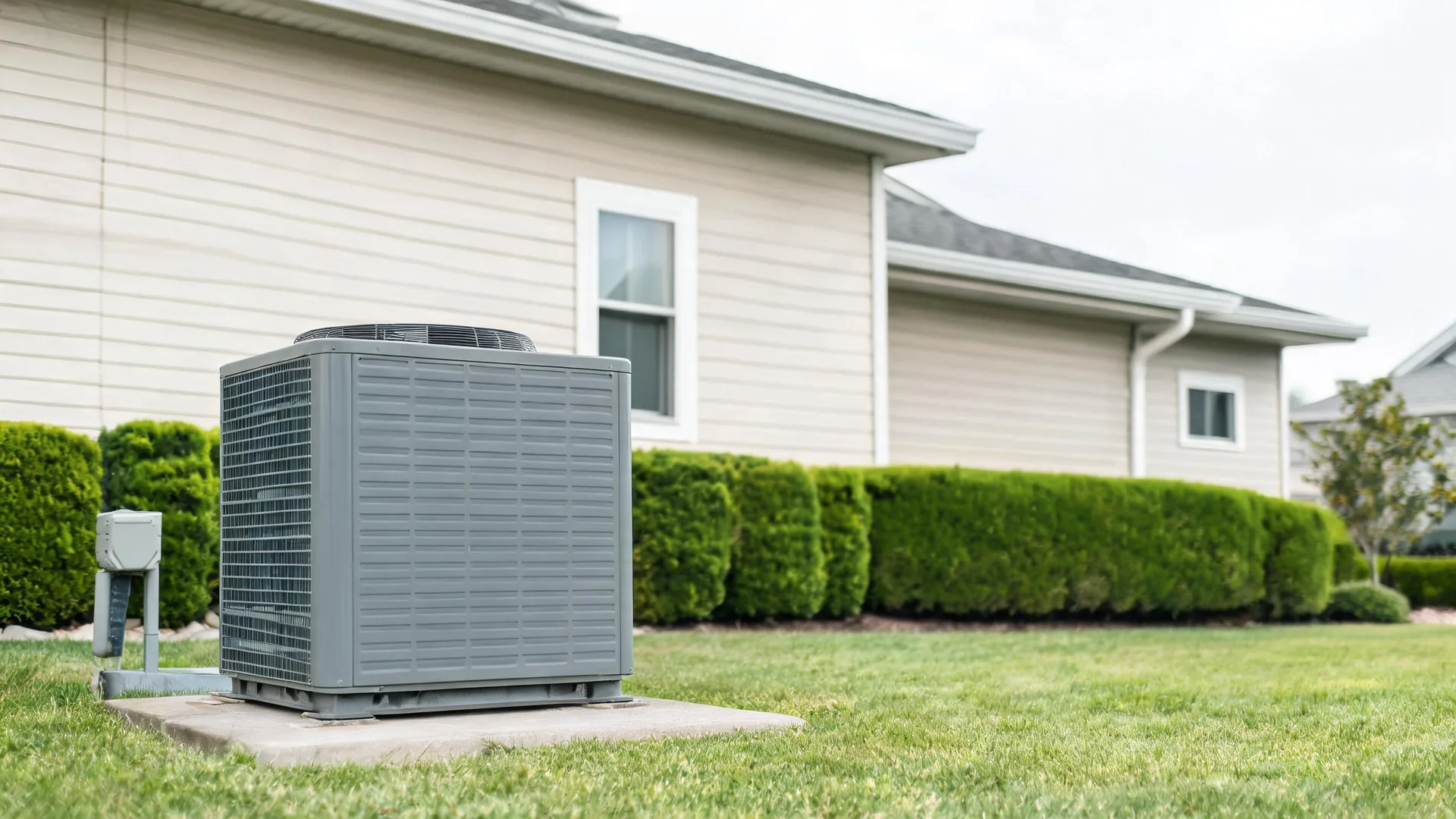
A gray heat pump condenser unit mounted on a concrete pad against the gray lap-siding exterior wall of a house.

A steadier load than extreme cold climates see

Winter is the bigger job on a heat pump here, with zone 5A calling for more heating than cooling across the year. That's a steadier load than extreme cold climates put on the compressor and the reversing valve, since the overnight low only averages 20°F across December, January and February. The wear you're more likely to find on this unit comes from the outside, not from the system working flat out. Damaging wind has hit Whitley County 64 times in the last ten years, enough to knock debris into the outdoor coil or bend a fan blade. Winter storms bring ice that coats the coil and makes the defrost board work to clear it. That's a different kind of wear than a system worn out from running hard, and it's usually the kind worth fixing.

What you can check safely

Look at the outdoor unit and see if the coil is packed with ice, leaves, or dirt. Clear away anything blocking airflow around it. Check your thermostat batteries and make sure it's set to heat, not cool or auto. Go to your breaker panel and check whether the breaker for the outdoor unit has tripped. Change the air filter if it looks gray or clogged, since a blocked filter can make the whole system struggle.

What to leave alone

Don't take any panels off the outdoor unit or touch the wiring inside it. Don't try to chip ice off the coil by hand, since that can bend the fins or damage the tubing behind them. Don't add refrigerant yourself even if you have some on hand, since the wrong charge does more harm than running low. If the breaker trips again after you reset it, stop there and leave it off until someone looks at it.

A frosted coil left alone doesn't stay a small problem. If the defrost board isn't cycling the way it should, ice keeps building on the outdoor coil, and that ice blocks the airflow the system needs to pull heat from outside. The compressor keeps running anyway, trying to make up what the iced-up coil can't deliver, and it ends up working harder and longer than it was ever meant to. A slow refrigerant leak follows the same pattern. The charge drops a little more each week it runs low, and a compressor working on reduced charge runs hotter than it should. Keep that up long enough and the repair stops being about the leak or the ice and becomes about a compressor that didn't survive the extra strain. None of that fixes itself by giving it more time.

A repair makes sense when the part that failed is one part, and the rest of the system was running fine before it quit. A contactor, a capacitor, a defrost board, these fail on their own without dragging anything else down with them, so replacing the one part gets you back to a system that works. Replacement starts to make more sense when the compressor itself is damaged, since that's the one part that can't be swapped out on its own without the cost rivaling a new system. Age matters less than what's actually worn. A unit that's been fighting a stuck valve or a slow leak for a while has likely put extra strain on the compressor even if the compressor itself hasn't failed yet, and that's worth knowing before you decide. The honest way to tell is to have someone look at what's actually failed, not guess from how old the unit is or how it sounds.