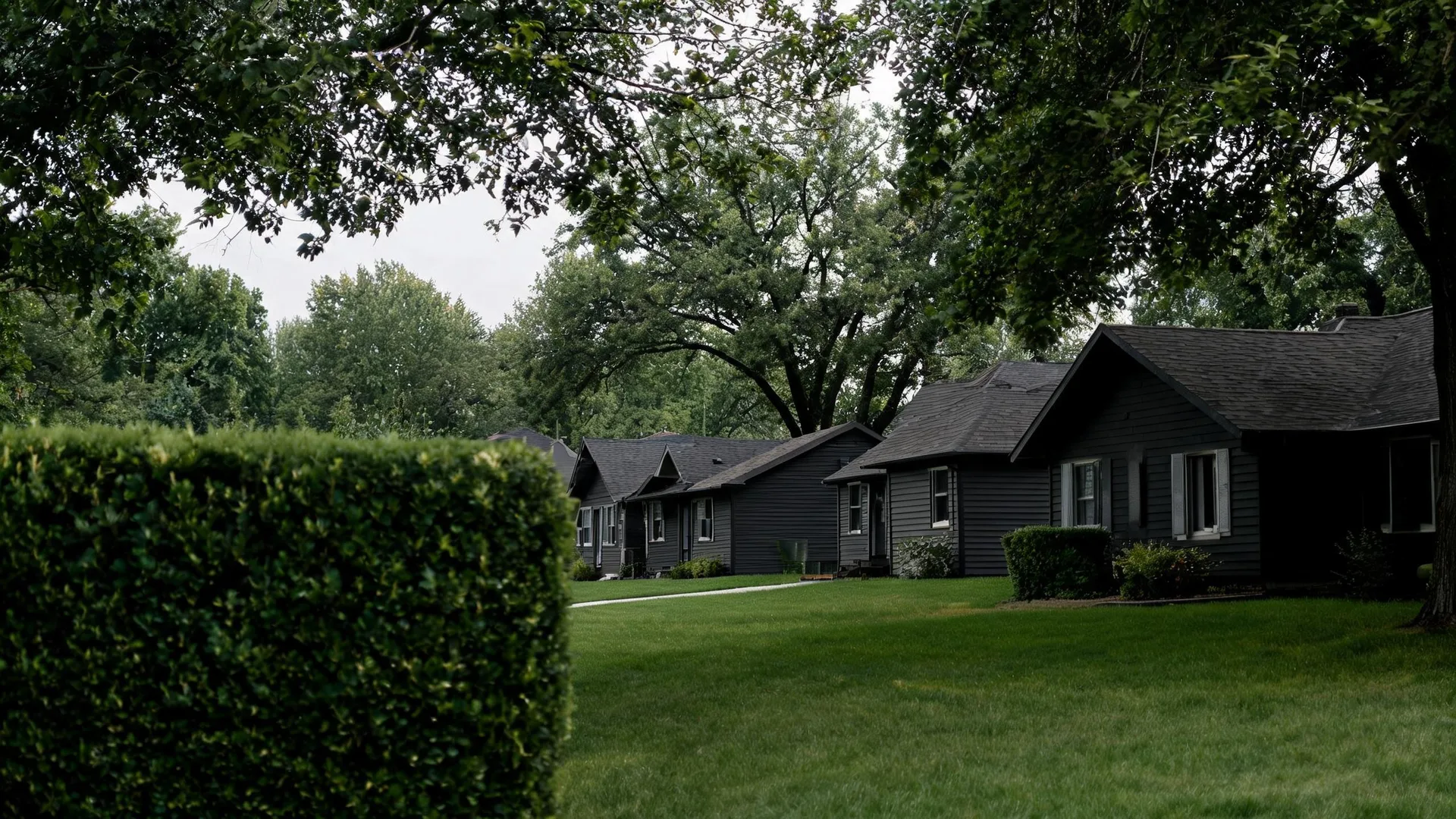





A row of dark-painted single-story cottages with gabled shingle roofs behind a mowed lawn, a trimmed hedge in the left foreground and large leafy trees overhead under an overcast sky.

Heat Pump Repair in Boonville, IN

Tell us about the job

Takes about a minute. No obligation.

RepairHeat PumpWarrick County, IN
Step 1 of 2

What ZIP code is the job in?

Most heat pump failures trace back to a handful of parts. The reversing valve sticks and the system gets stuck in one mode, blowing cold air when it should heat or warm air when it should cool. A low refrigerant charge, usually from a slow leak, makes the unit run long cycles without bringing the house to temperature. The defrost control board can fail, and ice builds up on the outdoor coil until airflow stops. Outside, the fan motor wears out from running through all kinds of weather, and the capacitor that gets it started weakens over time until the compressor won't kick on at all. A dirty outdoor coil or a clogged filter forces the whole system to work harder, and that extra strain is what wears down the parts that eventually quit.

7 months
October through April, your system heats
5 months
May through September, it cools
27°F
the average winter night it heats against
87°F
the average summer afternoon it cools against
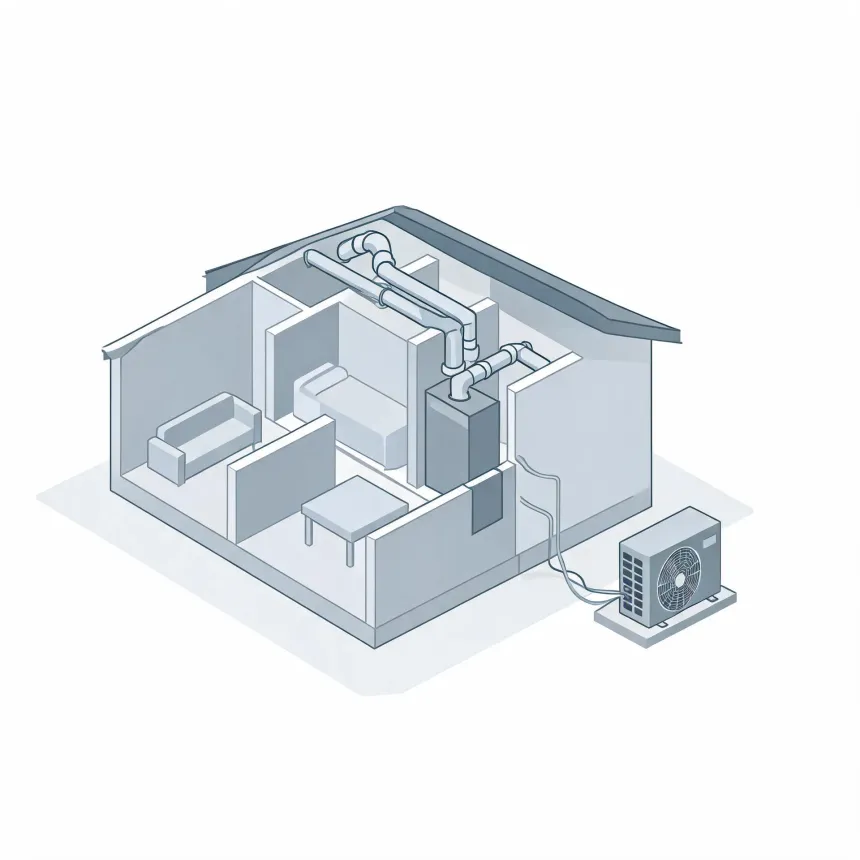
Isometric line illustration of a cutaway house showing interior rooms with furniture, ceiling ductwork connected to an indoor air handler, and a line running outside to an outdoor condenser unit.
Your system heats October through April and cools May through September.

NOAA nClimDiv, 1991–2020 normals

Heat pumps in Boonville run nearly year round, October through April for heat and May through September for cooling.

A weak part usually gives out in the first cold snap or the first hot stretch, right when the system first leans on it.

Half the homes in Warrick County date to 1986 or later

Half the homes here were built by 1986
77 damaging wind events from 2015 to 2024
Power costs 14.77 cents a kWh statewide
A mixed climate, not a hard oneZone 4A asks real work of both heating and cooling here, nothing more than that.

If your heat pump came with a newer build, replacing a worn part is usually enough to get it back to normal. A system installed with a house from the last couple decades hasn't had the years of wear that would point toward something bigger going wrong. Have a contractor confirm which part failed and why, then fix that part. There's no reason to think the unit itself is near the end of its working life just because it broke down once.

Get it looked at early

Problems tend to show up in the first weeks of the season, when the load hits a part that was already weak.

Find a contractor
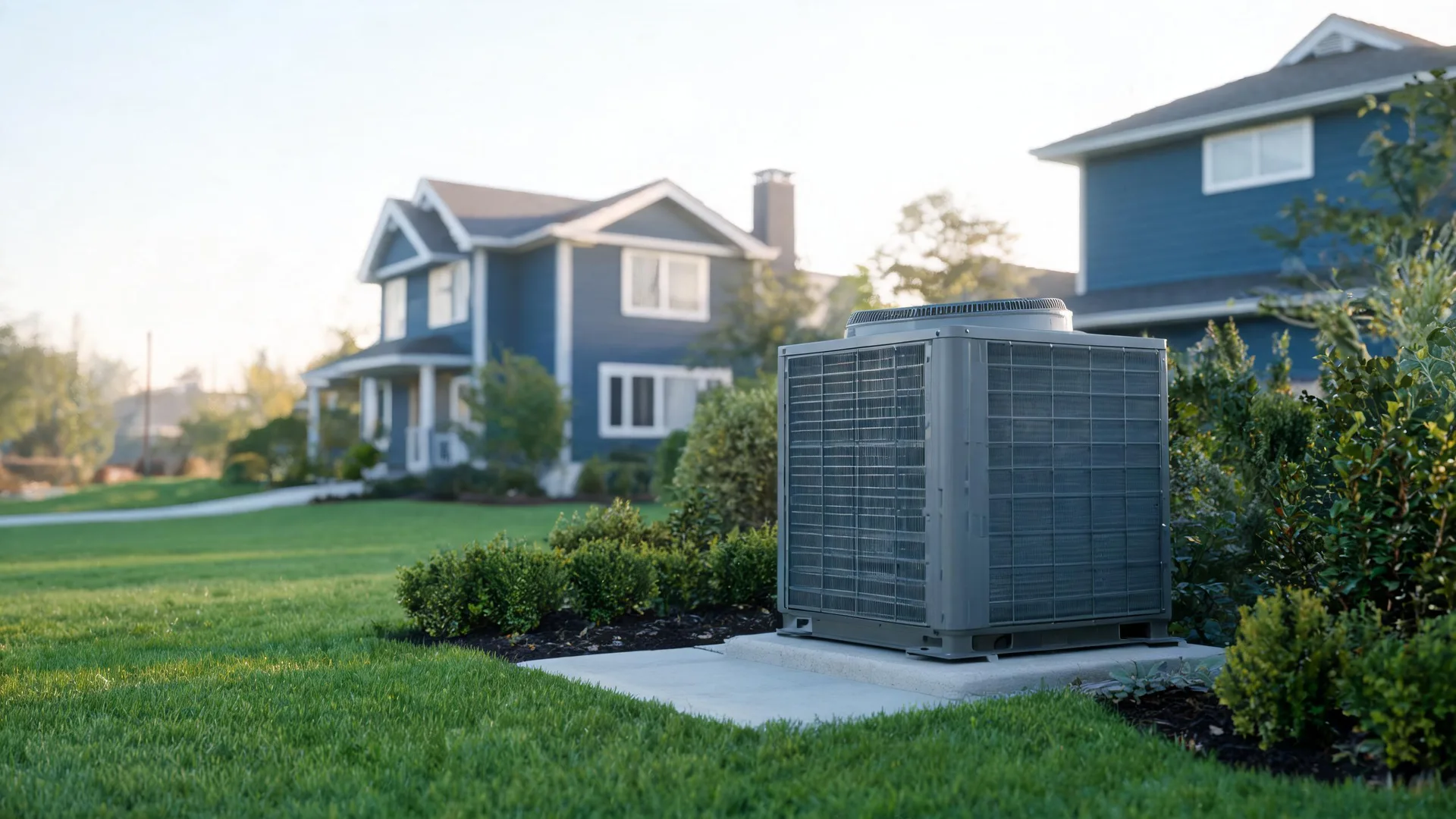
A gray outdoor HVAC unit mounted on a concrete pad beside a house with gray lap siding and a stone foundation.

What you can check before anyone comes out

Start at the thermostat. Make sure it is set to heat or cool the way you want and that the target temperature is actually different from the room temperature. If that looks right, go check the filter. A filter clogged with dust starves the system of airflow and can cause problems that look a lot worse than they are. Swap it if it is gray and matted. Outside, look at the unit itself. Ice on the coil or the fan means something is wrong, but do not chip at it or spray it off. Clear away anything piled against the sides, leaves, snow, stored items, anything blocking airflow in or out. Listen to what it is doing. A hum with no fan movement points to the capacitor or the motor. Warm air coming out when you asked for heat points to the reversing valve. Last, flip the breaker off and back on once. A tripped breaker stops the whole system, and sometimes that is the entire problem. None of this tells you exactly what failed, but it gives the contractor a place to start.

Noises tell you where to look

A grinding or screeching sound outside usually means the fan motor bearings are going. A clicking that repeats without the fan ever starting points to the capacitor. A buzzing from the indoor unit when the system should be quiet can mean the blower motor is struggling. Each sound points to a different part, so pay attention to where it comes from and when it happens.
Short cycling wears out the parts that are left

A heat pump that shuts off and restarts every few minutes instead of running a full cycle is fighting something, low refrigerant, a failing sensor, or a compressor that's overheating. Every one of those short cycles puts a load on the start components, so the longer this goes on unfixed, the more likely something else in the system fails along with it.

A system low on refrigerant doesn't just heat poorly, it runs the compressor hotter than it was built to run. That heat breaks down the oil that keeps the compressor's moving parts from wearing on each other. Ice on the outdoor coil does something similar from the other direction. Once it blocks airflow, the compressor starts pulling in liquid refrigerant instead of gas, and that can damage it in a single afternoon of running. A reversing valve stuck in one mode seems minor, blowing the wrong temperature air, but the system behind it is still working just as hard and getting no benefit for it. None of these start out as compressor problems. Left running, most of them end up as one.

A repair makes sense when the part that failed is one piece doing one job, a capacitor, a fan motor, a sensor. Swap it and the system goes back to working the way it did before. Replacement starts to make more sense when the broken part is the compressor itself, since that's the one piece a contractor can't just swap out cheaply, and a failing compressor often means the system was already straining for a while before it quit. Age matters too, not because a number tells you a unit is done, but because older refrigerant and parts get harder to source, and a contractor may be patching one failure while the next one is already forming somewhere else in the system. The honest way to decide is to ask what actually failed and why, not just that something failed. A part that gave out from one bad weather stretch is a different story than a compressor that cooked itself from months of running low on charge.