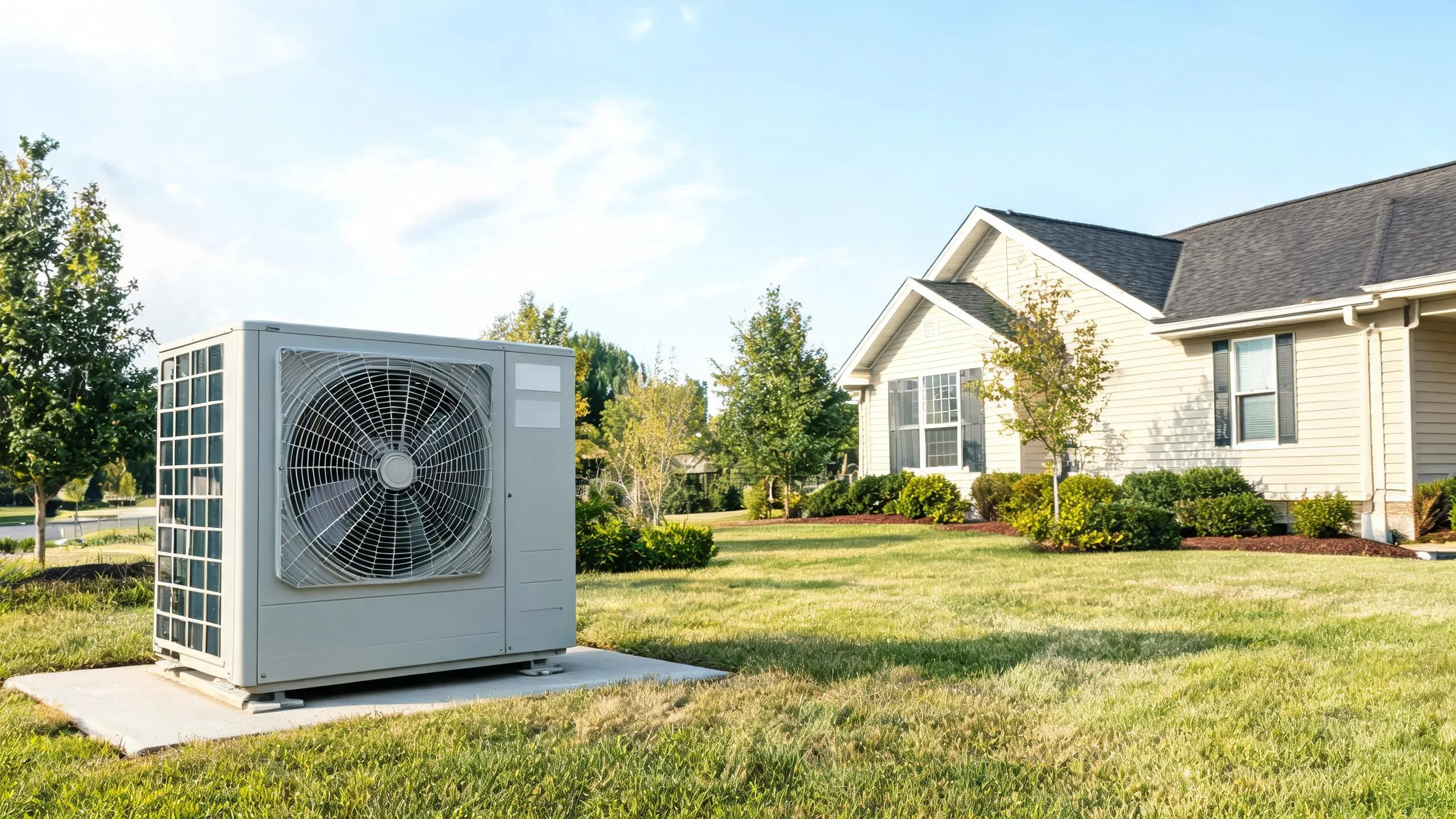
A grey heat pump outdoor unit mounted on a concrete pad in a suburban backyard, with a single-storey house visible behind it.

Heat Pump Repair in Angola, IN

Tell us about the job

Takes about a minute. No obligation.

RepairHeat PumpSteuben County, IN
Step 1 of 2

What ZIP code is the job in?

September is when a weak heat pump gets found out

Heat here switches over to heat in October, and whatever strain built up over the summer shows up fast once the pump has to work for warmth instead of against it. A unit that limped through August cooling often won't make it through the first cold mornings without help.


Get it looked at before the switch, not after

A heat pump that's already struggling in September will only have more demand put on it as the months go on, since heat here runs all the way from October through May. Catching the cause now means it gets fixed once, instead of failing again in the middle of winter.

8 months
October through May, your system heats
3 months
June through August, it cools
19°F
the average winter night it heats against
81°F
the average summer afternoon it cools against
Isometric line illustration of a cutaway single-story house showing interior rooms, ceiling ductwork and an indoor air handler, connected by a line to an outdoor condenser unit on a pad beside the building.
Your system heats October through May and cools June through August.

NOAA nClimDiv, 1991–2020 normals

A heat pump in Angola isn't fighting extreme heat or extreme cold most of the year.

So when one acts up, the cause is usually wear or a part gone bad, not a system that was overworked and is done for good.

Half these homes date to 1981 or earlier, which just means an older heat pump may be original to the house

Half the homes here were built by 1981
52 damaging wind events from 2015 to 2024
26 hail events from 2015 to 2024

A heat pump that's short cycling, running constantly, or blowing air that isn't quite warm enough isn't necessarily near the end. A bad capacitor, a stuck reversing valve, or a low refrigerant charge from a slow leak are all repairs, not reasons to replace the unit. What matters more is whether a tech keeps getting called out for a different problem each time. One failure is a part wearing out. A pattern of failures across different parts means the system as a whole is aging, even if each repair was reasonable on its own. Age matters too, but mostly alongside that pattern. A unit still running on its original compressor that's never needed a repair is a different case than one where the board has already been swapped out more than once.

If it's acting up now, it's worth fixing now

A heat pump that hasn't been run ragged by weather is usually a heat pump worth repairing. Get the actual cause checked before the cold mornings hit.

Find a contractor
A man in a dark long-sleeved shirt and brown work pants, seen from behind, carries a waxed canvas tool bag up porch steps toward an orange front door, with a potted shrub in a terracotta pot beside him.
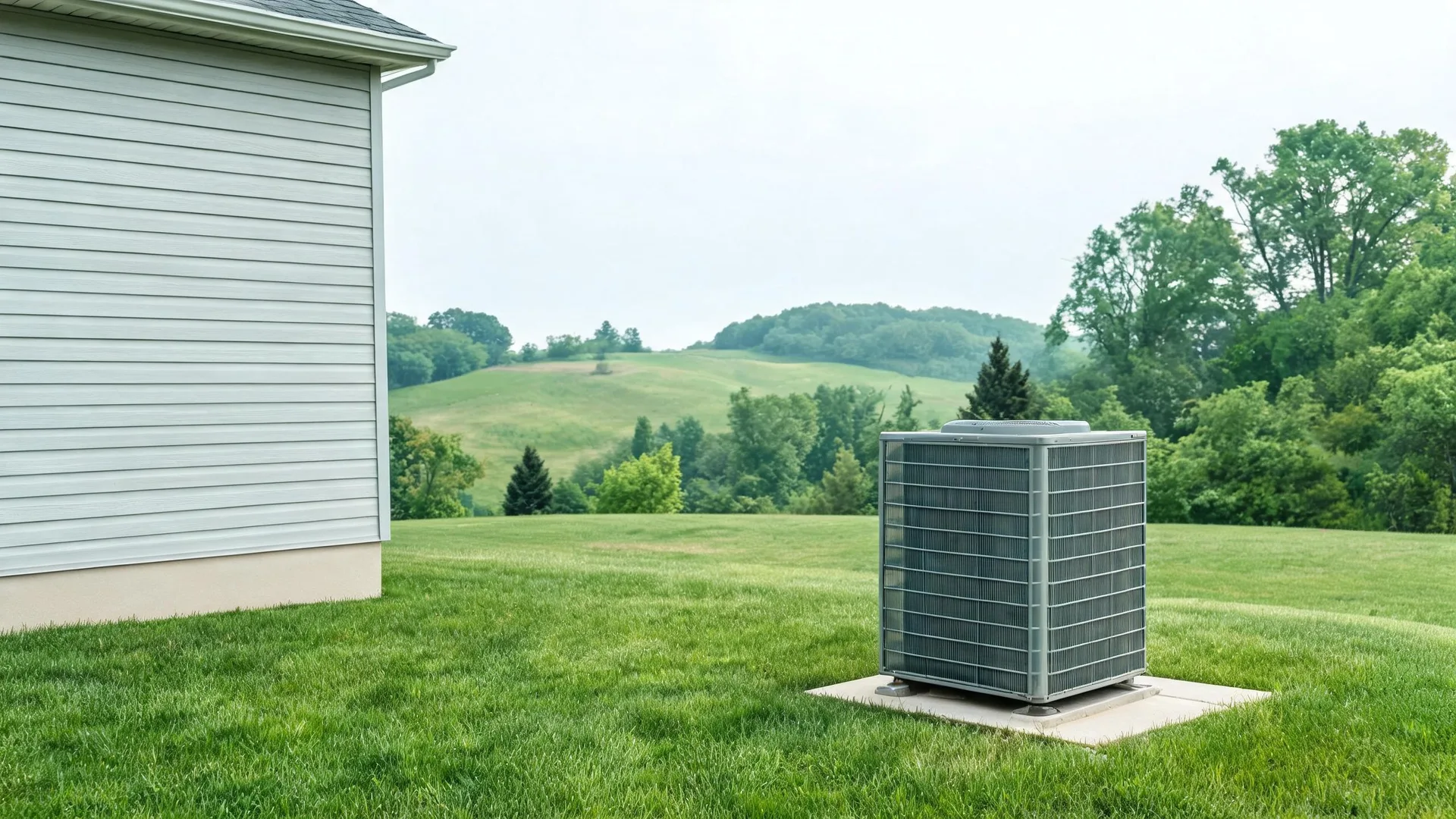
A residential heat pump outdoor unit mounted on a concrete pad next to a house with gray vinyl siding.

What to check before anyone comes out

Before anyone comes out, check the thermostat batteries and the setting itself. Make sure it's actually calling for heat and not stuck on a schedule. Go outside and look at the outdoor unit. Clear away leaves, grass clippings or anything blocking the coil, since restricted airflow there can look exactly like a failing part. Check the air filter inside. A clogged filter starves the system of airflow and can cause the exact short cycling or weak output that feels like a bigger problem. Look at the outdoor unit during a defrost cycle. Some frost is normal in cold weather, but a thick coat of ice that doesn't clear after a few hours points to a stuck reversing valve or a sensor issue, not something to chip off yourself. Check that the circuit breaker hasn't tripped, since a heat pump that won't start at all sometimes just needs power restored. None of this fixes a bad capacitor or a low refrigerant charge, but it rules out the simple stuff first and gives a tech a clearer picture of what's actually wrong when they get there.

It won't switch over to heat at all

A heat pump stuck blowing cold air, or not running at all when it's set to heat, often comes down to the reversing valve. That valve redirects refrigerant flow so the system can heat instead of cool. When it sticks, the unit either keeps acting like an air conditioner or shuts down trying to figure out which mode it's in.

It's making a sound that wasn't there before

A grinding, buzzing or rattling sound usually points to something specific. A motor bearing failing, a loose blade hitting its housing, a contactor pitted and struggling to close. None of these get quieter on their own. Running the system while a bearing wears out can turn a motor replacement into a compressor replacement.

A reversing valve that sticks only sometimes will stick more often the longer it's asked to switch back and forth under strain. A capacitor that's weak gives the compressor a harder start every cycle, and a hard start pulls more current and heats the windings more than a clean one does. Refrigerant leaking out slowly doesn't stay slow. Less charge means the compressor works harder to move what's left, and the compressor is the one part in the system a tech cannot just swap in an hour. Ice that isn't clearing off the outdoor coil blocks airflow, so the system runs longer to do the same job, which feeds whatever caused the ice in the first place. A sound that shows up once and gets ignored is a part rubbing or straining, and it keeps rubbing or straining every time the system runs after that. None of this means shut the heat off and wait for someone. It means the part failing now is rarely the part that ends up getting replaced if it keeps running.

A tech starts by asking what the system is doing and when it started doing it. Does it happen in heat mode, cool mode, or both. That matters before anyone touches a wrench. Next comes checking the numbers. Temperature at the vents, pressure in the lines, amp draw on the compressor and fan motors. Those readings point toward a part before the cabinet even comes off. A capacitor gets tested against its actual rating, not just eyeballed. A reversing valve gets checked for the signal reaching it, and for whether both sides are at the temperature they should be, since a valve that never shifted reads differently than one that shifted and got stuck partway. The visit ends with an actual cause named, not just the symptom that was called in.