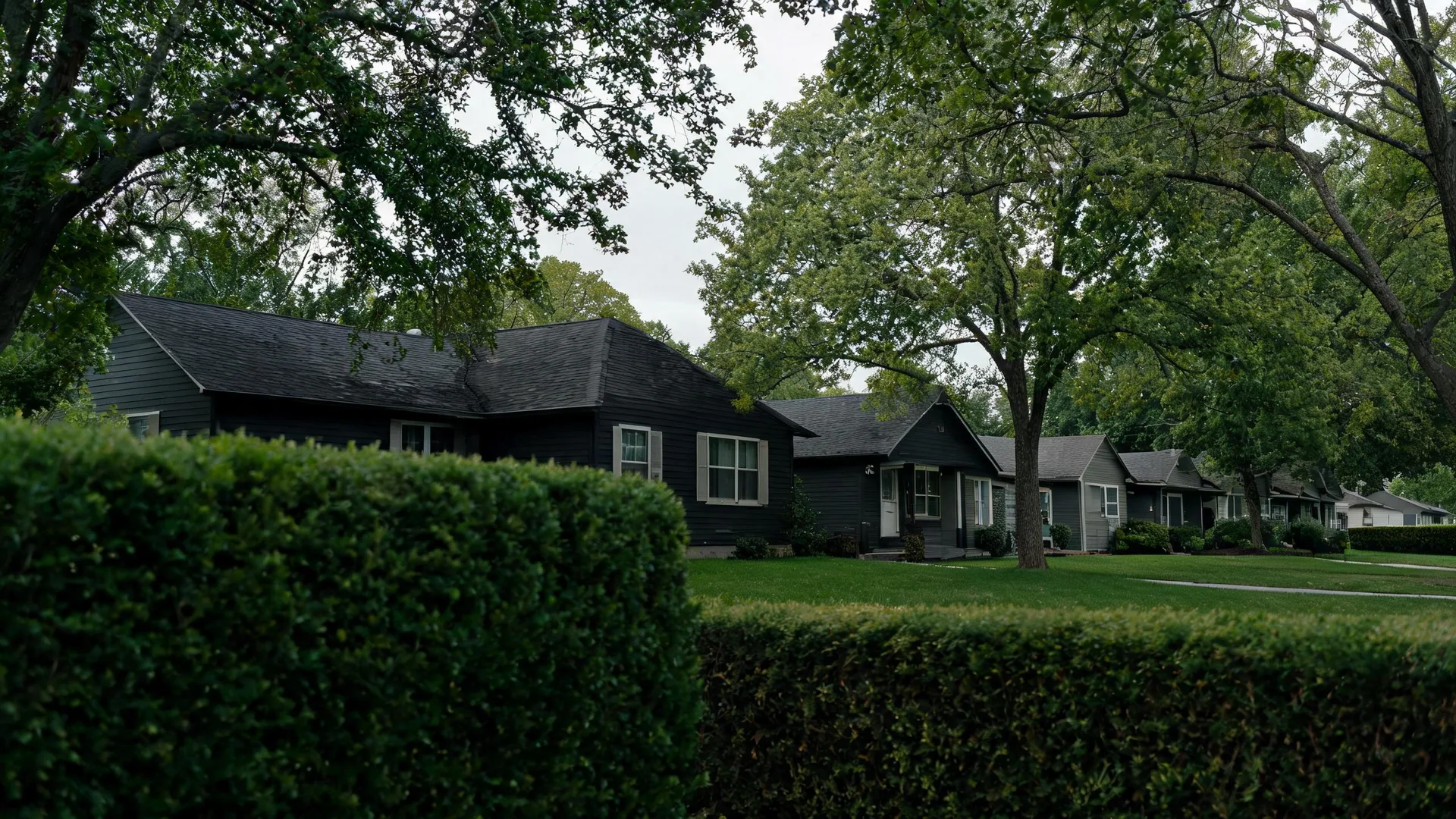
A row of dark-painted single-story houses with lawns and large deciduous trees, seen behind a tall trimmed hedge.

AC Repair in Zionsville, IN

Tell us about the job

Takes about a minute. No obligation.

RepairCentral ACBoone County, IN
Step 1 of 2

What ZIP code is the job in?

June is when weak parts show up

Cooling in Boone County runs June through August. The first hot stretch puts full load on a system that has not run since last summer, and a capacitor or contactor that was already marginal often fails right then instead of holding on.


May is the month to get it checked

If the AC struggled last summer or is acting up now, calling before June gives a contractor time to find the weak part before it fails outright. Waiting means finding out in the middle of a hot week instead.

3 months
June through August, your air conditioner is on duty
82°F
the average summer afternoon it cools against
43 hail events
in ten years, and hail bends the fins on outdoor coils
41 wind events
in ten years, and wind drives debris into outdoor units
Isometric grey illustration of a cutaway single-story house showing interior rooms, ceiling ductwork connected to an indoor air handler, and an outdoor condenser unit linked by lines outside the wall.
Your air conditioner works hardest from June through August.

NOAA nClimDiv, 1991–2020 normals

Boone County summers run about three months, June through August, with afternoon highs near 82°F and a dew point around 64°F that makes the air feel heavier than the number alone suggests.

That is a normal cooling load for central Indiana, so a system that is short-cycling or not keeping up is dealing with a specific broken part, not an unusual climate.

Half the homes here were built in 1995 or later, and the AC could be too

Half the homes here were built by 1995
Cooling runs June through August
Summer afternoons average 82°F

If your house was built around 1995 or later, the AC that came with it is probably not old enough to be worn out on its own. A system in that age range still breaking down is usually one part giving out, not the unit reaching the end of its life. That makes repair the right call first. It's worth asking the contractor what actually failed before any talk of replacement, especially if the house is newer.

Get it looked at early

Problems tend to show up in the first weeks of the season, when the load hits a part that was already weak.

Find a contractor
A man in a dark shirt and tan work pants, seen from behind, carries a canvas tool bag up concrete steps toward an orange front door flanked by gray siding and a potted shrub.
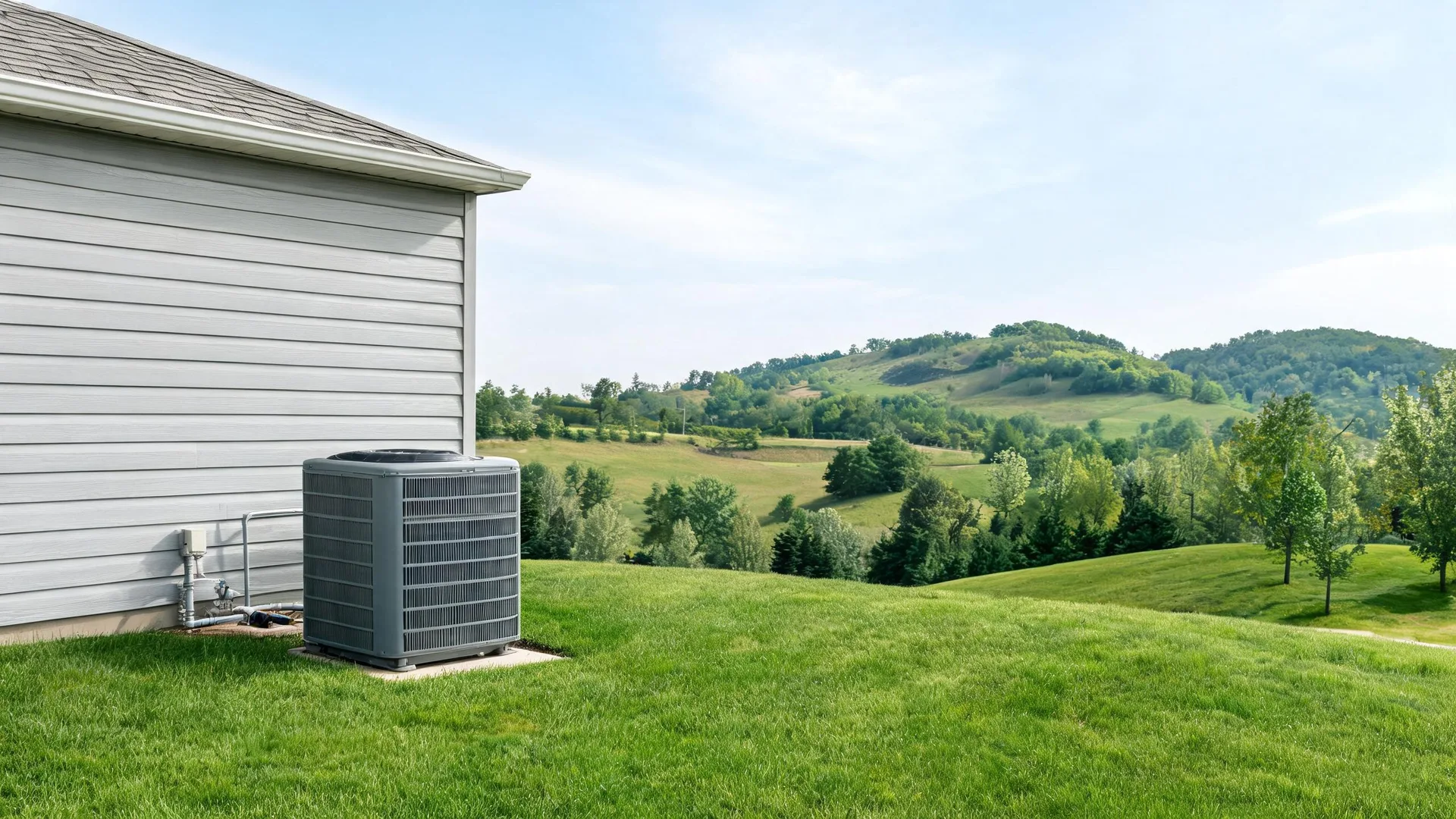
A gray metal air conditioning condenser unit mounted on a concrete pad in a flat grassy field under a partly cloudy sky.

The usual reasons an AC quits

Most AC breakdowns trace back to a handful of parts, not the whole unit. The capacitor stores a charge that gets the compressor and fan motors started and keeps them running. It weakens slowly over years of heat cycling, then one day it can't deliver the kick needed and the system hums or clicks without starting. The contactor is the switch that sends power to those parts, and its contacts pit and burn from years of arcing until it sticks or stops making contact at all. The condenser coil outside gives up heat to the air, and if it is caked with dirt or grass clippings it can't shed that heat well, so the compressor runs hotter and harder until something in it fails. Refrigerant doesn't get used up, so a system low on charge has a leak somewhere in the lines or coil, and that leak only gets worse until it's found and sealed. The fan motor that pushes air across the condenser coil wears out like any motor does, and once it slows down or stops, the whole system overheats behind it. None of these fail because a machine is old in years. They fail because they've been cycling on and off for seasons, and the parts that handle electrical load or mechanical wear give out one at a time.

Check the simple things first

Look at the thermostat setting before anything else, since a setting bumped too high or switched to fan instead of cool explains a lot of no-cool calls. Check the breaker box for a tripped breaker. Go outside and make sure the outdoor unit is actually running, the fan spinning, and clear away any leaves or grass clippings piled against it. Inside, pull the air filter and hold it up to light. If you can't see light through it, that alone can choke airflow enough to ice the coil and shut the system down.

Know what to leave alone

Opening the outdoor unit's panel or touching anything inside it means working near a capacitor that holds a charge even with the power off, and that's a job for someone with the right tools. If the filter is clean, the breaker is fine, and the thermostat is set right but the system still won't cool, stop checking parts yourself. A unit that's freezing up, tripping its breaker repeatedly, or making a grinding or screeching noise needs a contractor before it runs again, not after.

Overhead view of a gray residential air conditioning condenser unit mounted on a concrete pad beside a house with asphalt shingle roofing.

A new air conditioner would save little on running costs in Boone County, so the repair decision comes down to the unit's condition.

  • A new one at the federal minimum, 13.4 SEER2$220 a year
  • An older air conditioner$240 a year

Estimates for a typical Boone County home, compared with an older unit built to the previous federal minimum, from EIA household energy data, Indiana fuel prices and NOAA climate normals. Your home will differ.

Repair makes sense when a part like a capacitor or contactor has failed.

Replacement makes sense when the compressor has failed or the system uses R-22 refrigerant, which is no longer made.

A diagnostic visit starts with questions, not tools. A contractor wants to know what the system was doing before it quit, whether it was cooling poorly first or stopped all at once, and whether any breaker or switch got touched. Then they check the obvious path before the hidden one: power at the thermostat, power at the outdoor disconnect, the breaker holding under load. Gauges go on next to read the refrigerant pressure, which points toward a clean system, a low charge, or a coil that isn't moving enough air. A failing capacitor shows up fast, either by a meter reading below what's stamped on its case or by watching the compressor try and fail to start. Any of this gets written down as a reading, not a guess, because the part that's actually out of spec is the one worth replacing.