






Low-angle view across a mown green lawn toward a dark-sided building at left and a cream-colored single-story house with trees in the background under an overcast sky.

AC Repair in South Bend, IN

Tell us about the job

Takes about a minute. No obligation.

RepairCentral ACSt. Joseph County, IN
Step 1 of 2

What ZIP code is the job in?

St. Joseph County saw 159 damaging wind events and 51 hail events between 2015 and 2024. Eight tornadoes touched down in that same stretch. An outdoor condenser sits outside through all of it, and hail dents fins or bends them over the coil inside. Wind throws branches and debris into the fan and the cabinet. A unit can take a hit like that and still start up and run, so the damage doesn't always announce itself. If a storm has come through your yard, it's worth having the unit looked over even while it's still cooling the house.

3 months
June through August, your air conditioner is on duty
81°F
the average summer afternoon it cools against
51 hail events
in ten years, and hail bends the fins on outdoor coils
159 wind events
in ten years, and wind drives debris into outdoor units
Isometric line illustration of a cutaway single-story building showing interior rooms, ceiling ductwork and an air handler, connected by lines to an outdoor condenser unit beside the exterior wall.
Your air conditioner works hardest from June through August.

NOAA nClimDiv, 1991–2020 normals

A breaker that trips once might just be a loose wire or a surge. One that trips twice is the system telling you to stop flipping it back on.

Check the outdoor disconnect and the filter before anything else. A clogged filter starves the system of airflow and can shut it down on its own.

Half the homes here were built before central air was ever installed in them

Half the homes here were built by 1968
Cooling runs June through August
Summer afternoons average 81°F
The First Hot Week Finds the Weak PartCooling runs June through August here, and trouble usually shows up early.

Half the homes in St. Joseph County were built in 1968 or earlier. If yours is one of them, the air conditioner has likely been replaced at least once already, maybe more, and whatever is running now has its own age separate from the house. Before paying for a repair on an older unit, ask the contractor how many years it has left in it. A compressor on its way out can still take a part replacement, but the bill is worth weighing against a system that might need full replacement in a year or two anyway. Worth asking, too, when the current unit was installed, if that's not something you already know.

Storms Pass Through. Have the Unit Checked Anyway.

If a storm has come through recently, and one has most years, a unit that still runs isn't the same as a unit that's fine. Have it checked before the next hot stretch asks more of it.

Find a contractor
A man in a cap, dark shirt and tan work pants walks up concrete steps toward a red front door, carrying a canvas tool bag with tools in its side pocket.
A gray metal air conditioning condenser unit mounted on a concrete pad in a flat grassy field under a partly cloudy sky.

What the Unit Is Telling You Before It Quits

An air conditioner doesn't fail all at once. It gives notice first. Warm air coming out of the vents while the thermostat still says it's running means the compressor has quit even though the fan hasn't. Short cycling, where the unit kicks on and off every few minutes instead of running a full cycle, wears on the compressor every time it restarts. A hissing or bubbling sound near the indoor coil points to a refrigerant leak, and that's not something that fixes itself or tops back up on its own. Ice on the copper line usually means airflow is restricted, either a dirty filter or a blower that isn't pulling enough air across the coil. A musty smell when the system starts usually means moisture sitting somewhere it shouldn't, often in the ductwork or around the drain pan. None of these mean the whole system is done. Most of them are a single part giving out while the rest of the unit is fine. The ones worth acting on fast are the electrical ones, a breaker that keeps tripping or a burning smell from the cabinet, because those can damage other parts the longer they run.

Capacitors Wear Out on a Schedule

The capacitor gives the compressor and fan motor the push they need to start. It's a part that degrades with heat and time, not a part that breaks from one bad event. A weak capacitor shows up as a unit that hums but won't start, or a fan that spins slowly when it does. It's one of the most common reasons for a no-start call, and one of the simpler fixes once someone's looked at it.

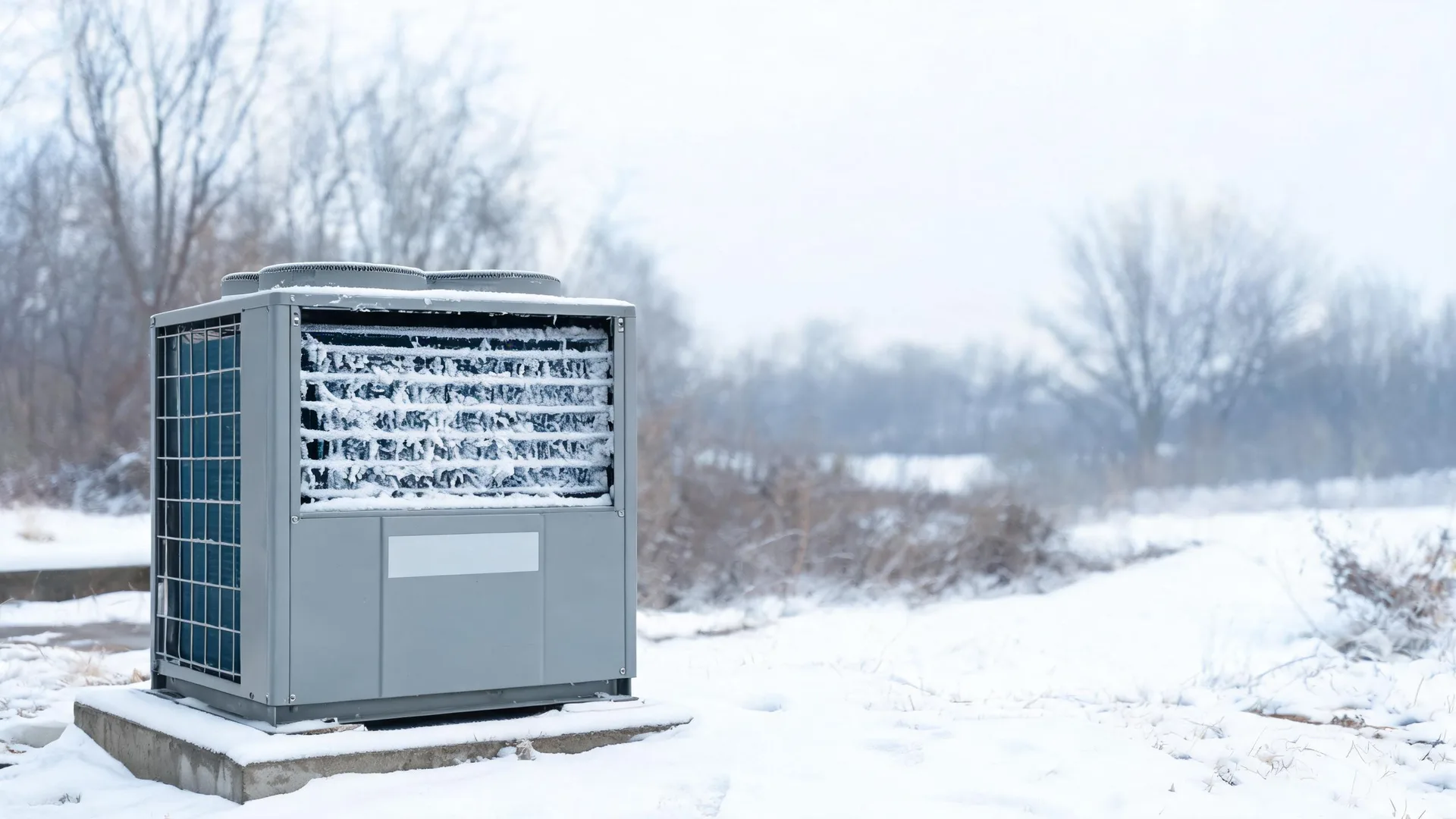
The Coil Needs Airflow to Do Its Job

The indoor coil cools the air passing over it, and it depends on steady airflow to stay above freezing. Cut that airflow, with a dirty filter, a failing blower motor, or a duct that's blocked, and the coil ices over instead. Once ice builds up, it blocks airflow even further, so the problem feeds itself. By the time someone notices ice on the line or warm air at the vents, the fix might be as simple as a filter or as involved as a blower motor.

An outdoor air conditioning condenser unit mounted on a concrete pad next to a blue-sided residential house at sunset.

A new air conditioner would save little on running costs in St. Joseph County, so the repair decision comes down to the unit's condition.

  • A new one at the federal minimum, 13.4 SEER2$190 a year
  • An older air conditioner$200 a year

Estimates for a typical St. Joseph County home, compared with an older unit built to the previous federal minimum, from EIA household energy data, Indiana fuel prices and NOAA climate normals. Your home will differ.

Repair makes sense when a part like a capacitor or contactor has failed.

Replacement makes sense when the compressor has failed or the system uses R-22 refrigerant, which is no longer made.

A diagnostic call starts outside at the condenser, checking that the fan spins freely and the coil fins aren't packed with debris. From there it's a set of readings: refrigerant pressure, the amp draw on the compressor and fan motor, voltage at the capacitor. Those numbers point to a part before any cover comes off. Inside, the tech checks the coil for ice or buildup and the airflow coming off the blower, since a weak signal there can mimic a refrigerant problem. The thermostat gets tested too, because a bad sensor or a wiring fault can look exactly like a compressor that won't kick on. Once the actual cause is found, the tech can say whether it's a part worth replacing or a sign the system is further along in wearing out.