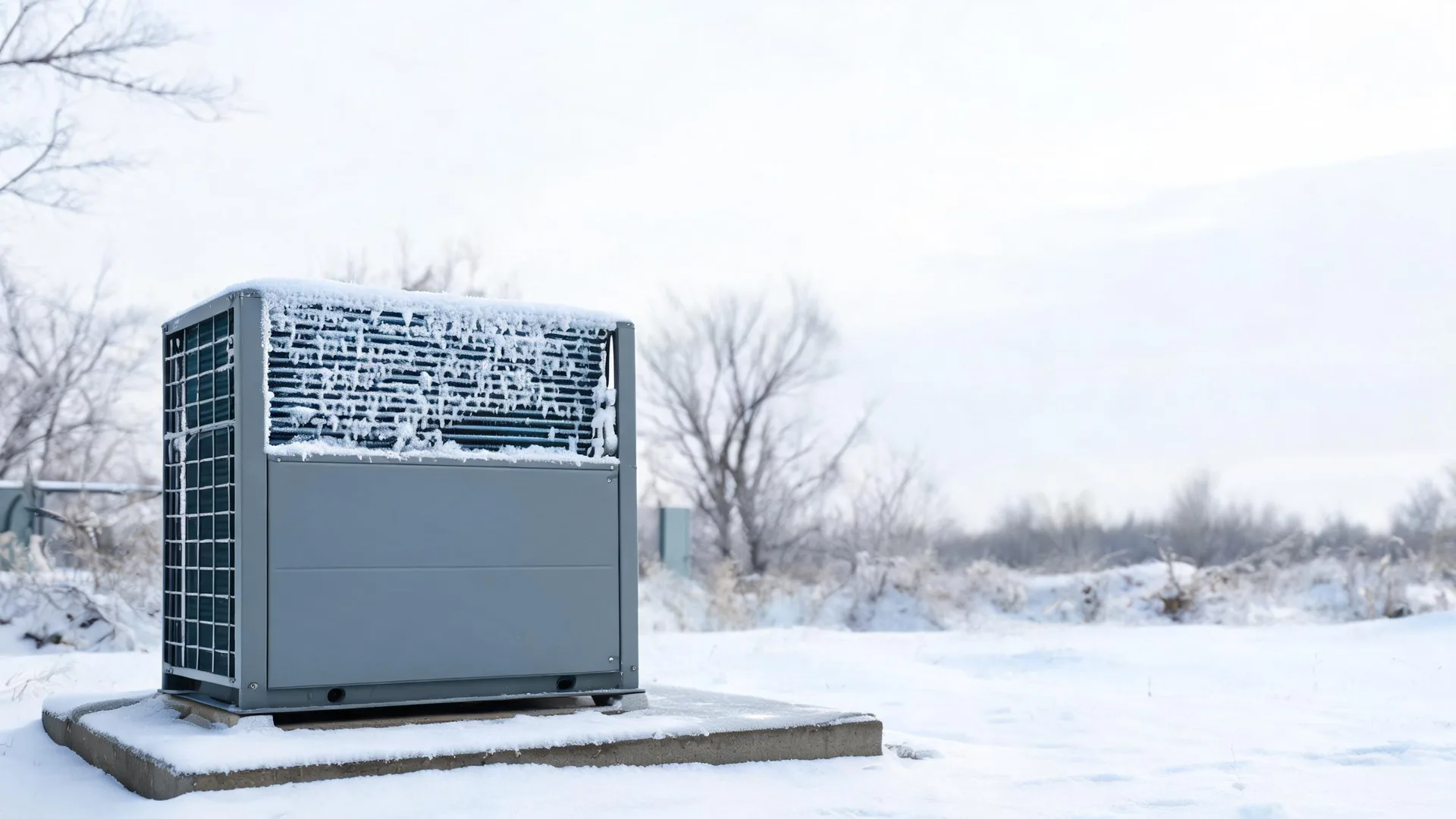
June is when weak parts fail
Cooling in Jackson County starts in June after the system has sat idle since September. A capacitor or contactor that was already marginal last summer often doesn't make it through the first real stretch of heat.

Takes about a minute. No obligation.
Cooling in Jackson County starts in June after the system has sat idle since September. A capacitor or contactor that was already marginal last summer often doesn't make it through the first real stretch of heat.
If your AC struggled at all last September, that same part is still in there. Having it checked in May, before the season starts, catches it before it fails once the system is running hard again.
NOAA nClimDiv, 1991–2020 normals
A breaker that trips once might trip again the moment the compressor kicks on.
Reset it, and if the outdoor unit shuts off a second time, that's the compressor or a wire telling you to stop flipping it back on.



Nothing about Seymour runs an air conditioner harder than it would anywhere else in Indiana. There's no local quirk driving extra wear here. When a unit in Jackson County quits, it's almost always a capacitor, a contactor, a low charge, or a dirty coil, the same handful of things that fail everywhere. That's worth knowing because the fix is usually straightforward once someone finds the actual part. Indiana homes paid 14.77 cents per kilowatt-hour in 2024, and a system working harder than it should, because of a weak part or a dirty coil, shows up on that bill before it shows up as a breakdown.
Problems tend to show up in the first weeks of the season, when the load hits a part that was already weak.
Find a contractorA capacitor fails because it wears out. It's charging and discharging every time the compressor and fan start, and after years of that cycling, it loses its ability to hold a charge. Once it drops below what the compressor needs, the motor tries to start without enough of a kick and strains instead. A contactor fails a different way. The contacts pit and burn from the arc every time they close, until they stick or stop making contact at all. A dirty coil doesn't break on its own, but it makes everything behind it work harder, and that strain is what takes out a capacitor or a compressor early. Refrigerant doesn't get used up. If the charge is low, it left through a leak somewhere in the line set or the coil, and it will keep leaving until that's found. Most failures trace back to one of these, not to the compressor itself. The compressor is usually the last thing to go, and often only after something upstream of it was already failing.
The air comes out warm, or it's blowing but not cold enough to keep up. Sometimes the outdoor unit hums like it wants to start and doesn't. Sometimes it short cycles, running briefly and shutting off before the house cools at all. Each of those points a different direction, but none of them mean wait and see.
A grinding or screeching sound from the outdoor unit usually means a motor bearing is going. Water pooling near the indoor unit means the drain line is clogged or the pan is cracked, and that water damages the floor or ceiling under it long before the AC itself quits. Ice on the refrigerant lines means airflow or charge is already a problem, and running it like that only makes the coil or compressor work harder.
Estimates for a typical Jackson County home, compared with an older unit built to the previous federal minimum, from EIA household energy data, Indiana fuel prices and NOAA climate normals. Your home will differ.
Repair makes sense when a part like a capacitor or contactor has failed.
Replacement makes sense when the compressor has failed or the system uses R-22 refrigerant, which is no longer made.
A diagnostic visit starts outside, not with guesswork. A tech checks the capacitor's actual charge against what it's rated for, tests the contactor for pitting, and looks for ice on the lines or oil residue that points to a refrigerant leak. Gauges go on to read the charge itself, since low refrigerant only shows the truth under pressure, not by looking. Inside, the coil and the airflow across it get checked too, because a coil caked with dirt will mimic a low charge even when the refrigerant is fine. The goal is to find the part that's actually failing, not to start swapping things and see what helps.