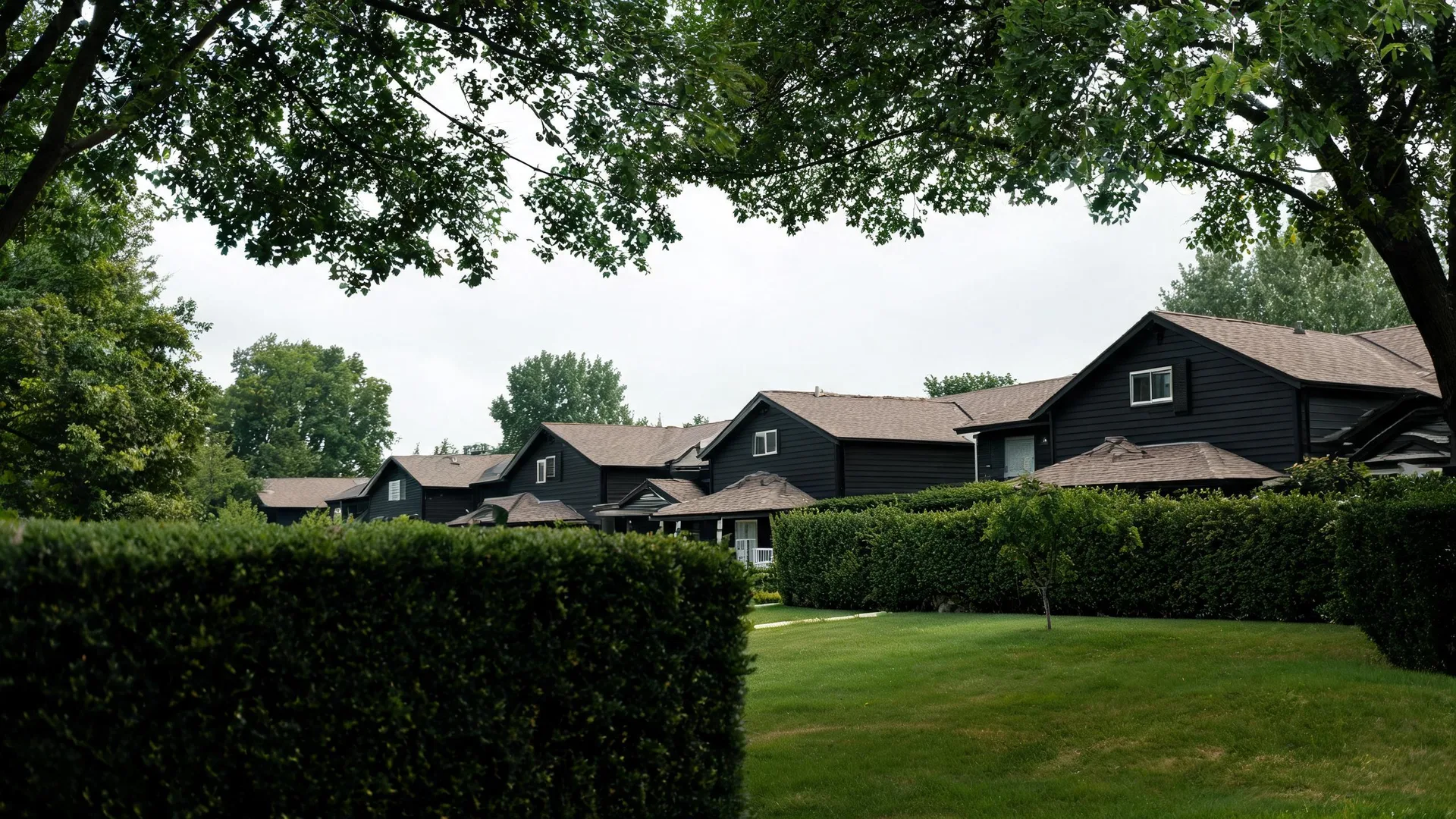






A row of dark-sided houses with brown shingled gable roofs behind tall trimmed hedges, with a mowed lawn in the foreground and overhanging tree branches against an overcast sky.

AC Repair in Richmond, IN

Tell us about the job

Takes about a minute. No obligation.

RepairCentral ACWayne County, IN
Step 1 of 2

What ZIP code is the job in?

AC runs June through August here, so May is when most systems sit idle right up until that first warm stretch. A capacitor or contactor that was already weak over the winter often doesn't show it until the compressor has to kick on and hold load for hours at a time. That's why the first couple weeks of June tend to bring the most repair calls. If yours is struggling now, it's worth having someone look before the heat settles in for good.

3 months
June through August, your air conditioner is on duty
83°F
the average summer afternoon it cools against
14 hail events
in ten years, and hail bends the fins on outdoor coils
68 wind events
in ten years, and wind drives debris into outdoor units
Isometric cutaway illustration of a single-story house with a dark shingled roof, showing interior rooms with ductwork and an indoor air handler connected to an outdoor condenser unit beside the building.
Your air conditioner works hardest from June through August.

NOAA nClimDiv, 1991–2020 normals

Summer here only runs three months, June through August, with afternoon highs averaging 83.

A compressor that isn't carrying a heavy load most of the year is usually worth fixing when something goes wrong.

Half the homes in Richmond were built in 1960 or earlier, so a lot of AC systems are old too

Half the homes here were built by 1960
Cooling runs June through August
Summer afternoons average 83°F

Most of the time a repair makes sense because the part that failed isn't tied to the parts that didn't. A bad capacitor doesn't mean a weak compressor, it just means the compressor never got the jolt it needed to start. The question worth asking is whether the failed part was doing the work alone or covering for something else nearby. A coil caked with dust will eventually drag down a compressor that was never the problem to begin with, so fixing the coil stops the slow damage even if the compressor still tests fine today. Age on its own doesn't decide this. A system that's been maintained and kept clean can outlast one that's newer but was ignored, and the only way to know which one you have is to have someone look at what's actually failing and what's still in good shape around it.

A system that's had it easy is usually worth fixing

Get a repair priced before you weigh replacement. With only three summer months to carry here, most of what fails is still worth fixing rather than swapping out.

Find a contractor
A man in a cap, long-sleeved shirt and work pants carries a canvas tool bag up concrete steps toward a wooden front door of a gray-sided house, with a shrub in a terracotta pot to the right.
An outdoor air conditioning condenser unit mounted on a concrete pad beside a house, with electrical conduit running to a wall-mounted disconnect box.

One repair call can answer two questions

If your AC came with the house, a repair call now is also a chance to ask how much life is left in the whole system. A contractor looking at a failed capacitor or a low charge can tell you in the same visit whether the compressor and coil behind it are worth building on. That's a better time to ask than after a second breakdown next summer.

What you can check at the thermostat

Set it a few degrees below room temperature and listen for the outdoor unit to kick on. If the indoor fan runs but you never hear the compressor or outdoor fan start, that points to the capacitor or contactor, not something you can fix yourself but good to know before the contractor arrives. Also check the batteries if it's a battery-powered thermostat. A dead thermostat looks exactly like a dead system.

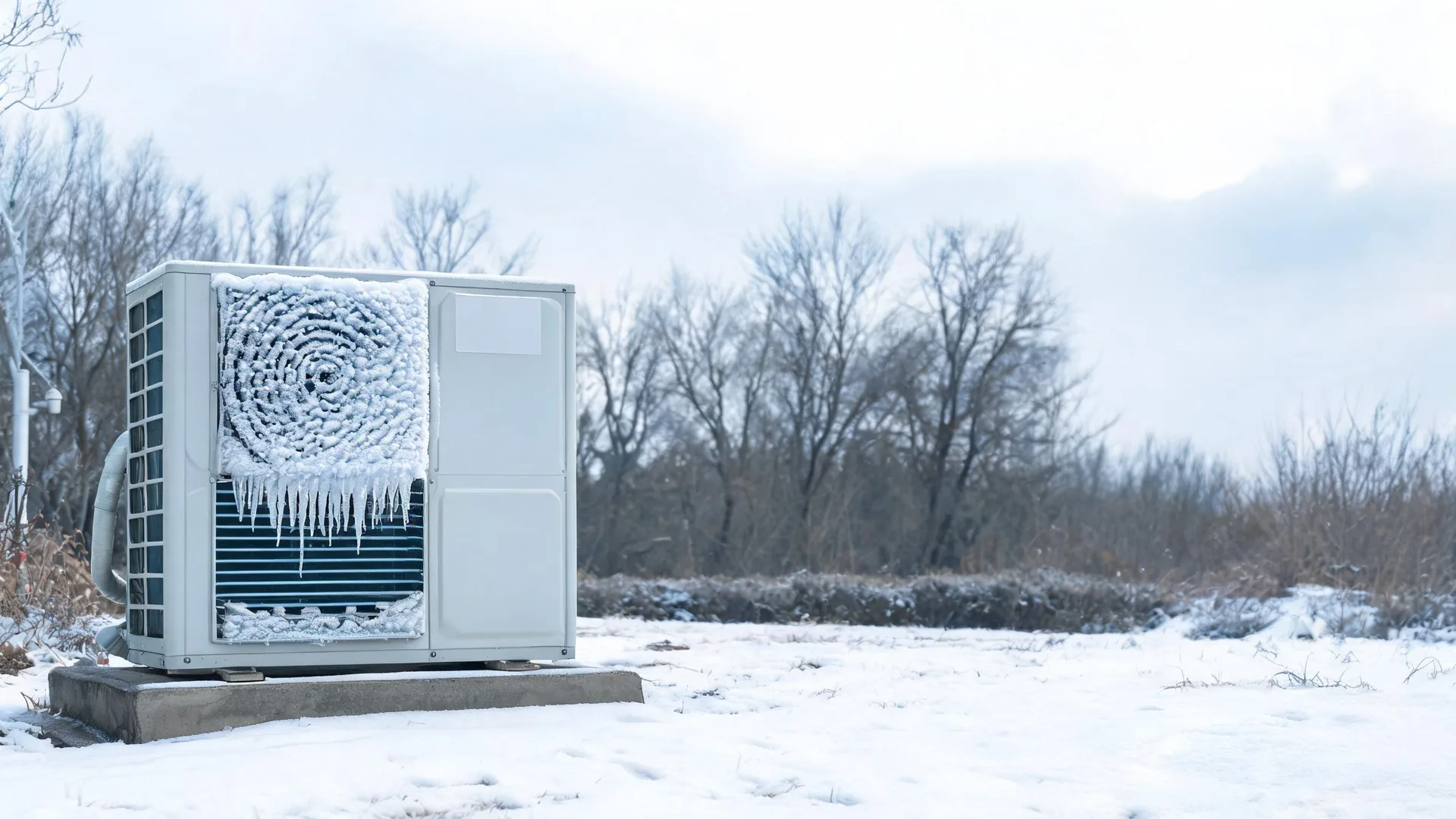
What's worth a look before you call

Check the air filter and swap it if it's clogged, a blocked filter can starve the system and cause ice to form on the coil. Look at the outdoor unit and clear away any leaves, grass clippings or debris blocking the sides. Check the breaker panel for a tripped breaker. None of this fixes a failing capacitor or a refrigerant leak, but it rules out the simple stuff first.

An outdoor air conditioning condenser unit on a concrete pad next to the gray vinyl siding of a residential home.

A new air conditioner would save little on running costs in Wayne County, so the repair decision comes down to the unit's condition.

  • A new one at the federal minimum, 13.4 SEER2$220 a year
  • An older air conditioner$230 a year

Estimates for a typical Wayne County home, compared with an older unit built to the previous federal minimum, from EIA household energy data, Indiana fuel prices and NOAA climate normals. Your home will differ.

Repair makes sense when a part like a capacitor or contactor has failed.

Replacement makes sense when the compressor has failed or the system uses R-22 refrigerant, which is no longer made.

A diagnostic visit starts with the same checks you already ran at the thermostat, only with meters and gauges behind them. A contractor will check the capacitor's output against its rating, since a capacitor can read fine on a glance and still be weak under load. If the compressor hums but doesn't start, that confirms it. From there it's gauges on the refrigerant lines to check the charge, because a system low on refrigerant will run but won't pull heat out of the house the way it should. The coil gets a look too, since a coil caked with dust or iced over chokes airflow and mimics other problems that have nothing to do with the coil itself. The contractor can usually tell you on the spot which part is at fault and whether the rest of the system is holding up behind it.