




A dark two-story house with a covered front porch and shrubs, framed by large leafy trees, photographed from ground level across a mown green lawn with blurred grass in the foreground.

AC Repair in Plymouth, IN

Tell us about the job

Takes about a minute. No obligation.

RepairCentral ACMarshall County, IN
Step 1 of 2

What ZIP code is the job in?

May is a good month to get your AC looked at in Plymouth. Cooling only runs June through August here, three months total, but that first hot stretch in June is when a weak part finally gives out. A capacitor or contactor that's been marginal all along doesn't show it until the system has to run hard. Getting it checked in May means you're not waiting on a repair during the one week you actually need the air on.

3 months
June through August, your air conditioner is on duty
82°F
the average summer afternoon it cools against
17 hail events
in ten years, and hail bends the fins on outdoor coils
76 wind events
in ten years, and wind drives debris into outdoor units
Isometric line illustration of a cutaway house showing interior rooms with furniture, ceiling ductwork, an indoor air handler, and an outdoor condenser unit connected by lines.
Your air conditioner works hardest from June through August.

NOAA nClimDiv, 1991–2020 normals

AC in Plymouth only has to work three months a year, June through August.

A system that only runs three months a year usually isn't worn out, so most repairs are worth making.

Half the homes here were built by 1973. Their AC units weren't

Half the homes here were built by 1973
Cooling runs June through August
Summer afternoons average 82°F

If your system is acting up now, that history is worth knowing before you decide whether to fix it or replace it. Three months of run time a year is light duty. A compressor or blower motor working that little doesn't wear out on its own, so when something fails it's usually one part, not the whole system giving out. Worth asking the contractor what actually failed and whether the rest of the unit is sound. Most of the time it is.

Ask how much life is left before you pay for the repair

If your AC came with the house and the house was built in the early 1970s, that's worth asking about before you pay for the repair. Light duty keeps a unit going longer than it otherwise would, but no unit lasts forever. A contractor can tell you how much life is left in yours and whether this repair is the last one worth making.

Find a contractor
An outdoor air conditioning condenser unit mounted on a concrete pad beside a house, with electrical conduit running to a wall-mounted disconnect box.

Some failures wait for you. Others don't.

A refrigerant leak is the clearest case. Low charge makes the compressor work harder to move heat, and running it low starves it of the oil that circulates with the refrigerant. Keep it running low on charge and the compressor itself starts to wear, not just the cooling. A dirty coil does something similar from a different angle. Airflow drops, the system runs longer to reach the same temperature, and heat that should release outside backs up into parts not built to sit that hot. A weak capacitor is its own kind of warning. It gives the compressor and fan motor the jolt they need to start. A capacitor on its way out makes the motor strain on every single start, and that strain wears down the motor long before the capacitor fully fails. None of this is the system needing a rest. It's one part under a specific strain, and running through it just passes that strain on to whatever part is downstream.

A few parts cause most calls

The capacitor, the contactor and the fan motor account for most AC repairs. The capacitor gives the compressor and fan motor the jolt they need to start. The contactor switches power to the outdoor unit, and its contacts pit and burn with use. The fan motor just wears out from years of spinning. Each one fails on its own schedule, not because of the others.

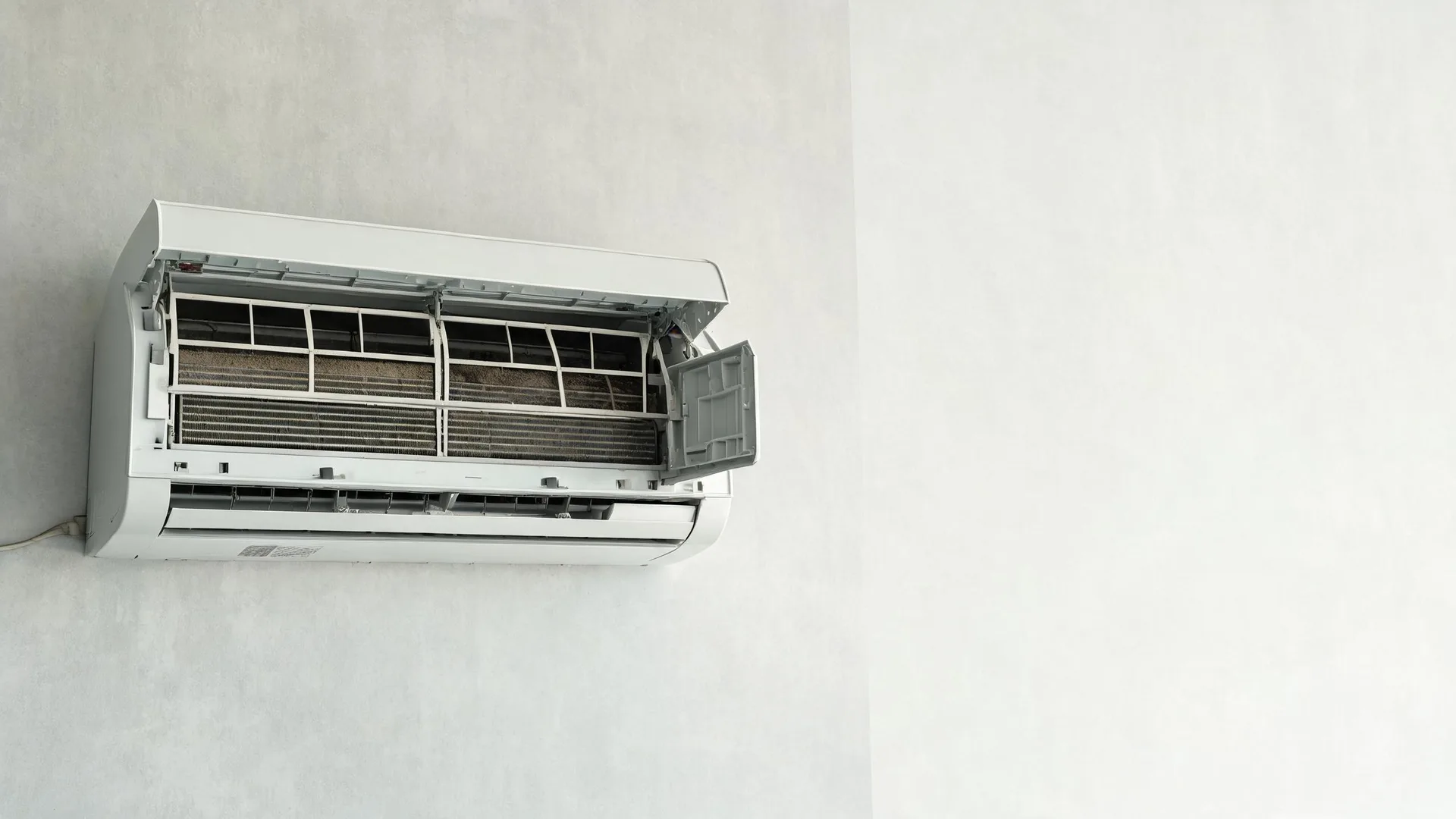
Low refrigerant means a leak, not age

A sealed system doesn't use up refrigerant over time. If the charge is low, it's because it's leaking somewhere, often a coil or a fitting. Adding refrigerant without finding the leak just buys a little time before the same problem shows up again, and running low the whole time makes the compressor work harder than it should.

An outdoor air conditioning condenser unit positioned on a concrete pad next to a blue-sided house, surrounded by green shrubs and flowering hydrangeas at sunset.

A new air conditioner would save little on running costs in Marshall County, so the repair decision comes down to the unit's condition.

  • A new one at the federal minimum, 13.4 SEER2$190 a year
  • An older air conditioner$210 a year

Estimates for a typical Marshall County home, compared with an older unit built to the previous federal minimum, from EIA household energy data, Indiana fuel prices and NOAA climate normals. Your home will differ.

Repair makes sense when a part like a capacitor or contactor has failed.

Replacement makes sense when the compressor has failed or the system uses R-22 refrigerant, which is no longer made.

A diagnostic starts with the thermostat and the air coming out of the vents, not the outdoor unit. A tech checks what the system is actually doing before taking anything apart. From there it's gauges on the refrigerant lines, a check of the capacitor's output against what it's rated for, and a look at the contacts inside the contactor. Electrical readings catch a lot that you can't see or hear. If the coil or blower looks like the real culprit, that gets pulled apart and inspected too. The point is finding the one part actually causing the problem, not swapping parts until something works.