Three months of real work
AC in Henry County runs from June through August, with afternoon highs averaging 82°F. That's a short season compared to what these systems handle further south.
Takes about a minute. No obligation.
AC in Henry County runs from June through August, with afternoon highs averaging 82°F. That's a short season compared to what these systems handle further south.
A system that isn't run hard all year is less likely to be worn out underneath. If yours is acting up, the cause is more likely something specific that failed than years of strain catching up with it.

NOAA nClimDiv, 1991–2020 normals
Warm air from the vents with the system running points to a failure inside the unit, not something loose outside.
A failure like that needs a contractor with gauges, not another look at the breaker panel.

Most AC repairs here come down to one failed part, not the system wearing out from overuse. A capacitor that's gone weak, a contactor stuck or pitted, a low refrigerant charge from a slow leak. These fail on their own schedule, not because New Castle summers are hard on equipment. If your electric bill jumped before the system started acting up, that's worth mentioning to whoever comes out. Indiana homes paid about 14.77 cents per kilowatthour in 2024, so a unit running longer to hit the same temperature shows up on the bill fast.
If your AC came with the house, its age matters more than its wear. Ask the contractor how many years it has left before you pay for a major repair. On an older unit, that answer may change whether the repair is worth it at all.
Find a contractor
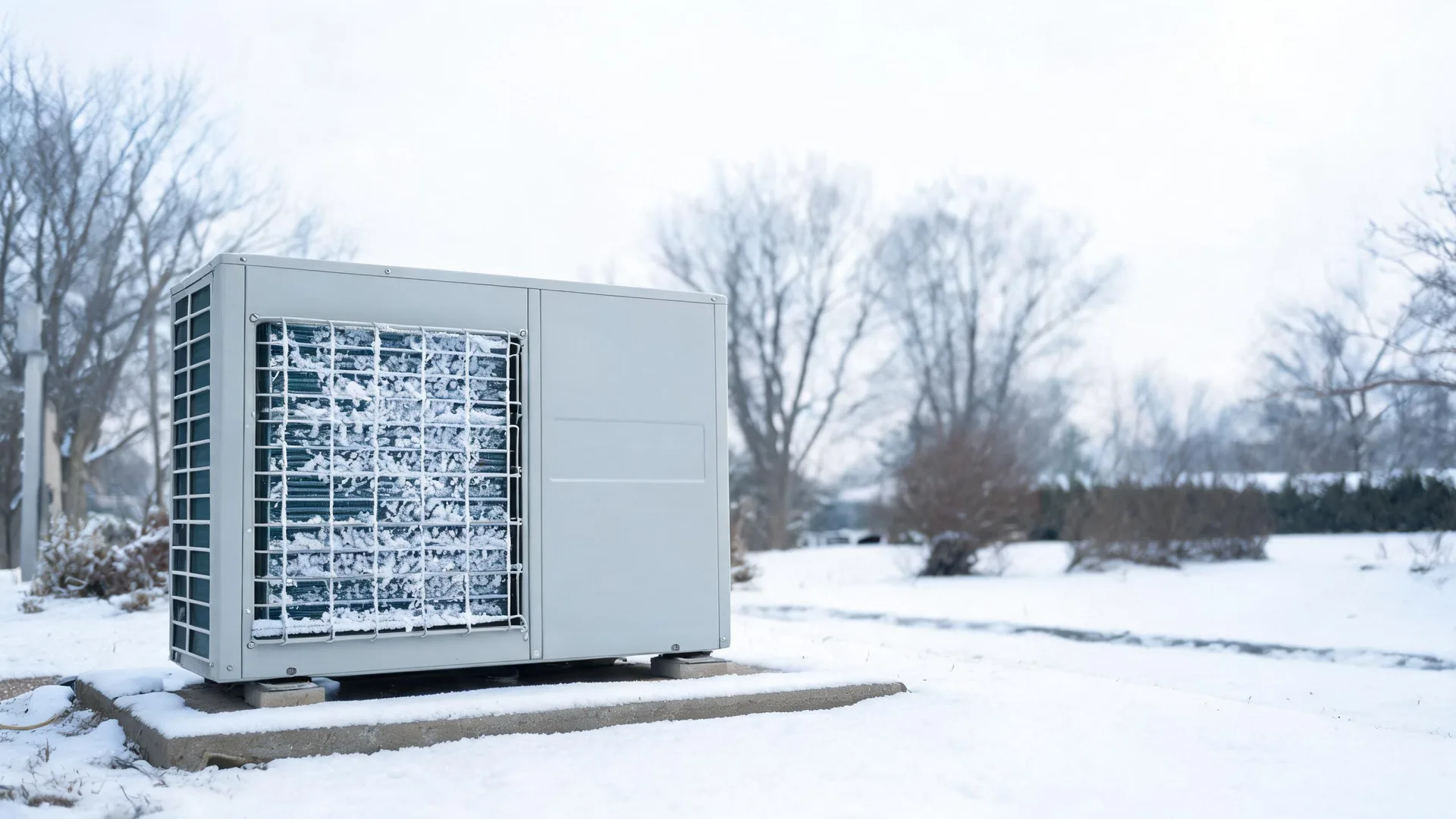
Before anyone comes out, check the simple things. Look at the thermostat first. Make sure it's set to cool and set below room temperature, and if it runs on batteries, swap them. Next, go to your breaker panel and see if the breaker for the outdoor unit or the air handler has tripped. If it has, reset it once. If it trips again, stop and leave it for a contractor. Check your air filter. A filter clogged with dust chokes airflow and can cause the whole system to perform poorly or ice up. Walk outside and look at the condenser, the unit sitting on a pad or slab. Clear away any grass clippings, leaves or debris stuck to the sides, and make sure nothing is blocking airflow around it. If you see ice on the refrigerant lines or the unit itself, turn the system off completely and let it thaw before anyone touches it. Check the vents inside the house to make sure none are closed or blocked by furniture or rugs. If the system is running but the air coming out isn't cold, that points to something inside the unit itself, not something you can safely fix from the outside.
The capacitor that starts the compressor and fan wears from age and heat inside the unit itself, not from how many hours the system ran last summer. It can give out in a system that barely ran, or hang on for years in one that runs constantly. When it goes, the outdoor unit hums but the fan won't spin, or the compressor won't kick on at all.
Refrigerant doesn't get used up. If the level is low, it's leaking from a joint, a coil, or a fitting somewhere in the line. A system low on charge will cool poorly, then worse, then not at all, and running it in that state makes the compressor work harder than it should. Once a leak is found and fixed, the charge can be restored, but topping it off without finding the leak just buys a little time.
Estimates for a typical Henry County home, compared with an older unit built to the previous federal minimum, from EIA household energy data, Indiana fuel prices and NOAA climate normals. Your home will differ.
Repair makes sense when a part like a capacitor or contactor has failed.
Replacement makes sense when the compressor has failed or the system uses R-22 refrigerant, which is no longer made.
A repair is worth making when one part failed and the rest of the system is sound. A capacitor, a contactor, a fan motor, these can be replaced on their own and the unit runs like it did before. Replacement makes more sense when the compressor itself is failing, or when the coil is leaking in more than one spot, or when a contractor finds the refrigerant your system uses is being phased out and hard to source. Age matters too, but less than condition. A unit that's been maintained and used gently can outlast one that was neglected. Ask whoever comes out to show you what failed and why, not just quote you a fix. If the same part keeps failing, or the repairs start costing close to what the unit itself is worth, that's the system telling you something, not bad luck repeating itself.