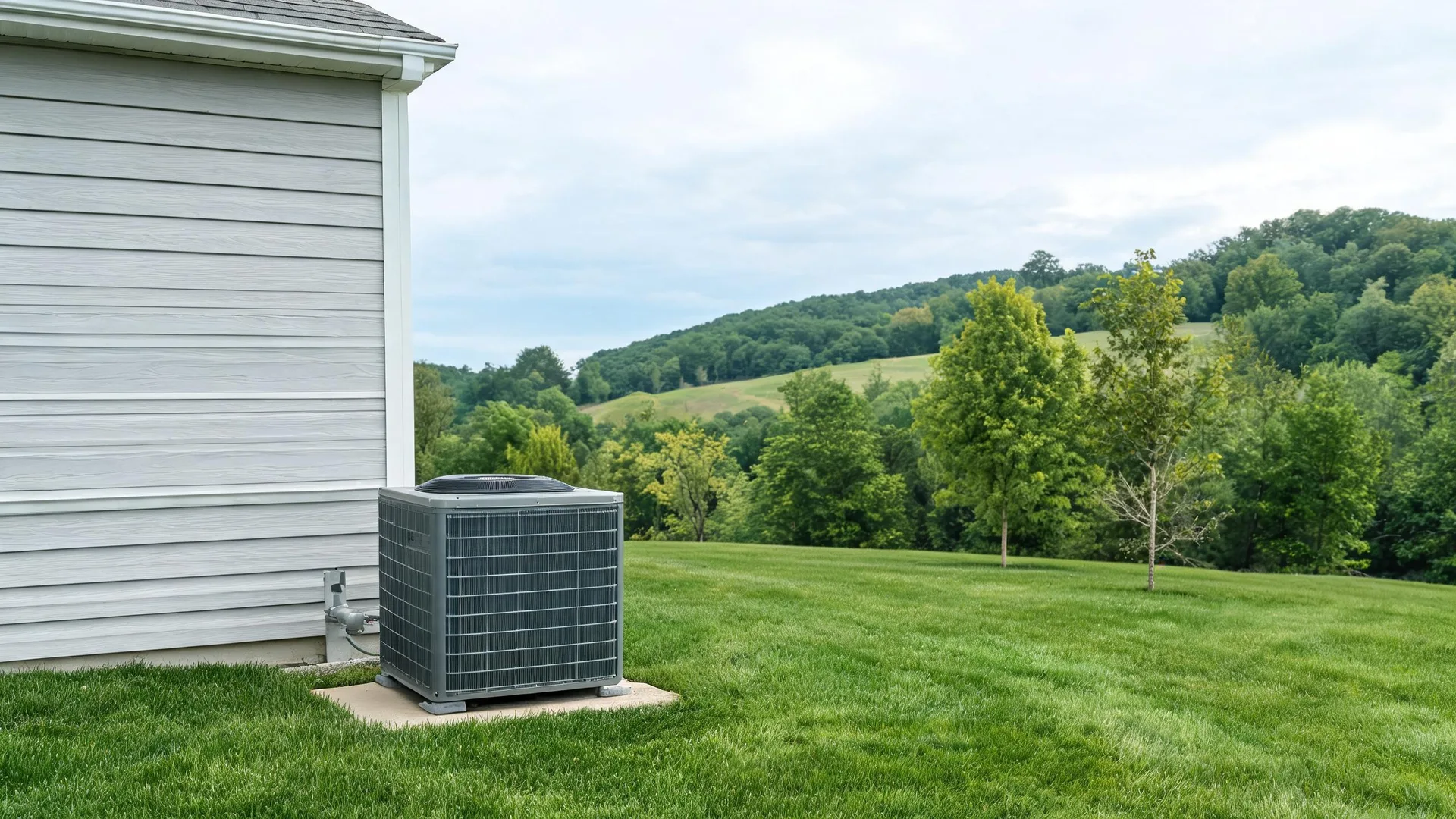
Three months of real work
AC here runs June through August, with afternoon highs averaging 81°F. That is a short, mild stretch compared to what a system runs further south.
Takes about a minute. No obligation.
AC here runs June through August, with afternoon highs averaging 81°F. That is a short, mild stretch compared to what a system runs further south.
A compressor that only works hard three months a year wears slower than one running most of the year. When something fails on a system like that, age or a specific bad part is the usual reason, not the system being worn out.

NOAA nClimDiv, 1991–2020 normals
AC in Michigan City starts working in June.
May is the month to get a weak part found before the first hot week finds it instead.



Half the homes in LaPorte County were built in 1969 or earlier. If the AC at your place came with the house, there's a good chance it's old too. Furnaces and condensers don't last forever, and a system from that era may already be past where most of these units give out. That doesn't mean every repair call ends in a replacement. But it's worth asking the technician how much life is actually left in the unit before putting money into a repair.
A compressor that only runs three months a year doesn't wear the way one does further south. When it's acting up now, the cause is more likely one bad part than a system worn past its years. Worth getting that part found before August.
Find a contractorIf the unit outside is the one the house came with, ask the technician for its age before agreeing to any repair. A tech can read it off the data plate, the serial number ties to a build date. That one fact decides whether a repair is worth it or whether the money is better put toward a new system.
Warm air coming out of the vents instead of cold means the system is either low on refrigerant or the compressor outside is struggling. Weak airflow even when the air is cold usually points to a clogged filter or ice built up on the coil. Either way, the sound the system makes while it tries to do this is usually your first clue something is wrong before the air itself changes.
A unit that clicks on and off every few minutes instead of running a full cycle is short cycling, and it's hard on the compressor every time it happens. Grinding, squealing or banging from the outdoor unit usually means a motor or fan blade problem, not something to wait out. Water pooling near the indoor unit means a drain line is clogged and needs clearing before it backs up further.
Estimates for a typical LaPorte County home, compared with an older unit built to the previous federal minimum, from EIA household energy data, Indiana fuel prices and NOAA climate normals. Your home will differ.
Repair makes sense when a part like a capacitor or contactor has failed.
Replacement makes sense when the compressor has failed or the system uses R-22 refrigerant, which is no longer made.
A diagnostic call starts outside at the condenser, checking the refrigerant pressure and seeing whether the compressor and fan are running the way they should. The technician will also check the capacitor, since a weak one is one of the most common reasons a compressor struggles to start. Inside, they check the evaporator coil for ice and the refrigerant lines for anything unusual. They'll pull the filter and look at the blower too, since restricted airflow can look like a refrigerant problem even when it isn't. Electrical connections get checked along the way, since a loose or corroded wire can cause the same symptoms as a failing part. By the end, the tech should be able to point to the one part causing the trouble, not just the system in general.