Three lit brick homes on a tree-lined residential street photographed at dusk.

AC Repair in Kokomo, IN

Tell us about the job

Takes about a minute. No obligation.

RepairCentral ACHoward County, IN
Step 1 of 2

What ZIP code is the job in?

The tech checks the whole system, not just the symptom

A tech will check refrigerant charge, look at the capacitor and contactor, measure airflow across the coil, and check the condensate line before touching the part that seems broken. A warm house can trace back to a dirty coil, a failing capacitor, or a refrigerant leak, and those call for different repairs.


What gets found decides what happens next

A weak capacitor or a clogged drain line is usually fixed on the spot. A refrigerant leak or a failing compressor takes more talk, since the tech needs to find the leak or weigh repair against replacing the unit. Either way, the diagnosis is what tells you which kind of job this is.

3 months
June through August, your air conditioner is on duty
82°F
the average summer afternoon it cools against
6 hail events
in ten years, and hail bends the fins on outdoor coils
51 wind events
in ten years, and wind drives debris into outdoor units
Isometric cutaway illustration of a single-story house showing interior rooms with furniture, attic ductwork connected to an indoor air handler, and an outdoor condenser unit on a pad linked by refrigerant lines.
Your air conditioner works hardest from June through August.

NOAA nClimDiv, 1991–2020 normals

Cooling starts in June here, and the first hot stretch finds whatever was already weak.

A unit that strained last August and got left alone is the one most likely to quit in the first weeks of June.

Half the homes in Kokomo were built by 1969, and the AC in one is usually about as old as the last owner left it

Half the homes here were built by 1969
Cooling runs June through August
Summer afternoons average 82°F
Kokomo summers aren't hard on an ACIndiana homes paid 14.77 cents per kilowatthour in 2024, and the usual repairs cost the usual amount

Summer here only runs three months, June through August, with afternoon highs averaging around 82. That's a mild ask compared to what air conditioners handle further south, and it's part of why a repair is usually the right call instead of a replacement. A system here isn't fighting that kind of heat most of the year, so when something goes wrong it's rarely from being run into the ground. More often it's a part that wore out or a coil that never got cleaned. That's worth knowing before anyone tells you the unit is shot.

If this AC came with the house, find out what's left in it before paying for a big repair

If yours is original to the house, ask the tech straight out how much life is left in it before you commit to the repair. A fair diagnosis tells you which job this is. A quick fix, or a unit that's done its time.

Find a contractor
A man in a dark t-shirt and tan work pants walks up concrete steps toward a red front door, carrying a worn canvas tool bag, with a potted shrub beside the entry.
An outdoor air conditioning condenser unit mounted on a concrete pad beside a house, with electrical conduit running to a wall-mounted disconnect box.

What to check before the tech shows up

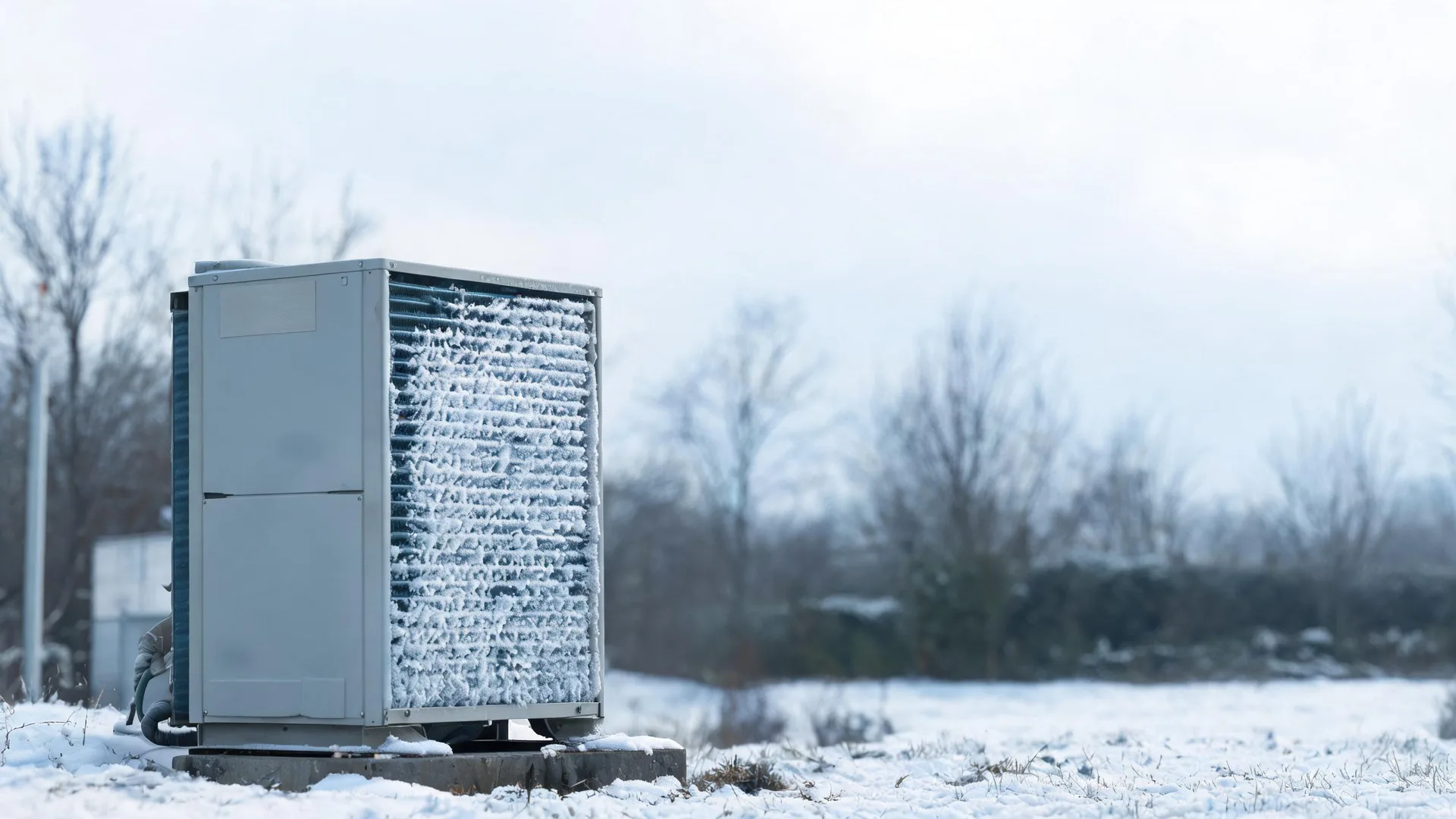
Before anyone comes out, check the thermostat first. Make sure it's set to cool and set below room temperature, and if it runs on batteries, swap them. Next, go to the breaker panel and look for a tripped breaker on the AC circuit. Outside, look at the condenser unit and clear away any leaves, grass clippings or mulch piled against it. A pane of airflow blocked on the sides keeps the coil from shedding heat. Check the air filter inside. If it's gray and matted, replace it. A clogged filter starves the system of airflow and can ice up the coil, which then blocks cooling entirely until it thaws. If you can get to the condensate drain line, look for standing water near the indoor unit or a drain pan that's full. Some systems have a safety switch that shuts the whole unit off when that pan fills, which looks like a dead AC but isn't. None of this tells you what's actually broken. It just rules out the things that aren't.

The sound changes before the house does

A hard click when the unit tries to start and doesn't catch usually points to the capacitor. A hiss or bubbling near the lines can mean refrigerant escaping. Grinding or squealing from the outdoor unit often means a motor bearing is going. None of these fix themselves, and running the system while they happen tends to wear out whatever's next in line.

Warm air isn't always the first sign

Short cycling, where the unit shuts off a few minutes after starting, points to a different problem than a system that runs constantly and never quite cools. Ice on the indoor coil usually means airflow is blocked somewhere, not that the system needs more refrigerant. Water pooling near the indoor unit means the drain line is clogged, not that anything is leaking refrigerant at all.

Overhead view of an outdoor AC condenser unit on a concrete pad next to a house with a dark shingle roof.

A new air conditioner would save little on running costs in Howard County, so the repair decision comes down to the unit's condition.

  • A new one at the federal minimum, 13.4 SEER2$220 a year
  • An older air conditioner$240 a year

Estimates for a typical Howard County home, compared with an older unit built to the previous federal minimum, from EIA household energy data, Indiana fuel prices and NOAA climate normals. Your home will differ.

Repair makes sense when a part like a capacitor or contactor has failed.

Replacement makes sense when the compressor has failed or the system uses R-22 refrigerant, which is no longer made.

Age matters less than how an AC has been treated. A unit that gets a yearly checkup and clean coils can outlast one that never had either, no matter which one is newer. What shortens the life of a compressor almost always starts smaller. Low refrigerant from a slow leak, a dirty coil, airflow choked by a bad filter, any of those raises the load on the compressor until that's the part that fails. A failing compressor is usually where repair stops making sense, since replacing it costs close to what a new system would. So the real question isn't how old the unit is. It's whether what's in front of the tech is a part that wore out on its own, or the last stage of something that's been building for a while.