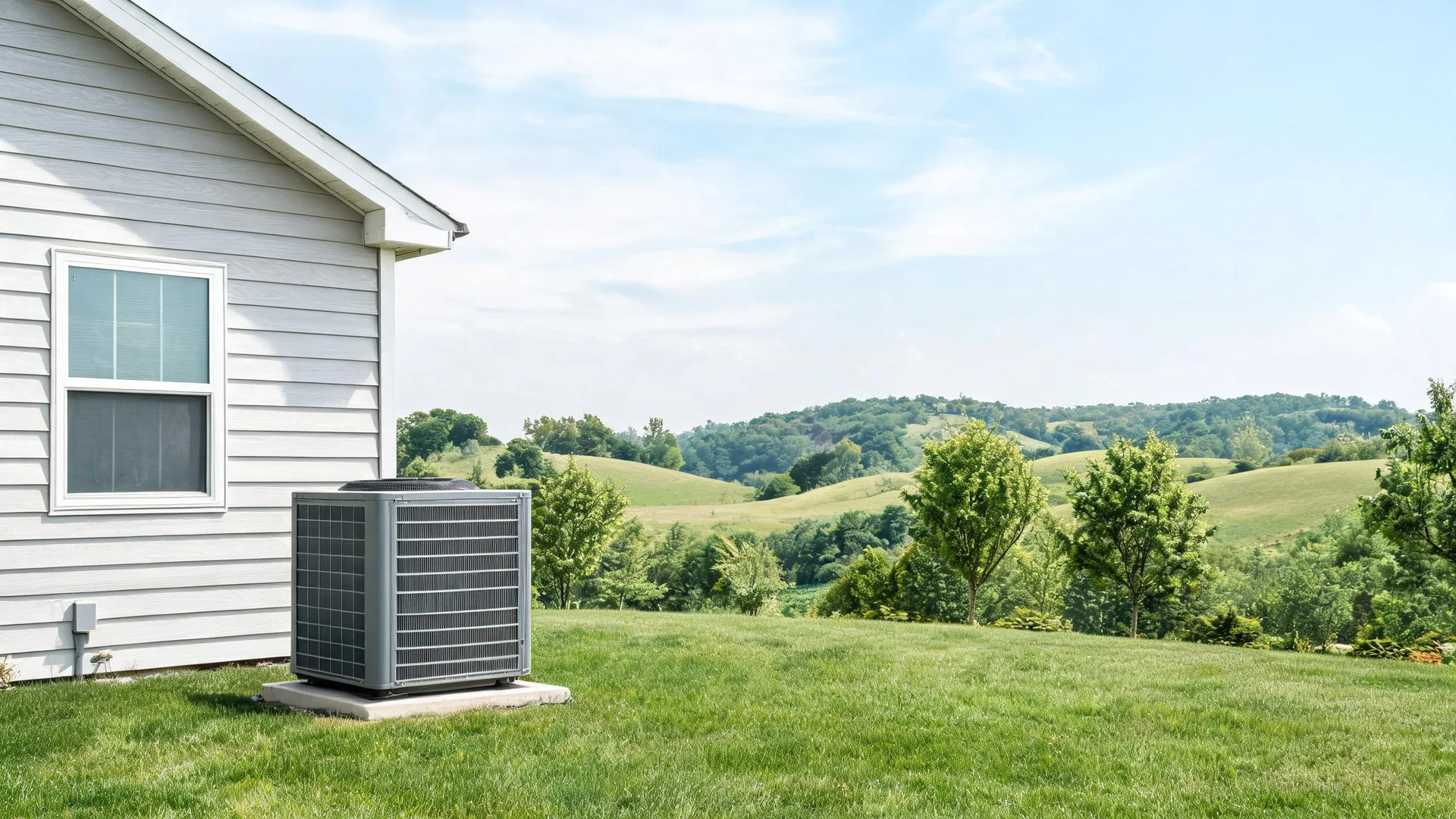
An overhead view of a residential air conditioning condenser unit mounted on a concrete pad next to a house with vinyl siding.

AC Repair in Jeffersonville, IN

Tell us about the job

Takes about a minute. No obligation.

RepairCentral ACClark County, IN
Step 1 of 2

What ZIP code is the job in?

Warm air from the vents means the system isn't finishing the job

A failing capacitor, a low charge, or a compressor on its way out can all leave the blower running while the air coming out stays warm. The fan running makes it look like the system is working, but moving air and cooling air are separate jobs, and this means the second one isn't happening.


A noise that wasn't there before is worth calling in now

Grinding, squealing, or a hard clanking usually points to a motor bearing or a loose part inside the cabinet, not something that settles down on its own. Left alone, a noise like that tends to end in a motor replacement instead of a simple repair, so it's worth having someone look at it while it's still just a noise.

5 months
May through September, your air conditioner is on duty
86°F
the average summer afternoon it cools against
38 hail events
in ten years, and hail bends the fins on outdoor coils
79 wind events
in ten years, and wind drives debris into outdoor units
Isometric line illustration of a cutaway single-story house showing interior rooms with furniture, ceiling ductwork, an indoor air handler, and an outdoor condenser unit connected by lines along the exterior wall.
Your air conditioner works hardest from June through August.

NOAA nClimDiv, 1991–2020 normals

Clark County summers run May through September, with afternoon highs averaging 86°F in June, July and August.

Five months of steady work is normal for an AC system here, and a breakdown usually comes down to one worn part, not the weather.

May is when a weak part finally gets tested

Cooling runs May through September
Summer afternoons average 86°F
79 damaging wind events from 2015 to 2024

Half the homes in Clark County were built in 1982 or later. If yours is one of them, the system behind that warm air or that new noise probably isn't old enough to be giving out from age alone. A compressor or a blower motor on a newer system still has years in it, and a single worn part is usually a repair, not a replacement. Check when your AC was actually installed, since a newer house doesn't always mean a newer unit. But if the system came with the house, that age works in its favor.

Get the real cause found before it costs you more

Electricity in Indiana ran 14.77 cents per kilowatt-hour in 2024, so a system working harder than it should costs more every month it runs that way. A worn capacitor or a low charge doesn't fix itself, and it doesn't usually take the whole system down with it either. Most of the time it's one part, found and replaced.

Find a contractor
An outdoor air conditioning condenser unit mounted on a concrete pad beside a house, with electrical conduit running to a wall-mounted disconnect box.

Check the install date, not the house

If the system is original to the house, there's a record of it somewhere. A sticker inside the cabinet door, usually, or the paperwork from whoever built the place. That install date tells you more than the house's age does. Worth checking before you decide what this call is.

A low charge wears on the compressor

A system low on refrigerant still runs, but the compressor has to work harder to move what's left. That extra strain shows up as heat it wasn't built to handle, and it builds with every hour the system stays on. A low charge found early is a simple fix. Left running, it can take the compressor down with it.

A struggling system freezes itself up

When airflow is blocked or the charge is off, the evaporator coil can get cold enough to ice over. Once that happens the system is cooling less, not more, no matter how long it runs. Shutting it off and letting the ice melt is step one. Running it through that condition just pushes more strain onto the compressor behind it.

An outdoor air conditioning condenser unit on a concrete pad next to the gray vinyl siding of a residential home.

A new air conditioner would cut about $30 a year off cooling for a typical Clark County home.

  • A new one at the federal minimum, 13.4 SEER2$320 a year
  • An older air conditioner$350 a year

Estimates for a typical Clark County home, compared with an older unit built to the previous federal minimum, from EIA household energy data, Indiana fuel prices and NOAA climate normals. Your home will differ.

Repair makes sense when a part like a capacitor or contactor has failed.

Replacement makes sense when the compressor has failed or the system uses R-22 refrigerant, which is no longer made.

A diagnostic starts outside at the condenser and works back in. The tech checks the capacitor, the contactor, and the refrigerant charge, since those cause most of the no-cool and weak-cool calls. Gauges go on the lines to see what the pressures actually are, not just what the thermostat says. Inside, it's the coil and the blower next, checking for ice, checking the filter, making sure air is moving the way it should. Most of the time the cause shows up early, because the list of parts that actually fail is shorter than it seems. Once it's found, the tech can say whether it's a quick repair or something bigger, instead of guessing from the symptoms alone.