





A tall trimmed hedge in the foreground borders a mown lawn beside a row of dark single-story houses with shingled roofs, surrounded by large leafy trees under an overcast sky.

AC Repair in Hammond, IN

Tell us about the job

Takes about a minute. No obligation.

RepairCentral ACLake County, IN
Step 1 of 2

What ZIP code is the job in?

Summers here run June through August, with afternoon highs around 82 degrees. That's a real cooling load but not an extreme one. It doesn't put unusual strain on a system that's sized and maintained right. When an AC struggles in Hammond, the cause is almost always something ordinary. A low refrigerant charge. A failing capacitor. A dirty coil, or a clogged filter choking airflow. A tech who sees what's actually wrong can fix that instead of guessing. If your system is cooling poorly or not turning on at all, it's worth having someone look at it soon, before the compressor keeps running harder than it should.

3 months
June through August, your air conditioner is on duty
82°F
the average summer afternoon it cools against
32 hail events
in ten years, and hail bends the fins on outdoor coils
121 wind events
in ten years, and wind drives debris into outdoor units
Isometric cutaway illustration of a house interior showing ducted HVAC piping, an indoor air handler unit, and an outdoor condenser with fan connected by a line, rendered in grey tones on a white background.
Your air conditioner works hardest from June through August.

NOAA nClimDiv, 1991–2020 normals

AC here starts running in June.

Early June is when a weak part that made it through last year finally quits.

If the AC is original to the house, ask for its age before you pay for the fix

Half the homes here were built by 1968
Cooling runs June through August
Summer afternoons average 82°F
Hammond's weather isn't what breaks your ACLake County saw 121 damaging wind events between 2015 and 2024, but most AC failures here come from a worn part, not the storm.

A struggling AC doesn't cost more to run just because it's working harder. It costs more because Indiana electricity ran 14.77 cents per kilowatthour in 2024, and every hour the compressor strains against a dirty coil or a low charge, it's pulling power without doing its job. That's the real reason to get the cause fixed instead of letting it limp along. A tech can check the charge, check the capacitor, and clean the coil in one visit. None of that is guesswork once someone's looking at the unit directly.

Find out how much life is left before you pay for the repair

If the AC in your Hammond house is the one it came with, repair is worth it right up until it isn't. A tech can tell you which side of that line you're on, and whether the fix in front of you is worth paying for or not.

Find a contractor
An outdoor air conditioning condenser unit mounted on a concrete pad surrounded by gravel, photographed against a partly cloudy blue sky.

The longer it runs like this, the more it takes with it

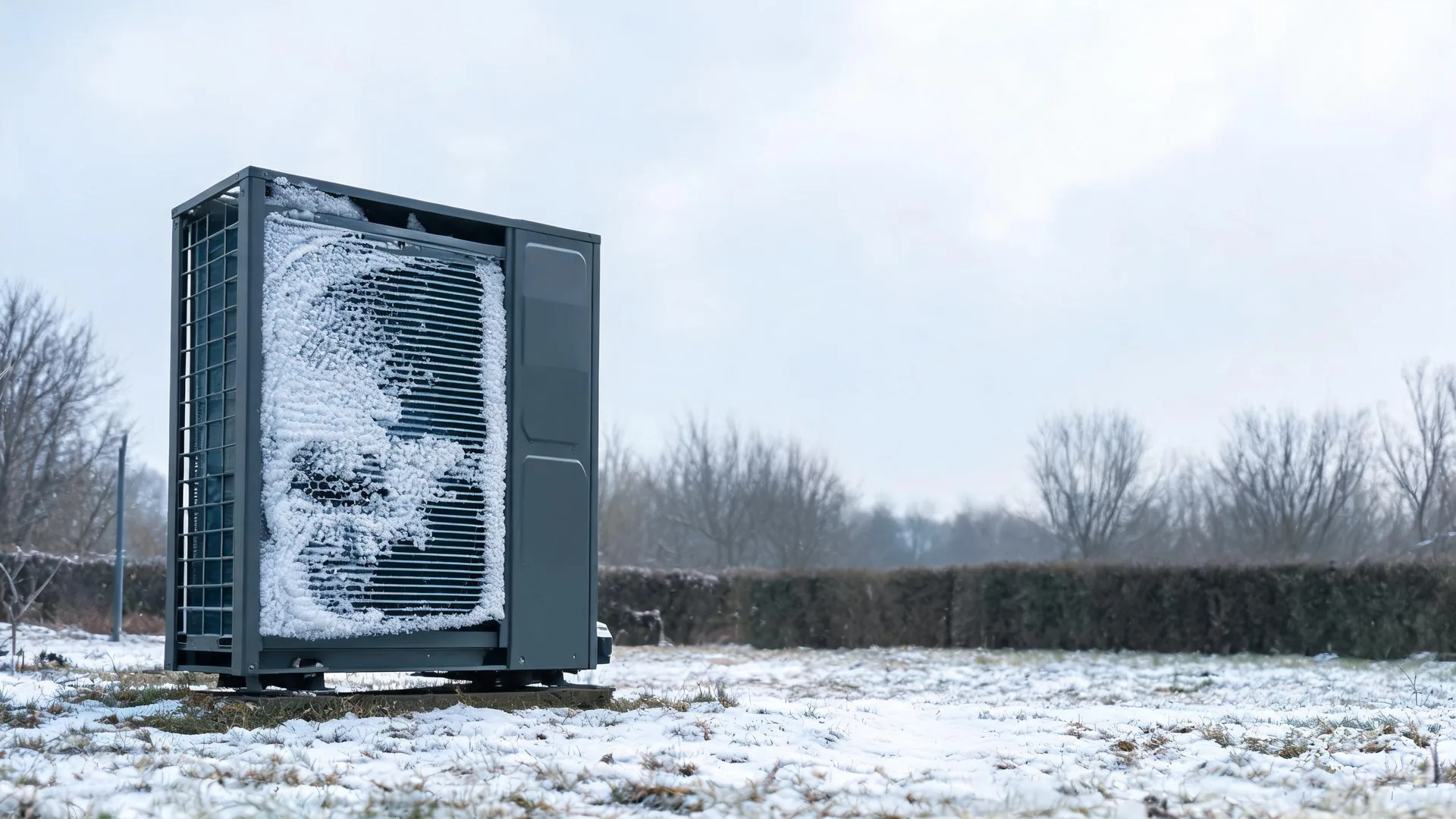
A system low on refrigerant doesn't just cool less, it runs colder on the coil than it should. That coil can ice over, and once ice forms it blocks airflow, so the system cools even less and runs even longer trying to catch up. A capacitor that's starting to weaken makes the compressor draw harder every time it starts, and it starts that way every single cycle. A dirty coil traps heat the system is supposed to be moving outside, so it runs longer to do the same job, and that extra heat soak falls on the compressor too. None of this gets better with more runtime. A tech who catches it early is working on the part that's actually failing. Wait, and the compressor is what gives out instead.

What you can check safely

Check the thermostat is set to cool and the temperature is actually below room temperature. Look at the outdoor unit and clear away leaves, grass clippings or anything blocking its sides. Check the air filter and swap it if it's gray or clogged, a blocked filter starves the whole system of airflow. Check the breaker box for a tripped breaker before assuming the unit itself failed.

What to leave for a tech

Don't pull panels off the outdoor unit or touch anything inside it. Refrigerant lines, capacitors and the wiring behind them can hurt you, and a capacitor holds a charge even with the power off. If the breaker trips again after you reset it, stop resetting it and get someone to look at what's pulling too much current.

Aerial view of a square outdoor air conditioning condenser unit on a concrete pad beside a house wall with a sliding glass door.

A new air conditioner would save little on running costs in Lake County, so the repair decision comes down to the unit's condition.

  • A new one at the federal minimum, 13.4 SEER2$210 a year
  • An older air conditioner$230 a year

Estimates for a typical Lake County home, compared with an older unit built to the previous federal minimum, from EIA household energy data, Indiana fuel prices and NOAA climate normals. Your home will differ.

Repair makes sense when a part like a capacitor or contactor has failed.

Replacement makes sense when the compressor has failed or the system uses R-22 refrigerant, which is no longer made.

Age matters more than the symptom. A capacitor or a fan motor is a contained part, and swapping it brings the system back to normal. A compressor or a coil is a different question, because both are expensive on their own and both tend to show up on a system that's already old. The real test is whether the fix in front of you is likely to be the last one for a while, or just the next one in a string. A system that keeps needing repairs isn't unlucky, it's telling you something about where it's headed. One that's run clean for years and hits a single failed part is usually worth fixing without a second thought.