





Aerial view of a gray outdoor air conditioning condenser unit mounted on a concrete pad next to a house with vinyl siding.

AC Repair in Greenwood, IN

Tell us about the job

Takes about a minute. No obligation.

RepairCentral ACJohnson County, IN
Step 1 of 2

What ZIP code is the job in?

Summers in Greenwood run June through September, with afternoon highs averaging 83 through July and August. That's a normal four months of cooling, not a heavy one, and your AC isn't being asked to do anything unusual for this area. So if it's struggling or not keeping up, the cause is probably the same thing that stops any AC in this kind of weather. A weak capacitor. A low refrigerant charge. A dirty coil, or a clogged filter cutting off airflow. The county does see a fair number of hail storms, and a dented outdoor unit or bent fins can explain a sudden drop in cooling after one comes through. Either way, the fix starts with finding which part actually failed, not guessing.

4 months
June through September, your air conditioner is on duty
83°F
the average summer afternoon it cools against
26 hail events
in ten years, and hail bends the fins on outdoor coils
39 wind events
in ten years, and wind drives debris into outdoor units
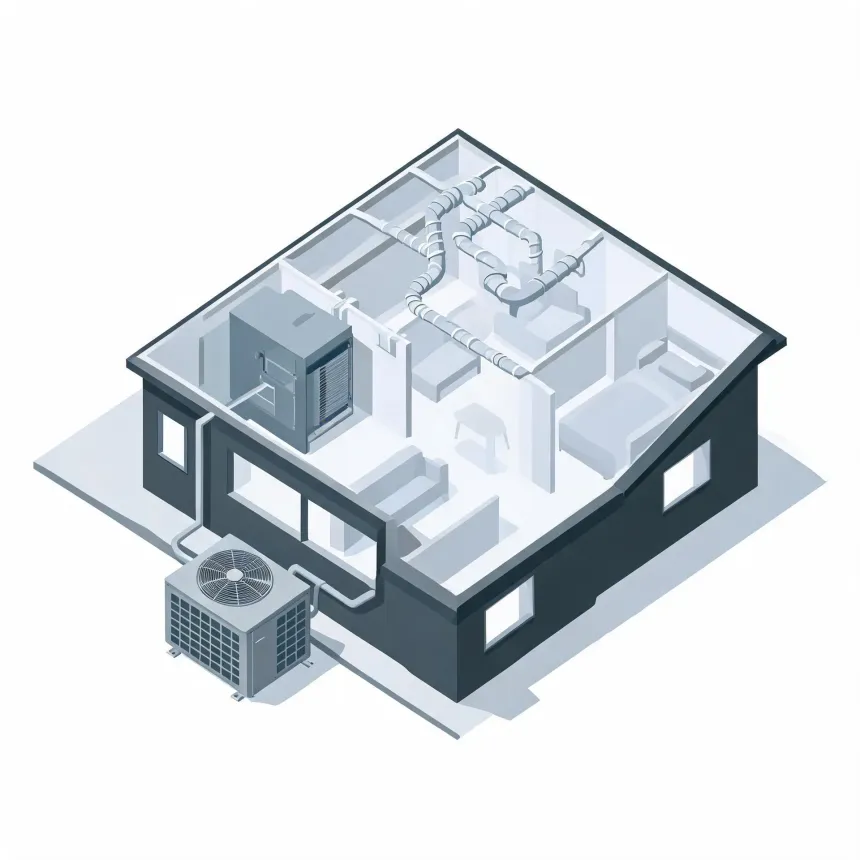
Isometric cutaway illustration of a small house showing interior rooms with furniture, ceiling ductwork and an air handler, plus an outdoor condenser unit connected by refrigerant lines beside the building.
Your air conditioner works hardest from June through August.

NOAA nClimDiv, 1991–2020 normals

Cooling in Johnson County starts in June, right after May.

June is when a part that barely made it through last summer gives out.

Half the homes here were built in 1993 or later, so the AC is usually still worth fixing

Half the homes here were built by 1993
Cooling runs June through September
Summer afternoons average 83°F

Electricity in Indiana runs 14.77 cents a kilowatt-hour, and a struggling AC costs more to run than one working right. A unit low on charge or fighting a dirty coil has to run longer to hit the same temperature, and it pulls power the whole time it's running. That's a real cost, not just a comfort problem. Fixing the actual cause, rather than just letting it run longer to compensate, is what brings the power draw back down.

Get the usual fix

Nothing about this area is especially hard on it. It's most likely the usual problem with the usual fix.

Find a contractor
A man in a cap, dark long-sleeved shirt and tan work pants carries a worn duffel bag as he climbs concrete steps toward an orange front door, with a potted shrub beside the entry.
An outdoor residential air conditioning condenser unit mounted on a concrete pad, surrounded by gravel with a blue sky in the background.

What to check before you call anyone

Before anyone comes out, there's a few things worth ruling out. Check the thermostat is set to cool and the set temperature is actually below room temperature, not just sitting there. Go to the breaker box and make sure the breaker for the outdoor unit hasn't tripped. Pull the filter and hold it up to a light. If you can't see light through it, that's your airflow problem, and a new filter might solve it on its own. Walk outside and look at the condenser. If the fan isn't spinning, or you hear it humming without turning, stop there and call rather than keep flipping it on and off. Check that nothing is blocking the unit, no leaves packed against the coil, no grass clippings, nothing sitting on top of it. None of this takes a panel off the unit, and it rules out the easy stuff first.

A weak capacitor can take the compressor with it

A capacitor that's starting to go still gets the compressor running, just with a harder jolt each time. That extra strain is what burns a compressor out early. Once the capacitor is bad enough that the unit hums and doesn't start, running it again can be the difference between replacing a capacitor and replacing a compressor.

Low refrigerant means the coil starts icing over

When the charge is low, the coil gets too cold and ice forms on it instead of just cooling the air passing over it. Once ice builds up, even less air moves across the coil, so it gets colder still and ices up more. Keep the system running in that state and the ice can spread to the line running back to the compressor, which is a different repair entirely.

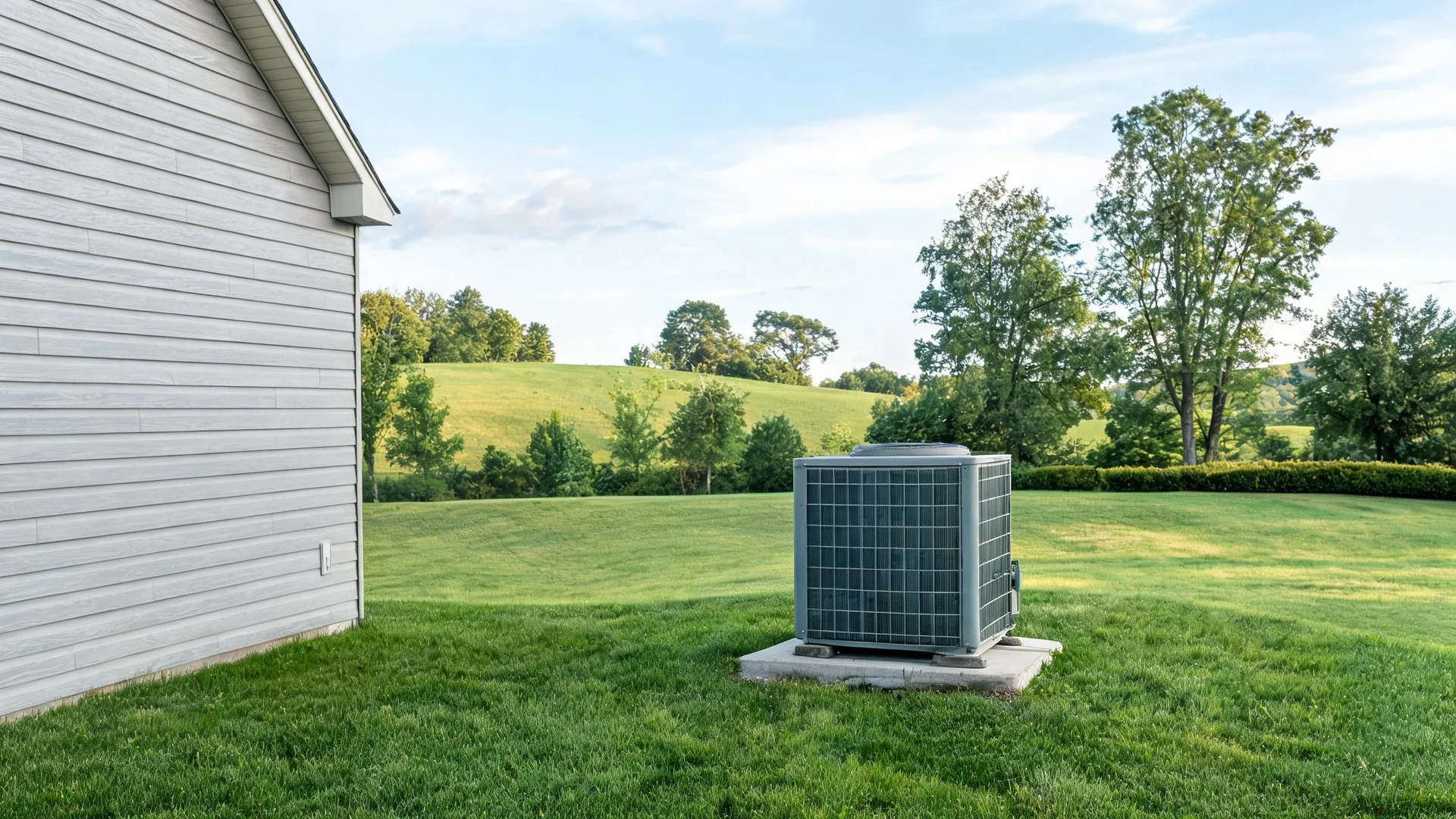
Aerial view of a gray central air conditioning condenser unit on a concrete pad next to a house with vinyl siding.

A new air conditioner would save little on running costs in Johnson County, so the repair decision comes down to the unit's condition.

  • A new one at the federal minimum, 13.4 SEER2$250 a year
  • An older air conditioner$270 a year

Estimates for a typical Johnson County home, compared with an older unit built to the previous federal minimum, from EIA household energy data, Indiana fuel prices and NOAA climate normals. Your home will differ.

Repair makes sense when a part like a capacitor or contactor has failed.

Replacement makes sense when the compressor has failed or the system uses R-22 refrigerant, which is no longer made.

Repair or replace usually comes down to what broke and what it would take to fix it. A capacitor, a contactor, a fan motor, these are normal wear parts, and swapping one doesn't say anything bad about the rest of the system. A compressor is a different question. It's the most expensive part in the unit, and once it's failing, the labor to replace it gets close to the cost of a new outdoor unit, so a compressor going is usually what tips someone toward replacing rather than repairing. If the thing that broke is a quick fix, replacing a whole working system over it rarely makes sense. What matters more is whether this is the first repair or one of several in a short span. A system that keeps finding new ways to fail is telling you something the next repair won't fix for good.