




A row of dark-sided houses with brown shingled roofs behind trimmed hedges, lawn, and large deciduous trees under an overcast sky.

AC Repair in Greenfield, IN

Tell us about the job

Takes about a minute. No obligation.

RepairCentral ACHancock County, IN
Step 1 of 2

What ZIP code is the job in?

Summers here only run about three months, June through August, with afternoon highs averaging 83 degrees. That's a short season for a compressor to work hard, and mild as far as cooling loads go. An AC that's acting up in Greenfield has usually spent most of its life sitting idle, not straining against heat. So if yours is short cycling, blowing warm, or tripping the breaker, the cause is more likely a part that's aged or been neglected than one that's been worked to death. That's a good reason to have it looked at before you write it off.

3 months
June through August, your air conditioner is on duty
83°F
the average summer afternoon it cools against
24 hail events
in ten years, and hail bends the fins on outdoor coils
53 wind events
in ten years, and wind drives debris into outdoor units
Isometric line illustration of a cutaway house showing interior rooms with ductwork, an indoor air handler, and an outdoor condenser unit connected by lines, on a white background.
Your air conditioner works hardest from June through August.

NOAA nClimDiv, 1991–2020 normals

Half the homes in Hancock County were built in 1991 or later.

A system installed with a newer house usually still has years left in it.

Cooling starts in June, and that is when trouble shows up

Cooling runs June through August
Summer afternoons average 83°F
53 damaging wind events from 2015 to 2024

A repair bill does not tell you much by itself. What matters is the part. A capacitor, a contactor, or a fan motor is a contained fix, and a unit that is sound otherwise is worth putting that money into. A compressor is a different question. It sits at the center of the system, and when it is failing, a tech will usually tell you straight that the cost to replace it rivals putting in a new unit. Age matters here too, but not in the way people think. It is not a birthday that matters, it is whether the rest of the system has been maintained. A unit that has had its coils cleaned and its refrigerant checked over the years can take a repair and keep going. One that has been ignored tends to fail again somewhere else within the year.

A newer system is worth repairing

If your AC came with the house, it's probably not old enough to write off. Get the part diagnosed and fixed before you start pricing a new unit.

Find a contractor
An outdoor residential air conditioning condenser unit mounted on a concrete pad, surrounded by gravel with a blue sky in the background.

What a failing system sounds and feels like before it quits

The signs show up before the system quits altogether. Warm air out of the vents while the thermostat is calling for cold usually means the compressor isn't running even though the fan is. Short cycling, where the unit kicks on and off every few minutes instead of running a full cycle, points to a different problem, often electrical. A hissing or bubbling sound near the lines can mean refrigerant escaping, and ice forming on the copper line or the indoor coil is a sign airflow or refrigerant is off, not a sign the system is working hard. A breaker that trips every time the AC starts means something is drawing too much current at startup, usually the compressor itself or the capacitor that's supposed to help it along. None of these fix themselves, and running the system while they're happening tends to turn a small repair into a bigger one.

A weak start gets worse every cycle

A compressor that struggles to start draws heavy amperage each time it tries. Left alone, that strain breaks down the windings a little more with every cycle until it trips the breaker or fails to start at all. A failing capacitor is usually behind it, and it is worth catching before the compressor itself takes the damage.

Low refrigerant does not stay put

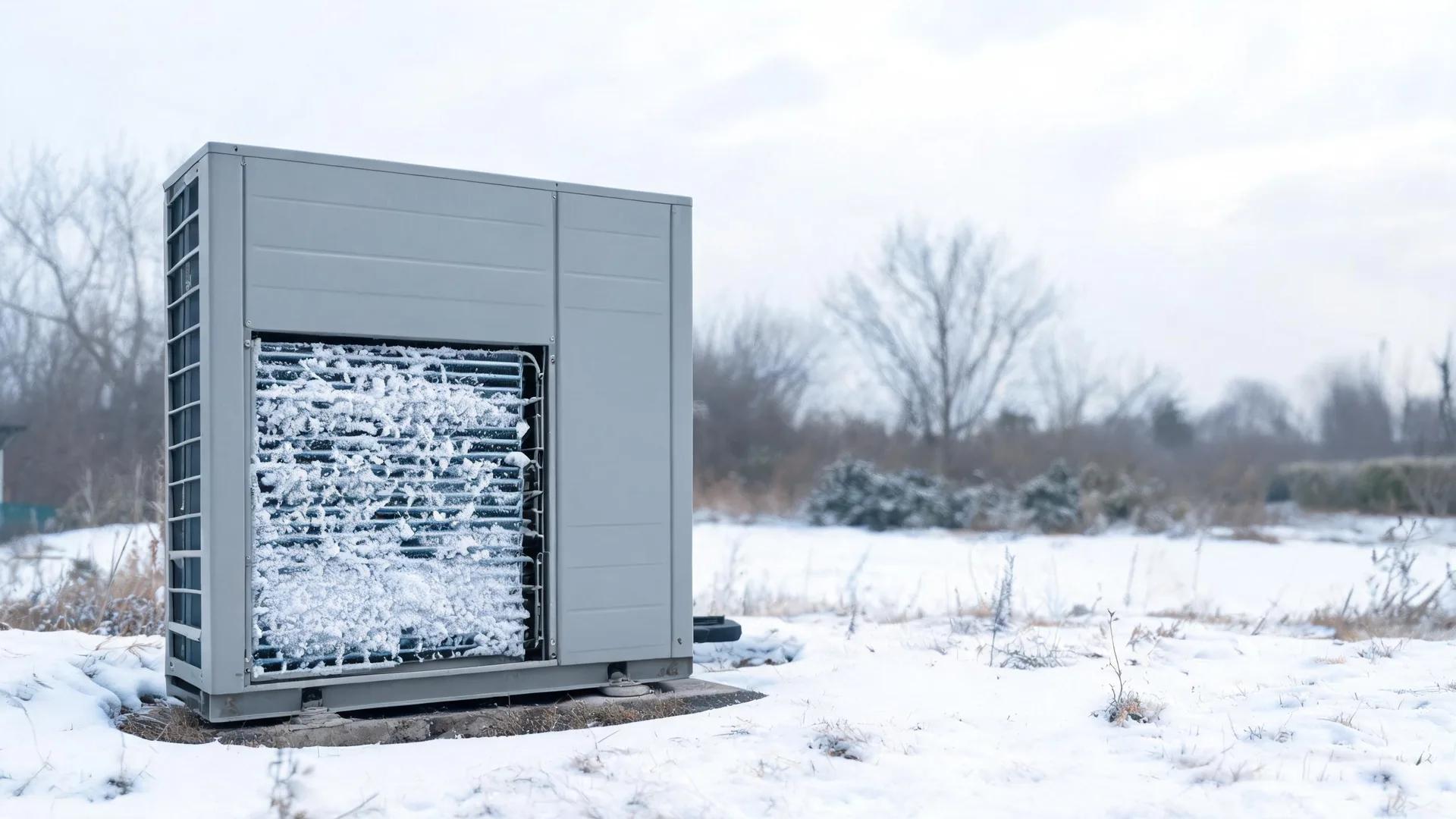
A system low on refrigerant runs its compressor hotter and lets the evaporator coil ice over. Keep it running like that and the ice blocks airflow, the compressor overheats further, and a leak that started small ends up taking the compressor with it.

An outdoor air conditioning condenser unit on a concrete pad next to the gray vinyl siding of a residential home.

A new air conditioner would save little on running costs in Hancock County, so the repair decision comes down to the unit's condition.

  • A new one at the federal minimum, 13.4 SEER2$240 a year
  • An older air conditioner$260 a year

Estimates for a typical Hancock County home, compared with an older unit built to the previous federal minimum, from EIA household energy data, Indiana fuel prices and NOAA climate normals. Your home will differ.

Repair makes sense when a part like a capacitor or contactor has failed.

Replacement makes sense when the compressor has failed or the system uses R-22 refrigerant, which is no longer made.

A diagnostic starts outside, at the condenser. A tech checks that the fan spins freely, that the coil isn't caked with dirt or grass clippings, and that the unit is pulling the amperage it should. Gauges go on next to check refrigerant pressure. That one reading points toward a weak compressor, a dirty coil, or a slow leak depending on where the numbers fall. Inside, the return air and the coil get checked for ice, because a frozen coil is a symptom and the tech still has to find what caused it. Electrical parts get tested directly rather than guessed at. The capacitor holds a charge and gets measured against its rating, the contactor gets checked for pitting, and wiring gets inspected at the connections, since that's where corrosion and loose lugs usually show up. By the end, the tech isn't just naming a broken part. They can tell you why it failed and whether anything around it got damaged in the process.