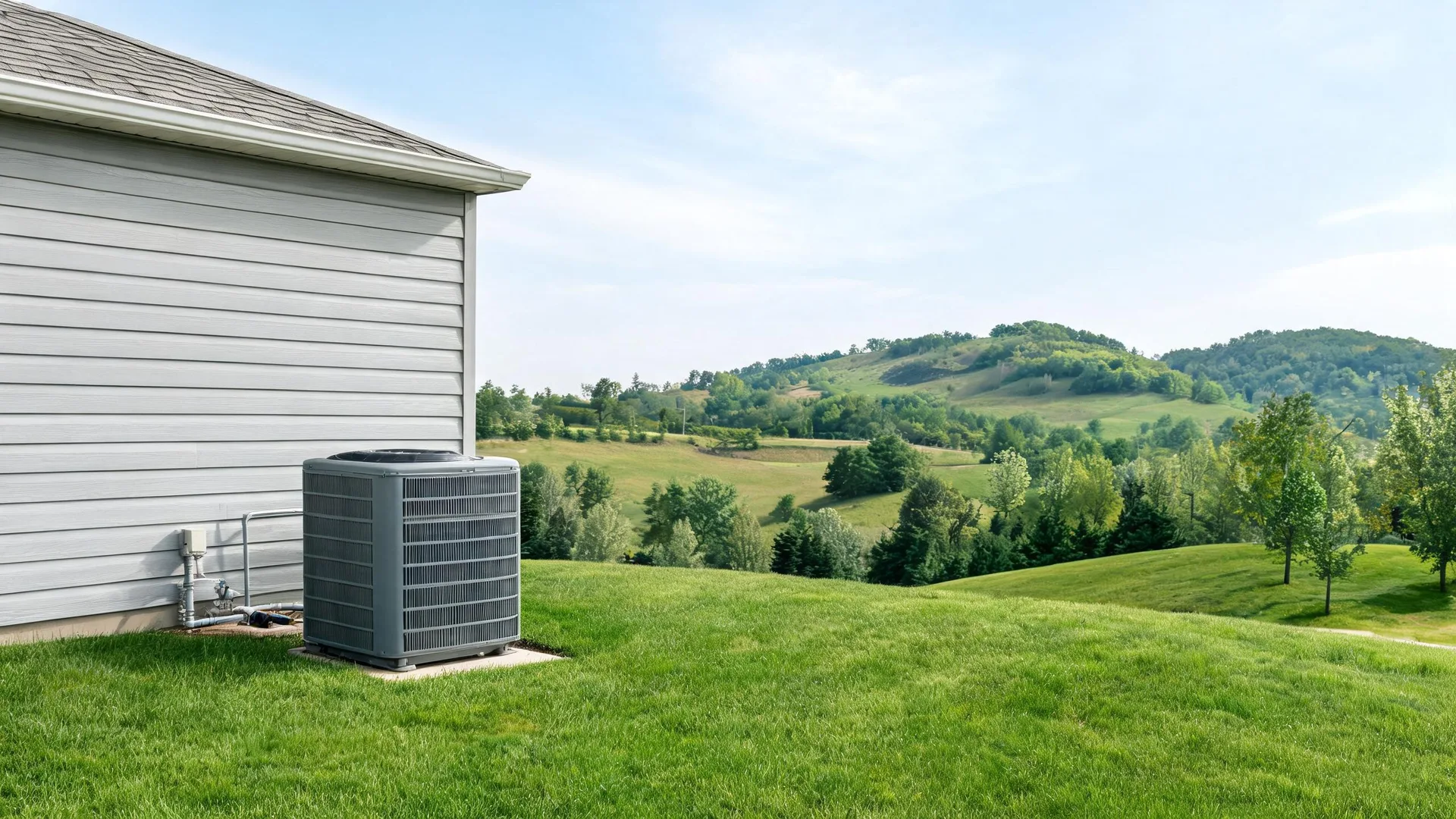
Overhead view of a gray residential air conditioning condenser unit mounted on a concrete pad beside a house with asphalt shingle roofing.

AC Repair in Fort Wayne, IN

Tell us about the job

Takes about a minute. No obligation.

RepairCentral ACAllen County, IN
Step 1 of 2

What ZIP code is the job in?

Warm air or weak airflow from the vents

If the air coming out isn't cold, or barely comes out at all, something in the cooling or moving of that air has failed. A refrigerant leak, a failing compressor, or a blower motor losing strength can all cause this. The longer it runs that way, the harder the rest of the system works to make up for it.


Short cycling or a system that won't shut off

An air conditioner that clicks on and off every few minutes isn't resting between cycles the way it should, and one that runs constantly without hitting the temperature on the thermostat is struggling the same way in the other direction. Both point to something concrete: a dirty coil, a stuck relay, or a unit sized wrong for the space. Either pattern wears on the compressor faster than normal use would.

3 months
June through August, your air conditioner is on duty
82°F
the average summer afternoon it cools against
56 hail events
in ten years, and hail bends the fins on outdoor coils
166 wind events
in ten years, and wind drives debris into outdoor units
Isometric grey illustration of a cutaway single-story house showing interior rooms, ceiling ductwork connected to an indoor air handler, and an outdoor condenser unit linked by lines outside the wall.
Your air conditioner works hardest from June through August.

NOAA nClimDiv, 1991–2020 normals

A technician traces the complaint to a part before touching anything, checking refrigerant pressure, electrical draw, and airflow in that order.

That order matters because replacing a capacitor or a contactor without checking pressures first can leave the real problem, a low charge or a dirty coil, untouched.

This county sees real storms, and your AC sits outside for all of it

241 severe weather events from 2015 to 2024
17% of homes statewide lost power a day or more in 2024
166 damaging wind events from 2015 to 2024
Built for Fort Wayne summersAC here runs June through August, and June is when a weak part usually gives out first.

A technician weighing repair against replacement is really asking how many other parts are likely to fail next. A compressor nearing the end of its life often takes the capacitor or contactor down with it, and replacing one part on an old system can just mean a different part fails the same summer. Age matters less than pattern. A unit that's needed a new part every year is telling you something a single breakdown doesn't. The refrigerant it uses matters too. Older systems built for a phased-out refrigerant cost more to keep running every time a leak sends them back for a recharge. None of that makes repair the wrong call on its own. A sound compressor and a tight coil can carry a system a long way on one fixed part.

If this storm season left a mark, get the unit checked before it costs you comfort

Hail and debris can hit an outdoor unit without stopping it cold. It keeps running, just worse. If yours came through wind or hail and hasn't been looked at since, a check now can catch what's bent or clogged before it takes the compressor with it.

Find a contractor
A man in a dark shirt and tan work pants, seen from behind, carries a canvas tool bag up concrete steps toward an orange front door flanked by gray siding and a potted shrub.
A gray metal air conditioning condenser unit mounted on a concrete pad in a flat grassy field under a partly cloudy sky.

Running it longer doesn't buy you time

A refrigerant leak doesn't hold still. The system keeps circulating what's left, and the compressor keeps pulling on it like the charge was full. That's what burns a compressor out early. Low airflow across a dirty coil does something similar from the other side: the system runs longer to hit the same setpoint, and heat that should leave the refrigerant stays put. Run it long enough that way and the compressor is working against conditions it was never built to run under. A part that would have been a simple swap on day one turns into the reason the whole system gets replaced.

What you can check yourself

Start at the thermostat. Make sure it's set to cool and the setpoint is actually below room temperature, since a bumped setting is an easy thing to miss. Check the air filter next. A filter clogged with dust blocks airflow across the coil and can shut the system down on its own. Go outside and look at the condenser. Clear away leaves, grass clippings or anything stacked against it, since it needs open space on all sides to move air. Check the breaker it runs on, too. A tripped breaker can mean something as simple as a reset, or it can mean the compressor is drawing too much and tripping it on purpose.

What to leave alone

Don't open the electrical panel on the outdoor unit or touch the wiring inside it. The capacitor in there holds a charge even with the power off and can shock you. Don't add refrigerant yourself either. It's sold and handled under license for a reason, and the wrong charge can damage the compressor faster than the leak would have on its own. If the indoor coil has frozen over, turn the system off and let it thaw completely before anyone runs it again or looks at it closely. Running a frozen coil just pushes liquid refrigerant back into the compressor, which is a harder failure than the one you started with.

Overhead view of an outdoor AC condenser unit on a concrete pad next to a house with a dark shingle roof.

A new air conditioner would save little on running costs in Allen County, so the repair decision comes down to the unit's condition.

  • A new one at the federal minimum, 13.4 SEER2$210 a year
  • An older air conditioner$230 a year

Estimates for a typical Allen County home, compared with an older unit built to the previous federal minimum, from EIA household energy data, Indiana fuel prices and NOAA climate normals. Your home will differ.

Repair makes sense when a part like a capacitor or contactor has failed.

Replacement makes sense when the compressor has failed or the system uses R-22 refrigerant, which is no longer made.

Most AC failures trace back to a handful of parts that wear out doing their job. The capacitor gives the compressor and fan motor the jolt they need to start, and that jolt weakens it a little every time until one day it doesn't deliver enough. A contactor can pit and stick from years of electrical arcing, leaving the outdoor unit humming or not starting at all. The condenser fan motor bears the weather directly, so its bearings dry out and its windings break down faster than parts kept indoors. Refrigerant doesn't get used up, so a low charge almost always means a leak somewhere in the coil or line set, slow enough that it can take a season or more to show up as warm air. None of these parts fail because they were neglected. They fail because they're the ones doing the work every time the system runs.