







An outdoor central air conditioning unit mounted on a concrete pad beside a blue-sided house at sunset.

AC Repair in Boonville, IN

Tell us about the job

Takes about a minute. No obligation.

RepairCentral ACWarrick County, IN
Step 1 of 2

What ZIP code is the job in?

April is when to get a weak AC looked at here, before cooling starts up in May. A system that struggled last September often has the same problem waiting this year, a capacitor on its way out or a contactor with worn contacts. Once the heat sets in and the unit runs daily from May through September, that same weak part fails under the load instead of giving any warning. Getting it checked in April catches it while the system is only running now and then, not every day.

5 months
May through September, your air conditioner is on duty
87°F
the average summer afternoon it cools against
6 hail events
in ten years, and hail bends the fins on outdoor coils
77 wind events
in ten years, and wind drives debris into outdoor units
Isometric grayscale illustration of a cutaway house showing interior rooms, ceiling ductwork connected to an indoor air handler, and an outdoor condenser unit linked by lines along the exterior wall.
Your air conditioner works hardest from June through August.

NOAA nClimDiv, 1991–2020 normals

A weak capacitor doesn't fail all at once, it just stops giving the compressor enough of a push to start.

A compressor that struggles to start on a mild day will stall out completely once it has to run every afternoon.

Half the homes here were built in 1986 or later, young enough that the AC is rarely the real problem

Half the homes here were built by 1986
Cooling runs May through September
Summer afternoons average 87°F
A broken AC costs more hereIndiana power ran 14.77 cents per kilowatt-hour in 2024, so a unit running bad still runs up the bill.

If the AC came with a newer build here, the unit itself usually isn't the problem. A system installed when the house went up has no real reason to be failing outright this early. What's more likely is a single worn part, a capacitor or a contactor, and that's a repair, not a reason to think about replacement. Worth telling whoever comes out how old the system actually is, since that points them straight at looking for the failed part instead of weighing the unit's age against the fix.

A struggling AC still runs up the bill

A bad capacitor or contactor doesn't get cheaper to ignore. At 14.77 cents a kilowatt-hour, a unit straining to start or run is still pulling power the whole time it struggles. Fixing the part now stops that.

Find a contractor
A man in a dark cap and shirt carries a worn leather tool bag up wooden porch steps toward an orange front door, with a potted shrub in a terracotta planter to the right.
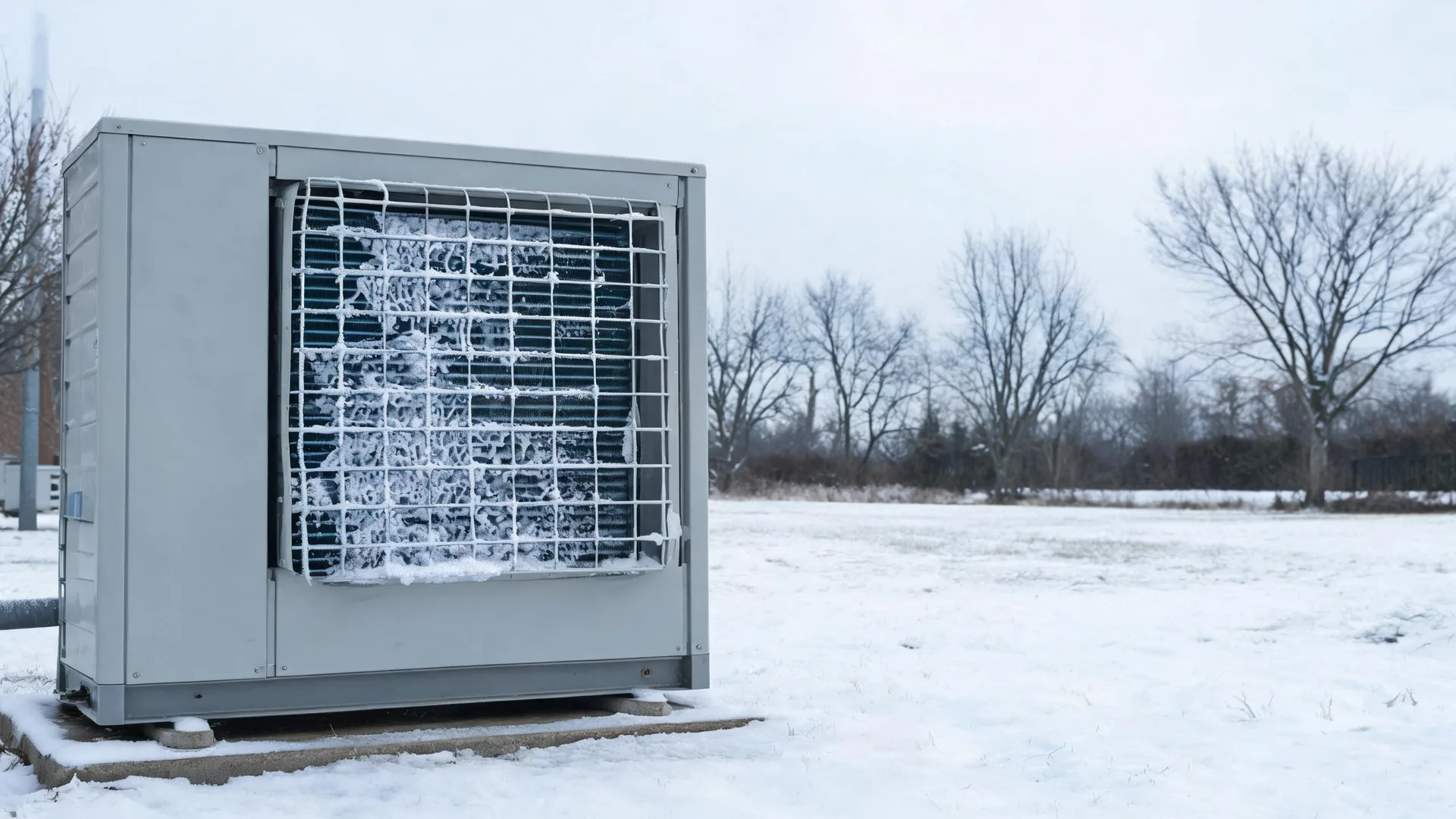
A gray residential air conditioner condenser unit mounted on a concrete pad in an open grass field.

Some of these problems get worse every hour the unit keeps running

A refrigerant leak is small on day one. The system still cools, so it keeps running, and every hour it runs it pushes what refrigerant is left through a compressor that was never built to work that low. Low charge means low lubrication too, since oil travels with the refrigerant. Keep running it and the compressor wears on itself until it seizes. A dirty condenser coil follows the same pattern. Airflow drops, head pressure climbs, and the compressor works harder to move the same heat. It can run like that for a while, right up until it can't. Neither problem announces itself with a bang. The unit just quietly moves from a part that needs replacing to a compressor that needs replacing, and one of those is a much bigger job than the other.

What you'll actually notice first

The AC takes longer to cool the house than it used to, or it runs long stretches without the temperature moving much. Warm air coming out of the vents, water pooling near the indoor unit, or a smell when it kicks on all point to something specific going wrong. A clicking or humming sound when the outdoor unit tries to start, especially if it doesn't start at all, usually means the capacitor or contactor rather than the compressor itself.

Noise and smell tell you more than you'd think

A grinding or screeching sound from the outdoor unit points to the fan motor bearings. A burning smell near the indoor unit can mean a motor winding is overheating. A musty smell usually means condensation is sitting somewhere it shouldn't, often the drain line or the coil itself. None of these fix themselves, and all of them are worth naming exactly when someone comes to look at it, since the sound or smell narrows down the part before the panel ever comes off.

Aerial view of a square outdoor air conditioning condenser unit on a concrete pad beside a house wall with a sliding glass door.

A new air conditioner would save little on running costs in Warrick County, so the repair decision comes down to the unit's condition.

  • A new one at the federal minimum, 13.4 SEER2$360 a year
  • An older air conditioner$380 a year

Estimates for a typical Warrick County home, compared with an older unit built to the previous federal minimum, from EIA household energy data, Indiana fuel prices and NOAA climate normals. Your home will differ.

Repair makes sense when a part like a capacitor or contactor has failed.

Replacement makes sense when the compressor has failed or the system uses R-22 refrigerant, which is no longer made.

A diagnostic visit starts outside at the condenser, since that's where most AC failures actually live. The tech kills power at the disconnect, pulls the panel, and checks the capacitor first, either with a meter or just by looking for a bulge on top. From there it's the contactor, checking for pitted contacts, then the wiring and the compressor's amp draw while it's running. Refrigerant pressure gets checked with gauges on the service ports, since that number says whether the charge is low and whether a leak is likely. Inside, the coil and drain line get a look too, since a clogged drain backs up water and a dirty coil shows up as poor cooling even when every electrical part is fine. By the time the panel goes back on, the failing part usually has a name.