


A lit residential street at dusk featuring large two-story brick houses with glowing windows, mature trees, and a street lamp.

AC Repair in Bloomington, IN

Tell us about the job

Takes about a minute. No obligation.

RepairCentral ACMonroe County, IN
Step 1 of 2

What ZIP code is the job in?

AC here runs June through September, so May is the month to get a weak system looked at before the heat load hits it. A capacitor or contactor that was already marginal last fall tends to fail in the first real hot stretch, not gradually. If your AC struggled at the end of last summer, that same part is still in there, and the problem didn't fix itself over the winter. Waiting until June means waiting in line behind everyone else whose system picked the same week to quit.

4 months
June through September, your air conditioner is on duty
84°F
the average summer afternoon it cools against
32 hail events
in ten years, and hail bends the fins on outdoor coils
44 wind events
in ten years, and wind drives debris into outdoor units
Isometric line illustration of a cutaway house showing interior rooms with furniture and ceiling ductwork, connected to an outdoor condenser unit with a fan beside the building.
Your air conditioner works hardest from June through August.

NOAA nClimDiv, 1991–2020 normals

Summer afternoons in Monroe County average 84°F for June through August.

A system low on charge or running on a weak capacitor has to work through four months of that before it gets a break.

A Bloomington AC that's short on refrigerant or running on a weak capacitor doesn't just cool worse. It runs longer to put out the same amount of cold air. That extra runtime shows up on the power bill at Indiana's going rate, 14.77 cents per kilowatthour as of last year. There's nothing about this area that wears a system out faster than anywhere else. It's the same handful of parts that fail everywhere, a capacitor losing its charge, a contactor with pitted contacts, a slow leak dropping the refrigerant charge. Finding which one it is and fixing that part is the whole job.

Half the homes here were built in 1986 or later. Yours is probably worth fixing.

Half the homes in Monroe County were built in 1986 or later. If your house is one of them, the AC that came with it likely still has years left in it. That favors fixing the part that's failing over replacing the whole system.

Find a contractor
An outdoor residential air conditioning condenser unit mounted on a concrete pad, surrounded by gravel with a blue sky in the background.

What a tech actually checks

A diagnostic starts with the thermostat and the breaker, not the unit outside. A tech needs to know what the system is actually doing before taking anything apart. From there it's gauges on the refrigerant lines to check the charge. A meter goes on the capacitor to see if it's still holding what it should. The contactor gets a look for pitting or burn marks. The coil gets checked too, both for ice and for the kind of grime that keeps it from giving up heat the way it needs to. None of this is guesswork. Each test rules something in or out, and most systems only have a handful of parts that actually fail. The visit ends with a straight answer, which part is bad and whether the compressor behind it is still worth protecting.

Warm air instead of cold

The thermostat says it's cooling, but the air coming out of the vents is weak or barely cooler than the room. That usually points to a compressor that isn't running right or a system low on refrigerant. It's rarely something to leave alone, because it tends to get worse, not better.

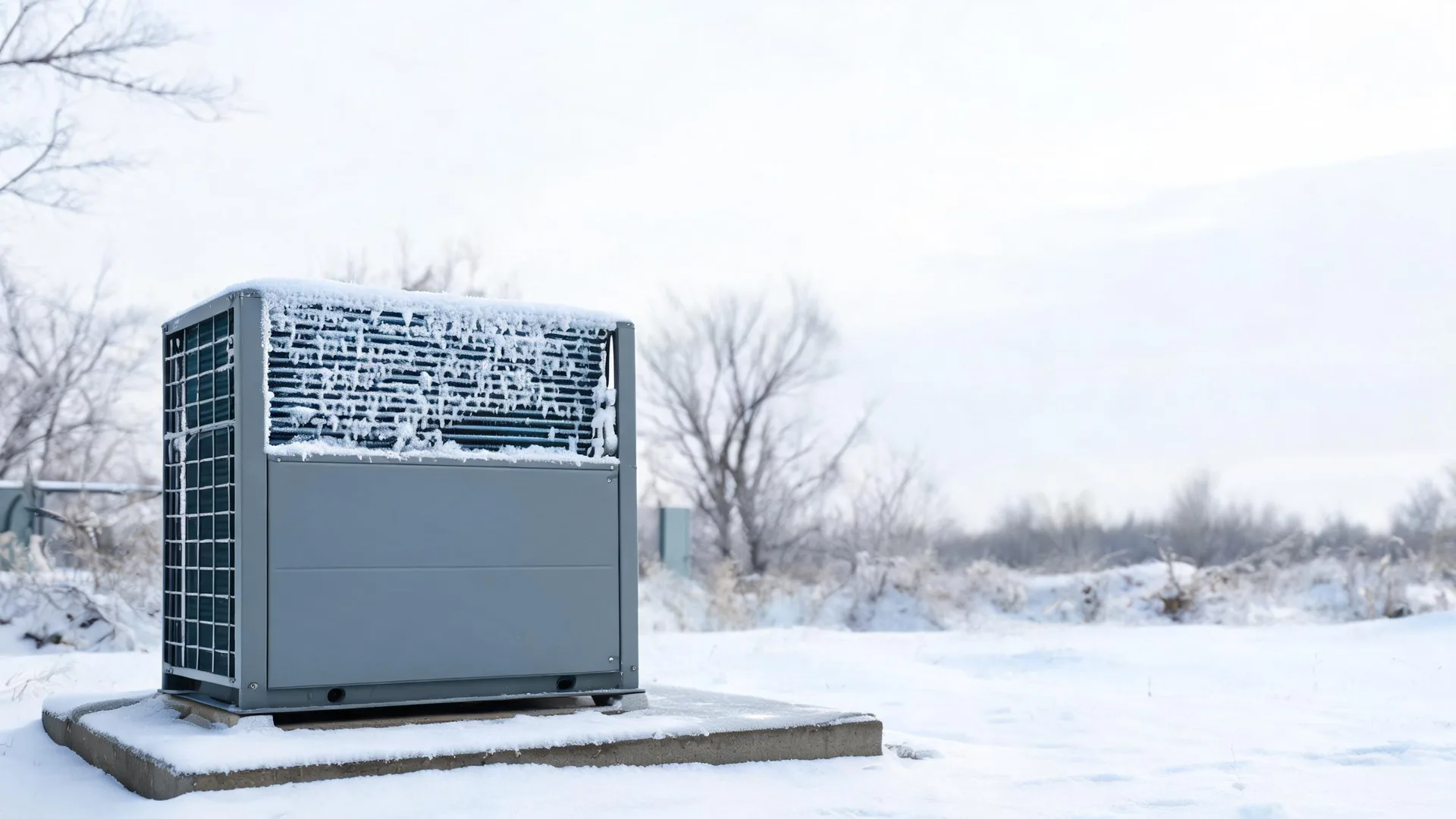
Short cycling or no start at all

A system that clicks off soon after starting, or hums without starting at all, usually has a failing capacitor or a contactor that's stuck or pitted. Left alone, the compressor ends up taking the strain instead, and the compressor is not a part anyone wants to be replacing.

An outdoor air conditioning condenser unit positioned beside a blue-sided house at sunset.

A new air conditioner would save little on running costs in Monroe County, so the repair decision comes down to the unit's condition.

  • A new one at the federal minimum, 13.4 SEER2$260 a year
  • An older air conditioner$270 a year

Estimates for a typical Monroe County home, compared with an older unit built to the previous federal minimum, from EIA household energy data, Indiana fuel prices and NOAA climate normals. Your home will differ.

Repair makes sense when a part like a capacitor or contactor has failed.

Replacement makes sense when the compressor has failed or the system uses R-22 refrigerant, which is no longer made.

Age by itself doesn't tell you whether to fix a system or replace it. What matters is whether the compressor is still good. A compressor that's running fine, just being asked to work through a bad capacitor or a dirty coil, is worth saving every time, because that part is the expensive one and it's still doing its job. A compressor that's grinding, tripping its overload, or won't start even with a good capacitor feeding it is a different problem, and no repair fixes a compressor that's actually failing. The other thing worth asking is how many repairs this same system has needed. One bad capacitor is normal wear. A system that's had a contactor replaced, then a capacitor, then shows up low on charge again a year later is telling you something about how much life is left in it.