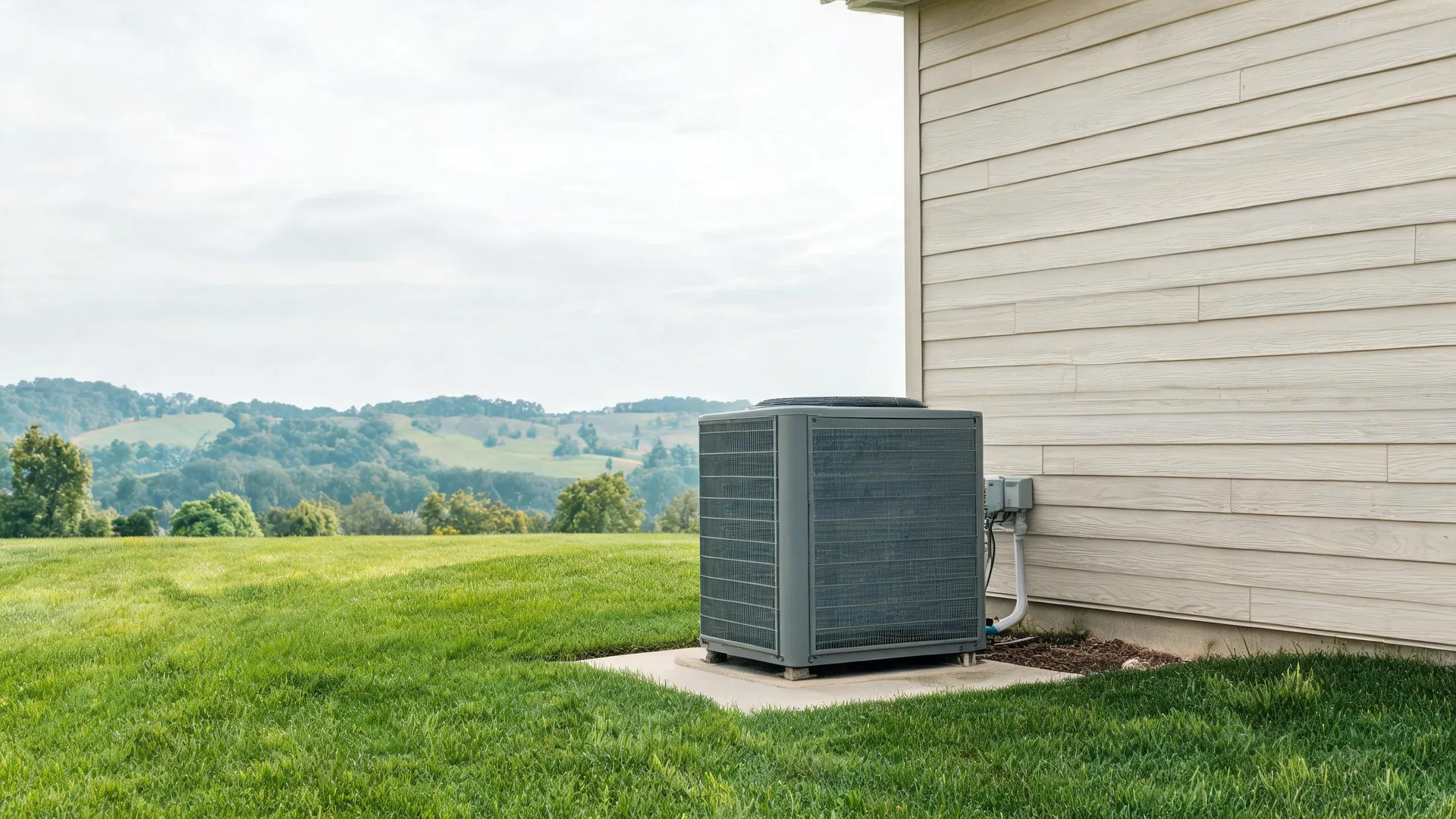
June is when weak parts give out
Cooling in Auburn starts in June. A capacitor or contactor that was already weak often doesn't survive that first stretch of real heat once the system is finally asked to run.
Takes about a minute. No obligation.
Cooling in Auburn starts in June. A capacitor or contactor that was already weak often doesn't survive that first stretch of real heat once the system is finally asked to run.
Homes here only run AC from June through August, so May is the one month the system sits idle before the load hits it. Checking it in May catches a weak part before it fails outright in June.

NOAA nClimDiv, 1991–2020 normals
Auburn gets about three months of real cooling load, June through August, with afternoon highs averaging 82.
Three months a year of moderate heat is a light workload for an AC system, so when a part fails, the rest of the system is usually still in good shape underneath it.



A system that's struggling still cools, so it's easy to let it ride instead of shutting it down. That's usually the wrong call. A compressor low on charge keeps pulling current every time it cycles, and it runs hotter than it was built to while it does less work. A weak capacitor forces the motor to draw extra current trying to start, and every cycle it survives makes the next one less likely. Ice on the coil is the clearest case. Once airflow is blocked, the system keeps running in the one spot that needs airflow most, and what started as a simple fix can end with a compressor that won't start at all. Shutting the system off doesn't fix anything, but it stops a failing part from taking the rest of the unit down with it.
Problems tend to show up in the first weeks of the season, when the load hits a part that was already weak.
Find a contractorBefore anyone comes out, there are a few things worth checking yourself. Look at the outdoor unit first. If the fan isn't spinning at all, check the breaker, sometimes it's tripped and nothing more than that. While you're out there, clear away any leaves, grass clippings or mulch piled against the cabinet, airflow in matters as much as airflow out. Inside, pull the filter and hold it up to a light. If you can't see through it, swap it, a clogged filter starves the coil of air and can cause the whole system to ice up. Check your thermostat batteries if it's got a screen that looks dim or blank. If the system's running but the air isn't cold, go look at the outdoor coil, the one surrounded by fins, and see if it's coated in ice. If it is, shut the system off and let it thaw completely before anyone tries to diagnose it running, ice on the coil hides the real problem underneath. None of this tells you what's actually wrong, but it rules out the easy stuff first.
If the system shuts off and restarts every few minutes instead of running a full cycle, something is cutting power to the compressor too soon. A failing capacitor or a dirty coil sensing false readings can both cause this. Short cycling wears the compressor fast. It's worth getting looked at before the compressor stops starting at all.
The fan running while the air stays warm almost always points to the compressor, not the thermostat. It may not be starting at all, which can be a bad capacitor or contactor. Or it's running but low on refrigerant charge and can't move heat out of the house. Listening at the outdoor unit tells you which. Silence means it isn't starting. A compressor that's running while the air inside stays warm points to low charge.
Estimates for a typical DeKalb County home, compared with an older unit built to the previous federal minimum, from EIA household energy data, Indiana fuel prices and NOAA climate normals. Your home will differ.
Repair makes sense when a part like a capacitor or contactor has failed.
Replacement makes sense when the compressor has failed or the system uses R-22 refrigerant, which is no longer made.
Most repairs don't mean the system is wearing out. They mean one part failed while the rest is still fine. The compressor and the coils are built to outlast the smaller parts around them, things like the capacitor, the contactor, the fan motor. Those are the parts that take the electrical punishment every time the system cycles on, so they're the ones that give out first. Replacing one of them doesn't shorten the life of the unit. It just fixes the thing that actually broke. Physical damage is different. A cracked cabinet, fins bent across a wide stretch of the coil, a cabinet that's been struck by something falling or flying, that kind of damage isn't wear and no part swap corrects it. A contractor opening the unit up can usually tell right away which kind of problem is sitting in front of them.