Why your heat pump has ice on it in an Indiana winter

RepairHeat PumpIndiana
Step 1 of 2

What ZIP code is the job in?

Why is my heat pump covered in ice in the winter?

A little frost on the outdoor unit during an Indiana cold snap is normal and the unit clears it on its own. You're probably asking because what you're seeing looks like more than that. Maybe the coil is caked in ice, or it's been iced over for hours without the unit kicking into defrost, and you want to know if that's something to worry about or just how heat pumps act once the temperature drops.

A thin coat of frost is normal. A thick, lasting layer of ice is not.

Heat pumps pull warmth out of outdoor air, and in an Indiana winter that air carries moisture that freezes onto the coil. A normal unit builds some frost, then reverses itself for a few minutes every so often, melts it off, and switches back to heating. If the ice is thick, covers the whole coil, or never seems to melt between cycles, the defrost cycle isn't doing its job. That can come from a stuck reversing valve, a bad defrost sensor or control board, or a fan that isn't moving air the way it should. Left alone, the ice blocks airflow, the system works harder to heat your home, and the compressor can end up carrying damage that gets expensive to undo.

A dark bedroom at night with a rumpled duvet and pillows on a bed beside a rain-streaked, condensation-covered window with distant lights, a curtain, and a bedside lamp.

You wake up a little after two and the house already feels wrong. The air coming out of the vent is cold, not warm, and you lie there a minute telling yourself it's nothing before you get up. Out back, the unit is coated solid, ice built up thick over the coil and climbing the sides of the cabinet. No steam, no melt, just a quiet hum underneath it like it's still trying. Indiana cold snaps do this, the kind that sits at ten degrees for days, and you've seen frost on it before. This isn't that. You stand there in the cold in your socks, breath fogging, staring at it like it might explain itself.


Normal Frost or a Problem

Normal Frost

  • A thin layer of frost on the lower coil or around the base after a cold, damp night is part of how the unit defrosts itself.
  • The unit runs a defrost cycle automatically, sending warm refrigerant through the outdoor coil to melt the ice off.
  • During defrost you may hear the fan stop and see steam rise off the coil for several minutes before it clears.
  • Warm air still comes out of your vents once the cycle ends and the unit goes back to heating.
  • The coil looks wet or lightly frosted afterward, not packed solid, and it does not build back up within the hour.

Ice That Needs a Look

  • Ice covering the whole cabinet, including the top and the fan grille, means the defrost cycle is not finishing the job or not running at all.
  • Cold air blowing from your vents instead of warm points to a problem beyond normal frost, like low refrigerant or a stuck reversing valve.
  • A unit that stays frozen solid for hours, even after the compressor has clearly been running, is not going to thaw on its own.
  • A fan that won't turn because ice has locked the blades needs a contractor before you run the system again.
  • Ice returning within an hour or two of melting, over and over, means something in the defrost control or sensor isn't doing its job.
A white outdoor heat pump unit on rubber feet atop a concrete pad beside a light stucco wall, with gray siding and a small shrub at the left edge.

How the defrost cycle works

Your heat pump checks its own coil temperature as it runs. When it senses enough frost buildup, it reverses the refrigerant flow for a few minutes, sending hot gas through the outdoor coil to melt the ice. The outdoor fan stops during this, and you might notice steam rising off the unit. It then switches back to normal heating. A unit stuck in a loop, running defrost over and over without clearing, usually points to a stuck reversing valve, a bad defrost sensor, or a refrigerant charge that's off.

A gray outdoor heat pump unit with a large circular fan grille sits on a concrete pad beside a house with horizontal siding, surrounded by gravel and grass, with a conduit and junction box on the wall.

What a frozen coil costs the system

Ice on the coil blocks the airflow the unit needs to pull heat from outside air, even in cold temperatures. The compressor keeps working to meet the thermostat's call, but with a blocked coil it's working against itself. Left alone through a few more Indiana cold snaps, that strain on the compressor is the kind of wear that turns a sensor repair into a compressor replacement. Catching it while the ice is still new, before it's thick over the fan or the base, keeps the fix small.

A woman in a long cream cardigan and jeans stands at an open wooden front door of a gray shingled house with stone-based porch columns, with a second person visible inside, and potted flowers and shrubs beside the entry.

What stops the defrost cycle from finishing the job

The defrost cycle only works if a few things happen in order. The sensor has to read the coil temperature correctly. The reversing valve has to switch over cleanly. The control board has to time the cycle and shut it off once the coil is clear. If any one of those is off, the cycle can start and never finish, or never start at all, and ice keeps building instead of melting away. A stuck reversing valve is a common culprit. So is a sensor that's reading wrong and telling the board the coil isn't cold enough to need defrosting.

None of that is something you can see from the back steps in your boots at two in the morning. You can see the ice. You can't see which part in that chain is the one holding things up, and running the system on a guess can wear on the compressor. Send the details in and a contractor who works on heat pumps in Indiana winters will reach out to look at what's actually happening with yours.

A large weathered ceramic vase and a shallow wooden bowl sit on a rustic wooden table beside a window with linen curtains, with a blurred sofa with cushions and a hanging fabric panel in the background.
A gray outdoor condenser unit on a concrete pad beside a light-colored horizontal-siding house, with a disconnect box and refrigerant line on the wall, ornamental grasses and a shrub in mulch nearby, and a concrete patio in the foreground.

Working the way it should

This is what a heat pump looks like between defrost cycles. The coil is clear, the fan spins free, and the lines running to the disconnect box are doing their job out of sight. On a cold Indiana morning this is what you want to walk past.

An outdoor condenser unit sits on a concrete pad beside a house with horizontal vinyl siding, with a gray electrical disconnect box and conduit on the wall and a shrub at left.

Ice that won't let go

Here the coil stays wrapped in ice well after a defrost cycle should have cleared it. The fan may be fighting to turn, and the lines running to the disconnect box are buried under buildup. Left alone, this is what pushes a repair into a bigger job.

An outdoor air conditioner condenser unit on a concrete pad beside a house with horizontal lap siding, with refrigerant lines entering the wall and a shrub on bare soil to the left.
Before you get your heat pump repair
A gray outdoor condenser unit on a concrete pad beside a light green lap-sided house, with a wall-mounted electrical disconnect box, mulch bed with shrubs, river rock, and a paved walkway in the foreground.
After you get your heat pump repair
  1. Coil temperature sensor reads the outdoor coil as frosted.

  2. Control board switches the reversing valve to defrost mode.

  3. Hot refrigerant routes through the outdoor coil to melt ice.

  4. Outdoor fan shuts off while the coil heats.

A bearded man in a plaid flannel shirt stands indoors looking out a window at snow-covered conifers, with a ceramic mug on the wooden sill and wooden cabinets behind him.
A smiling man in a dark blue T-shirt sits on a light gray sofa in a living room with a wooden shelf and window behind him, with a laptop edge visible in the foreground.

Matched to your heat pump job

Get the heat pump repair search off your mind today.

Asking costs nothing, and the choice to hire stays yours.

You can wait and watch it.

If the ice keeps coming back after every defrost cycle, or the coil never clears down to bare metal, something is keeping the system from recovering on its own, and watching it longer just means more nights with cold air coming out of the vent.

Power costs 15.96 cents per kilowatt-hour statewide

At 15.96 cents a kilowatt-hour, a heat pump that's stuck running its outdoor fan and backup heat against a frozen coil is pulling more power than it should for the warmth you're getting. Get the ice resolved and the unit goes back to heating your house instead of fighting itself.

EIA-861 2025 statewide residential average

A gray outdoor condenser unit on a concrete pad beside a house with horizontal lap siding, connected by conduit and lines to a wall-mounted disconnect box, with a shrub and gravel bed to the left.
A clean coil and a clear fan mean the unit is moving heat the way it's supposed to.
An outdoor air conditioner condenser unit on a concrete pad beside a house with horizontal lap siding, with refrigerant lines and a gray electrical disconnect box on the wall, surrounded by bare dirt.
A grille caked with dirt and debris chokes airflow, and a coil that dirty struggles to shed the ice it builds.
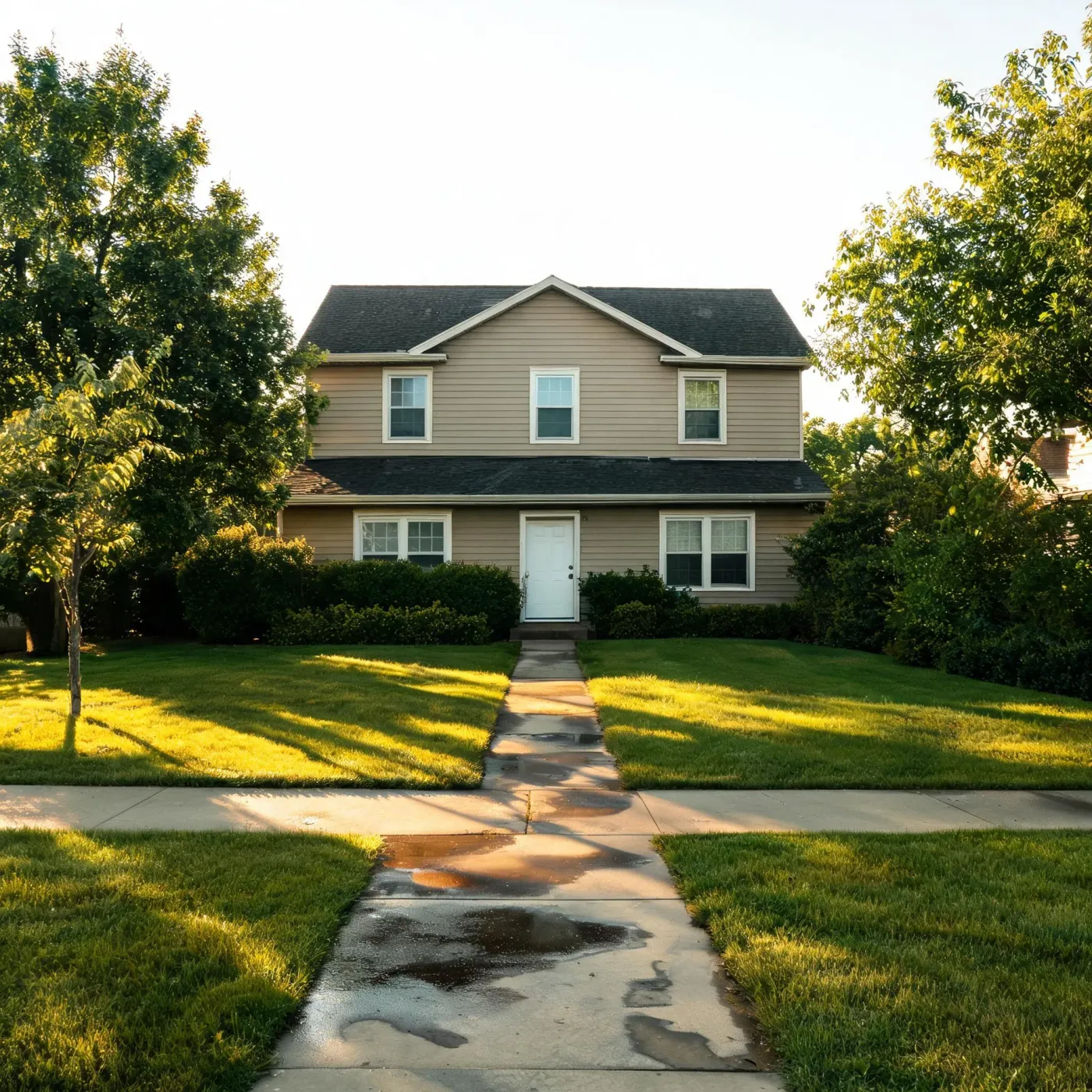
A two-story house with tan horizontal siding and a dark shingled roof, fronted by a mowed lawn, trimmed shrubs, leafy trees on both sides, and a concrete walkway leading from a wet sidewalk to the white front door.

The air here in summer sits heavy, a dew point averaging 64°F across June, July and August. That same humidity matters in winter too, because moisture in the air around your heat pump is what turns to frost on the coil in the first place. The more water vapor there is to begin with, the more ice the unit has to clear every time it runs a defrost cycle. On a damp Indiana night that means more frequent cycles, more frost built up between them, and a better chance you notice the outdoor fan working harder or the air from your vents running cooler than it should while the system catches up. Source: regional climate averages.

NASA POWER T2MDEW county cells weighted by homes

Is your heat pump actually keeping up right now

Check the thermostat against what's coming out of the vents. If it's set to 70 and the air feels lukewarm or cool, the system is struggling under that ice, not working through it. Listen for the outdoor unit too. A normal defrost cycle runs for a few minutes and the fan comes back on after. If the fan stays off longer than that, or you hear the unit running constantly without ever warming the house, backup heat may already be carrying the load, and your next bill will show it. Left alone, a coil that won't clear can mean longer stretches without real heat on the nights you need it most.

A woman in a cream cowl-neck sweater stands in a lamp-lit room looking out a window at a snow-covered yard with shrubs and bare trees at dusk.
A woman in a gray turtleneck sweater stands near a large window in a lamp-lit living room, looking out at falling snow and snow-covered conifers.
A woman in a chunky knit sweater stands by a large window looking out at snow-covered ground, with a dimly lit living room containing a gray sofa, framed artwork, shelves and table lamps behind her.
A woman in a gray turtleneck sweater stands in a dimly lit living room with a lamp and bookshelves, looking out a multi-pane window at falling snow.
A gray outdoor condenser unit on a concrete pad beside a light-colored lap-sided house, with a wall-mounted disconnect box, refrigerant lines, mulch bed and shrubs, and a concrete walkway in the foreground.

Unit clear and running

The coil is clean, the fan grille is free of rust, and the ground around the pad is clear. Lines run straight to the disconnect box with nothing blocking airflow in or out. A unit kept like this sheds frost on its own and gets back to heating without help.

An outdoor air conditioner condenser unit with rust spots on its top grille sits on a concrete pad beside a house with light horizontal siding, with conduit lines and an electrical box on the wall and a mulch bed to the right.

Unit weathered and struggling

Rust has set into the top grille and dirt has built up around the base where the fan pulls air in. That buildup chokes the airflow the coil needs to shed ice. A unit in this shape is more likely to ice over and stay iced, run after run, until something gets fixed.

A thin coat of frost that melts off on its own is nothing to worry about. Ice that keeps coming back, builds up thick, or never clears down to bare metal is the system telling you the defrost cycle isn't finishing what it starts. That could be a sensor reading the coil wrong, a reversing valve not switching over, or a control board losing track of the timing. None of those fix themselves, and none of them are things you can see from the kitchen window. What you can see is cold air coming out of your vents on a January night, and that's reason enough to get someone out to look at it. Once you send in the form, you're done hunting for a contractor and making calls to find one who's free. That part becomes someone else's job, and a licensed contractor who knows heat pumps and Indiana winters takes it from there.

A sunlit room corner with cream walls, white baseboard and window sill molding, a wood floor, and a dark wooden cabinet on the right holding a pale vase with leafy branches below a framed picture.
A round woven basket with a cream fringed throw draped over its rim sits in a corner on a wood floor, beside a dark wooden cabinet holding a stone vessel, with sunlight from a nearby window on the beige walls.
Interior corner of a room with a white-trimmed window and sill, beige walls, white baseboard molding, and a wood floor with sunlight falling across it; green foliage is blurred outside the window.
Interior corner of a room with cream walls, white baseboard molding, a window with a white sill showing blurred green foliage outside, and a wood plank floor lit by sunlight.
Sunlit interior corner showing a beige wall with a small crack above white baseboard molding, wood plank flooring, a patterned rug edge at lower left, and a window with sill at upper left.

A heat pump pro near you

Once you send the form, finding a pro is off your list.

Find a pro near me

No fee to send it, and nothing to sign.