





A illuminated two-story red brick house on a quiet residential street at dusk, flanked by mature trees under a deep blue evening sky.

Heat Pump Repair in Anderson, IN

Tell us about the job

Takes about a minute. No obligation.

RepairHeat PumpMadison County, IN
Step 1 of 2

What ZIP code is the job in?

Winters here are steady rather than brutal. Overnight lows average 22°F through December, January and February, cold enough to keep a heat pump working but not the kind of deep freeze that pushes a system past what it's built for. The bigger wear here tends to come from outside, not from the cold. Madison County has seen 68 damaging wind events over the past decade, and the outdoor unit sits right in that path. So when a heat pump here starts acting up, it's rarely because years of hard winters wore it down. More often it's one part, worn out or knocked loose by weather, and that kind of problem is usually worth fixing.

8 months
October through May, your system heats
3 months
June through August, it cools
22°F
the average winter night it heats against
83°F
the average summer afternoon it cools against
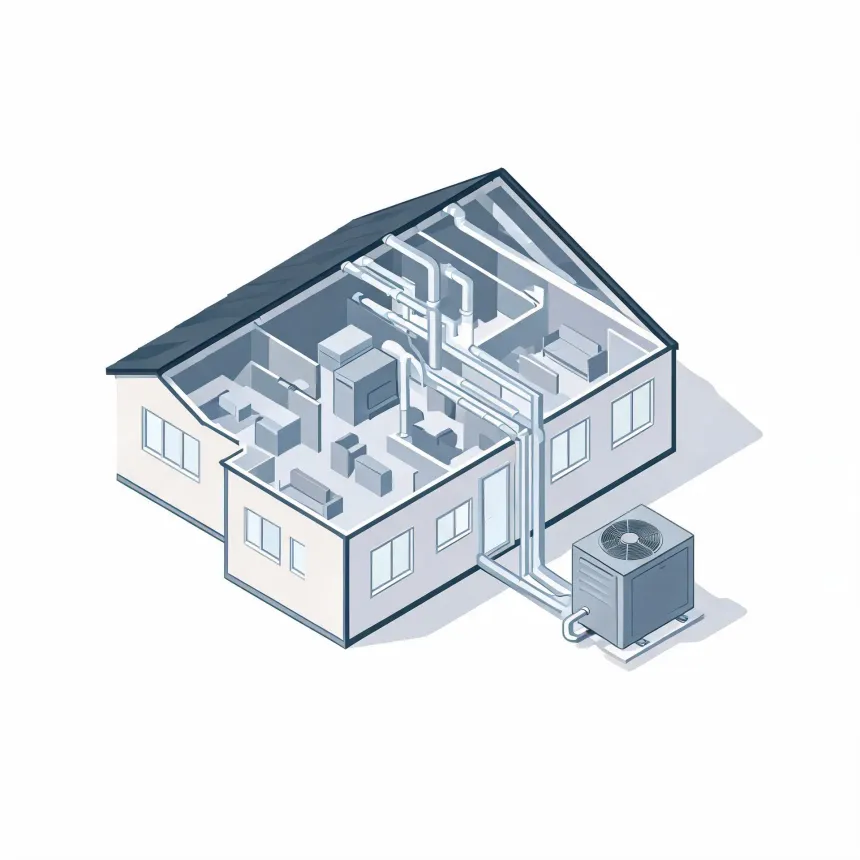
Isometric illustration of a cutaway single-story house showing interior ductwork and vents connected to an outdoor condenser unit beside the building, on a white background.
Your system heats October through May and cools June through August.

NOAA nClimDiv, 1991–2020 normals

Heat here starts up in October, after sitting idle most of the year.

The first cold mornings put load on parts that may have gone bad over the summer, and that's when a weak one usually gives out.

Weather here is ordinary. Your heat pump's trouble is probably one worn part.

121 severe weather events from 2015 to 2024
17% of homes statewide lost power a day or more in 2024
68 damaging wind events from 2015 to 2024

Half the homes in Madison County were built in 1965 or earlier. If your heat pump came with a house that old, it's worth asking how old the unit itself is. A house gets its heating system replaced more than once over the years. An older heat pump nearing the end of its run tends to show it in smaller ways first. It runs longer to reach the same temperature. It needs a repair like this one more than it used to. None of that means this repair isn't worth doing. It means the answer depends on the age of the equipment, not the age of the house, and a contractor can tell you that once they're looking at the unit.

A heat pump running wrong costs you every month it stays that way

Electricity in Indiana ran 14.77 cents per kilowatthour in 2024, and a heat pump leaning on a bad part pulls more of it just to keep up. The longer it runs like that, the more it shows up on your bill. Worth getting the part found and fixed.

Find a contractor
A man in a cap, dark long-sleeved shirt and brown work pants carries a worn leather duffel bag up porch steps toward an orange front door, with a potted shrub in a terracotta planter to the right.
A dark gray heat pump unit mounted on a concrete pad next to a house with gray siding and a stone veneer wall.

The hours add up, but they were mostly easy ones

A heat pump logs its hours in exactly this kind of stretch, day into night, month after month. Here that stretch is milder than most places see. Overnight lows average 22°F through December, January and February, which keeps the unit working steadily instead of straining against extreme cold. Hail and wind are the harder events, but those hit in a single afternoon, not across the whole season. So the hours this machine has logged are mostly easy ones. When it's acting up now, a contractor is usually looking at one worn or damaged part, not a system run into the ground. That's the kind of problem worth fixing.

What you can check yourself

Look at the outdoor unit first. If the fan isn't spinning or the coil is packed with leaves and debris, clearing it or straightening bent fins can bring it back. Check the thermostat is set to heat and the batteries are good. Go to your breaker panel and look for a tripped breaker, both the one for the outdoor unit and the one for the air handler inside. If you have a disconnect box next to the outdoor unit, make sure it's pushed in all the way. Check your air filter too. A filter packed with dust chokes airflow and can make the whole system struggle.
What to leave alone

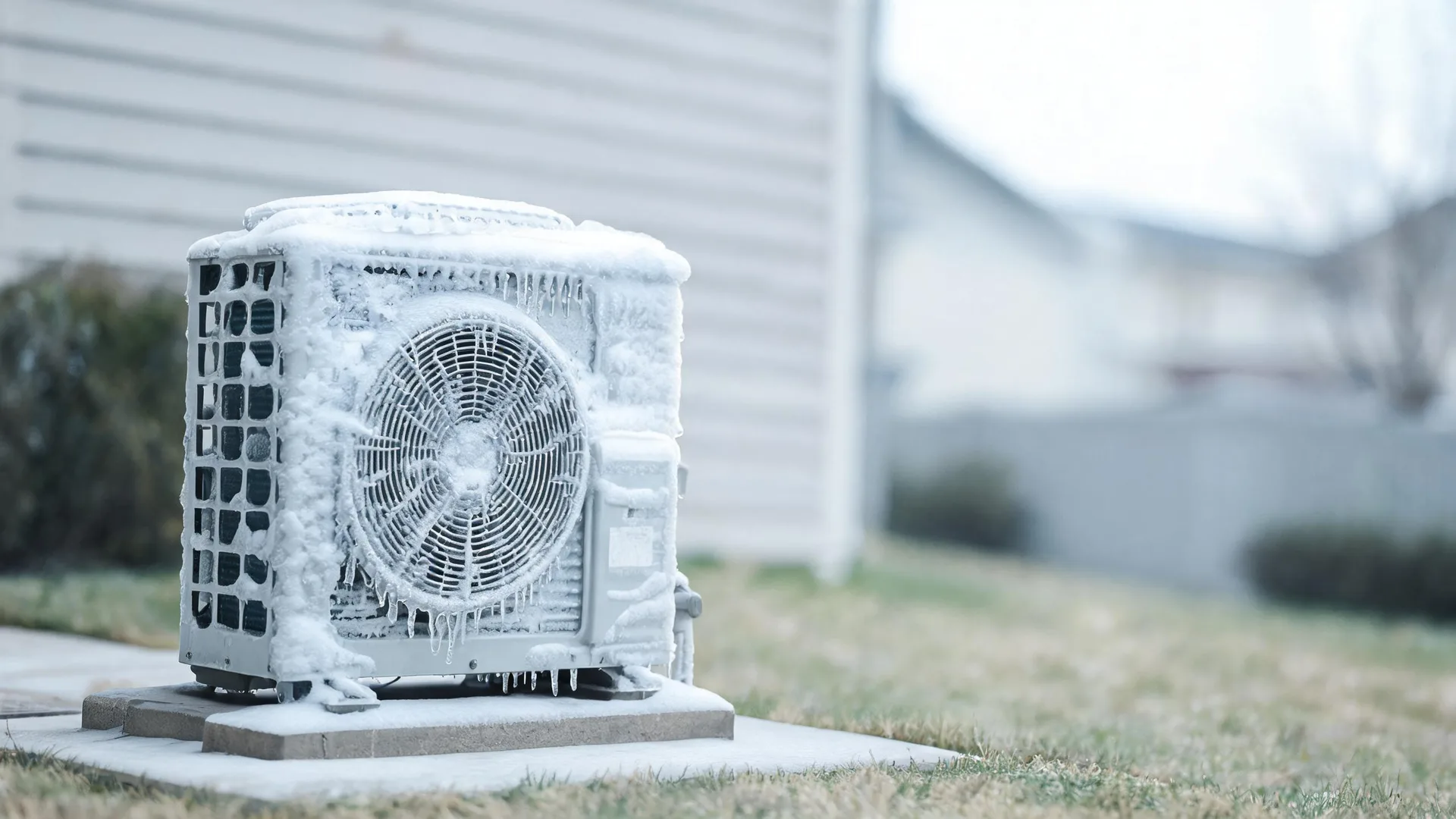
Don't open the outdoor unit's cabinet or touch the wiring inside it. Don't add refrigerant or try to find a leak yourself, that takes gauges and training to do safely. If you smell something burning, hear grinding or clicking that wasn't there before, or see ice covering the outdoor coil even after you've checked the basics, stop and call a contractor. Running a heat pump with a frozen coil or a failing part can turn a small repair into a much bigger one.

A diagnostic call starts outside, with the contractor watching the unit run before touching anything. They'll check the refrigerant pressures, look at the compressor's amp draw, and see whether the reversing valve is actually switching the system into heat mode when it's told to. Inside, they'll check the air handler, the condensate line, and whether the system is pulling the temperature rise it should across the coil. A lot of this is process of elimination. A bad capacitor looks different from a stuck reversing valve, which looks different from a thermostat sending the wrong signal, and the only way to tell them apart is to test each one in order. By the end, the contractor should be able to point to the one part causing the trouble and explain what replacing it involves.

Repair or replace usually comes down to the compressor. It's the one part in a heat pump that's expensive enough to change the math, and it's not something a contractor swaps out on its own, since a failed compressor is often a sign the system around it is worn too. Everything else, a capacitor, a contactor, a fan motor, a reversing valve, gets replaced on its own terms without touching the bigger question. So the real test isn't how old the unit looks or how long it's been acting up. It's what the part turns out to be. A contractor who's found the failed part can tell you straight whether it's a fix or a sign to start pricing a new system.